
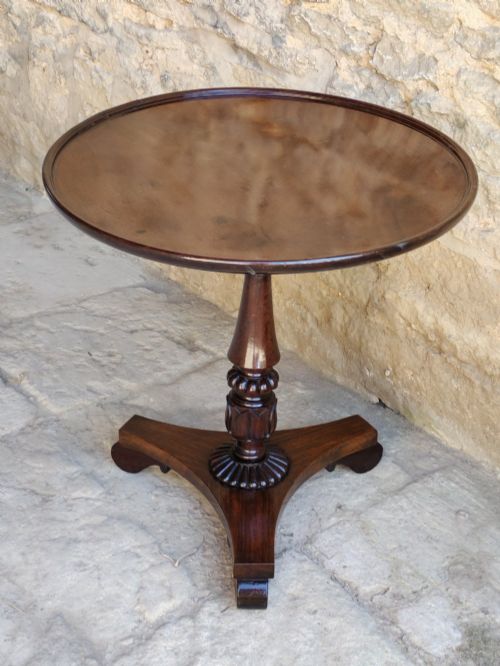

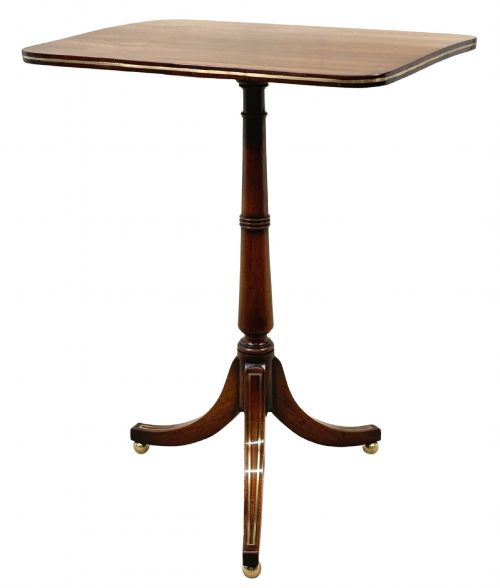


Rosewood Lamp Stand
These pieces for a rosewood lamp stand offer sturdy timber and fine grain to elevate household lighting with period charm.
Rosewood Lamp Stand
A rosewood lamp stand serves as a dedicated support for lighting, originating across the nineteenth and early twentieth centuries in various regional workshops.
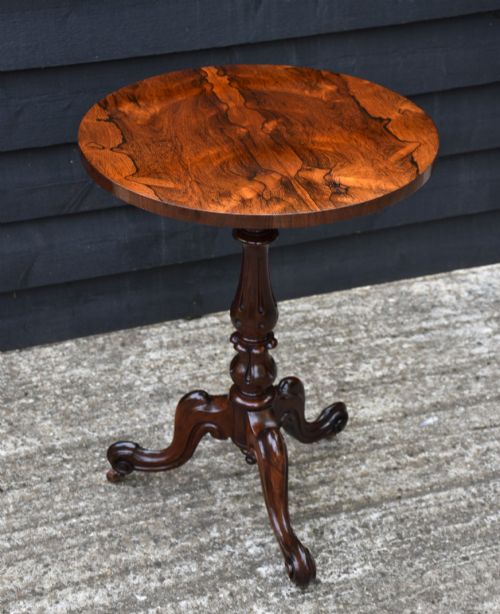
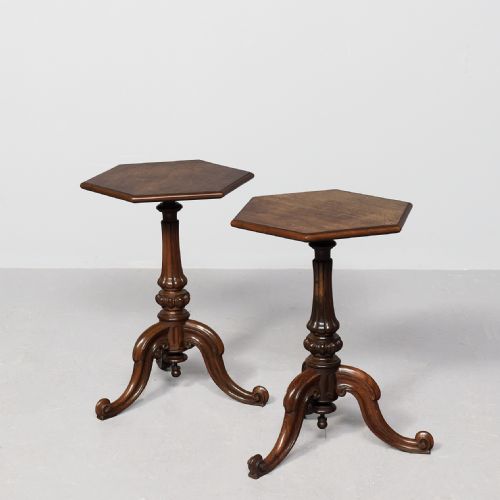
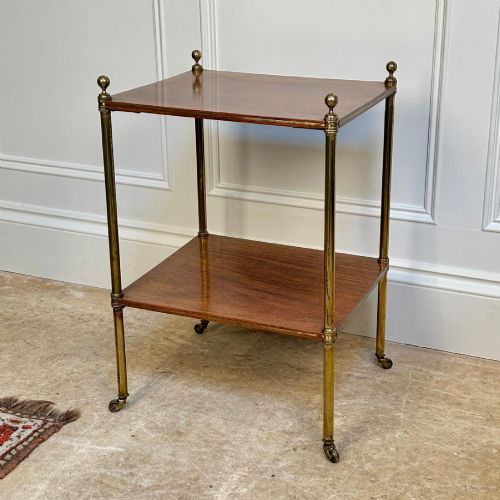
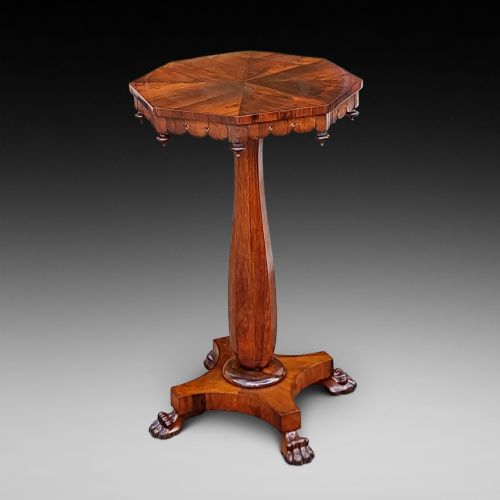
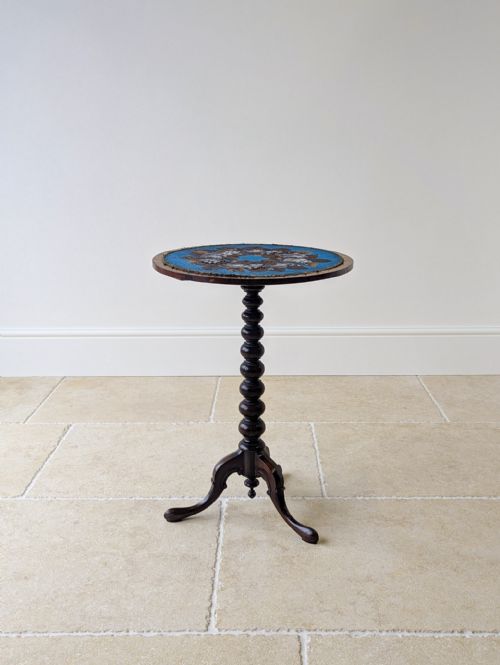
Buyers seeking this phrase encounter occasional tables, tripod wine tables, and standard floor lamps configured to hold lamps or jardinieres.
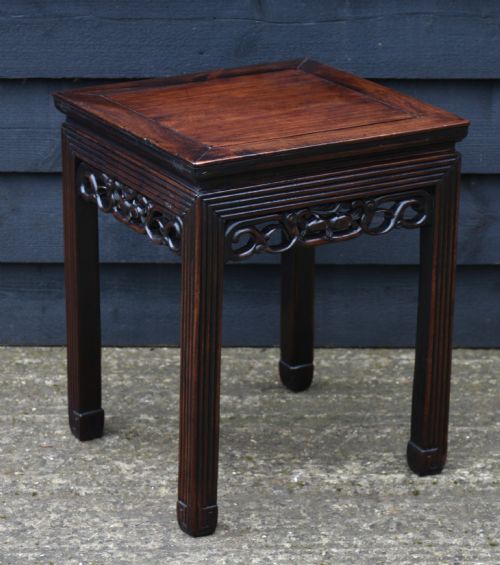
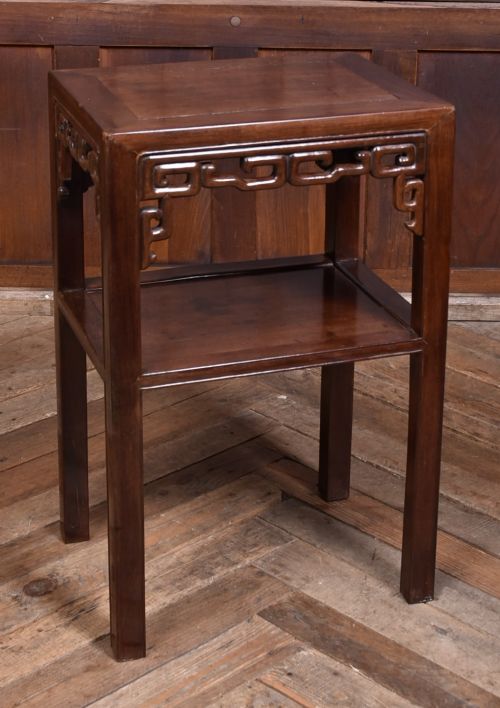
Forms span British Regency, Victorian, and William IV designs alongside Chinese export hardwood and Art Deco interpretations.
How they were made
Cabinetmakers utilised dense rosewood and exotic hardwoods, often selecting figured timber for prominent table tops and columns.
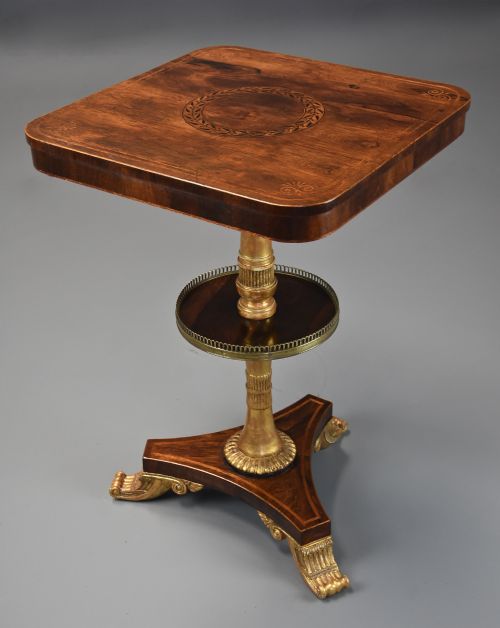
Construction frequently incorporated brass stringing, inlay, marble inserts, and carved details such as barley twists or traditional oriental motifs.
Some tables hide clever trompe l'oeil tricks beneath your tea.
What varies in quality
The degree of refinement in the timber figure and the crispness of carved or inlaid decoration distinguish the superior examples.
Proportion, stability of the tripod or pedestal base, and the integrity of brass mounts or marble inserts define the standard of execution.
The Rosewood Lamp Stand Glossary
- Rosewood
- A dense, heavily grained timber prized for its dark colour and polished finish. It forms the primary structural material for these stands.
- Brass stringing
- Thin lines of brass inlaid into the wood surface for decorative contrast. This technique appears frequently on Regency pieces.
- Jardiniere stand
- A tall piece designed specifically to display plants or heavy vases. Many examples double effectively as lamp supports.
Rosewood Lamp Stand: Frequently Asked Questions
What periods do these lamp stands come from?
The pieces span the nineteenth and early twentieth centuries, encompassing Georgian, Regency, William IV, Victorian, and Art Deco eras.
Alongside British cabinetmaking traditions, the selection includes Chinese export and Qing Dynasty hardwood stands from the same timeframe.
Were these stands originally built for electric lamps?
Most of the nineteenth-century examples began life as occasional tables, wine tables, or candle stands rather than fitted electrical supports.
Standard floor lamps and certain table variations were adapted later, or built specifically during the Edwardian and Art Deco periods for lighting.
How do I place a rosewood lamp stand in a room?
These compact tables and vertical stands suit corners, beside seating, or between windows where surface space is required.
The rich timber tones pair well with traditional interiors, while simpler forms anchor modern spaces with dark wood accents.
What is the difference between a lamp table and a jardiniere stand?
Lamp tables generally offer a wider top suited for resting a portable light fixture and small objects.
Jardiniere stands and lantern stands tend to be taller and narrower, designed originally to hold heavy planters or decorative vases.