



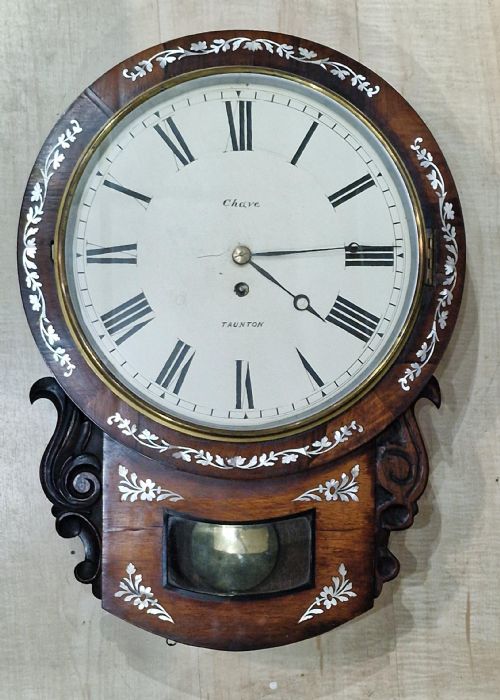


Rosewood Inlay Clock
A rosewood inlay clock brings deep tropical timber and precision brass work together in a functional domestic centrepiece.
Rosewood Inlay Clock
A rosewood inlay clock combines rich, dark timber casing with contrasting decorative elements to tell the time in a formal room. When searching this phrase, a buyer encounters domestic timepieces spanning several distinct eras of design.
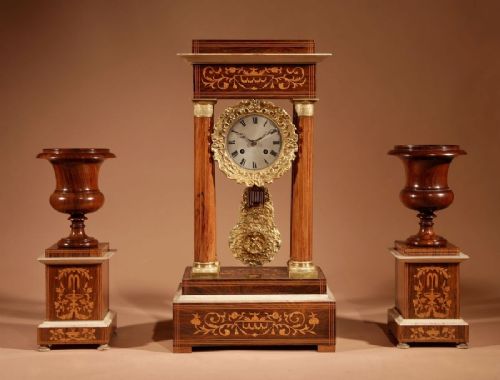
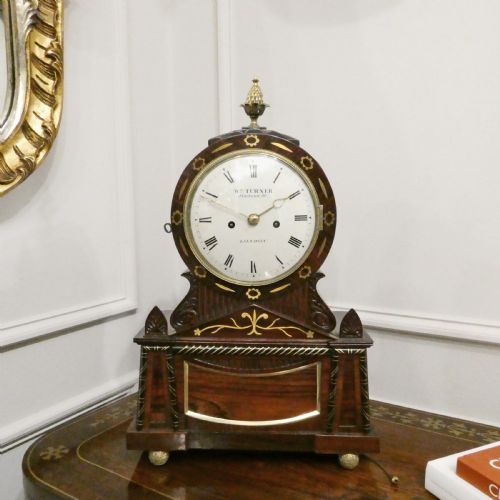
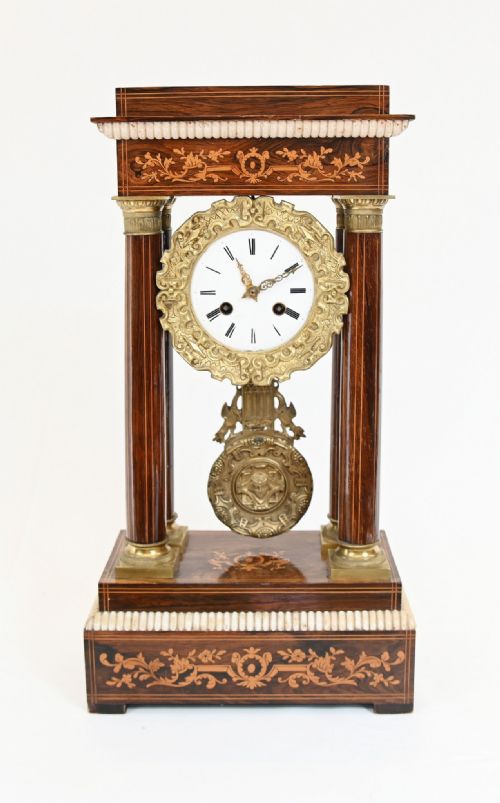
The most common forms on this page include bracket clocks for the table, drop-dial wall clocks for practical timekeeping, and architectural portico clocks originating from French workshops. These pieces cross Georgian, Regency, Victorian, and Edwardian periods.
Makers from London and provincial towns such as Reading, Taunton, and Bridgwater produced fusee movements for reliable timing. French makers contributed marquetry and ormolu mounts alongside traditional English bracket forms.
Materials and construction methods
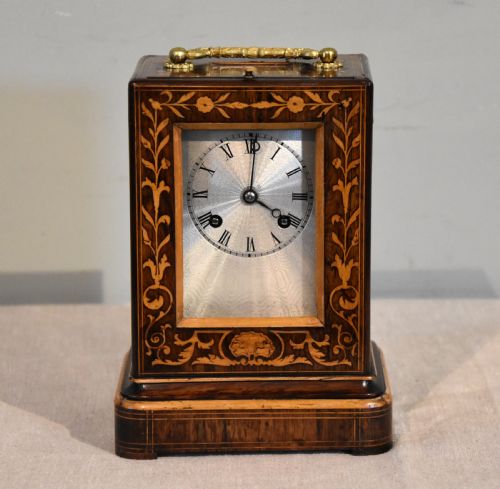
Cabinet makers utilised dense, richly figured rosewood veneers laid over solid secondary timbers to build the cases. Contrast came from inlay work executed in lemon wood, satinwood, and engraved brass.
Movements relied on brass gear trains driven by fusee or spring mechanisms, often housed behind glass inspection panels and enamel or silvered metal dials.
Rosewood Inlay Clock Retail Price Guide 2026
Typical asking prices for rosewood inlay clock among the pieces listed under this phrase on Sellingantiques today, from the lower quarter to the upper quarter. They describe what is for sale here now, not the wider market.
At least one nineteenth-century mantel clock squeezes an internal thermometer right alongside its ticking brass movement.
Judging the execution and finish
The standard of an example rests upon the precision of the timber inlay and the crispness of the cast ormolu mounts. Sharpness in the engraving on dial plates and backplates indicates skilled handwork rather than mass production.
Movement quality shows in the complexity of the striking train and the finish of the internal brass components. Original matched parts and undamaged veneers elevate an individual clock above heavily restored specimens.
Turner of London·George Orpwood·Seller of Reading·S Simpson Southampton·Halliday & Rich Bridgwater·Ganthony of London·Henry Marc·Kleyser of London·Walker and Hall·Plumbly & Tupman London·Savory & Fils A Paris·Dumont
The Rosewood Inlay Clock Glossary
- Fusee
- A conical pulley used in clock movements to maintain equal drive force as the mainspring unwinds. This mechanism ensures more accurate timekeeping throughout the duration of the wind.
- Portico clock
- A distinct architectural mantel clock style featuring columns supporting a central housing for the pendulum and dial. French makers frequently employed this form during the nineteenth century.
- Bracket clock
- A portable spring-driven timepiece originally designed to sit on a wall bracket or table. These often incorporate complex chiming or bell-striking arrangements.
- Drop-dial wall clock
- A timepiece featuring a circular dial above an extended wooden case body designed to accommodate a swinging pendulum. They served institutional and domestic roles alike.
- Marquetry
- The art of applying pieces of veneer to a structure to form decorative patterns and pictures. Makers used contrasting timbers like lemon wood and satinwood for this detailed work.
Rosewood Inlay Clock: Frequently Asked Questions
How do I wind an antique fusee clock?
Use the appropriate winding key to turn the square arbor clockwise until gentle resistance stops the motion. Care ensures the gut line or chain remains properly seated on the fusee cone.
Avoid over-winding the mechanism, as excessive tension can damage the mainspring or snap internal components. Consult professional advice if the movement resists standard operation.
Where should I place a wall clock?
Mount the timepiece on a sturdy interior wall away from direct sunlight, central heating vents, and damp areas. Stable conditions protect the timber veneer and prevent expansion in the case.
Ensure the wall provides a secure anchor point capable of supporting the combined weight of the rosewood case and movement.
What maintenance do these movements require?
A professional service every few years keeps the brass gear trains clean and properly lubricated. Dust accumulation and thickened oils hinder the pendulum swing over time.
Keep the glass door closed to prevent dust settling on the enamel dial or silvered metal chapter ring.
How can I tell a Regency clock from a Victorian one?
Regency pieces often display restrained brass inlay and architectural restraint typical of the early nineteenth century. Ormolu mounts and portico forms frequently reflect French influence during this period.
Victorian examples tend toward heavier marquetry patterns, varied dial configurations like drop-dial wall formats, and broader provincial maker representation.