


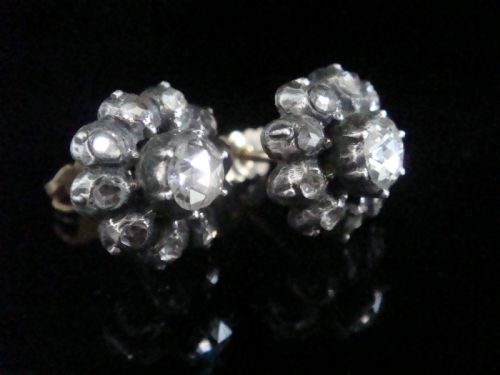


Rose Cut Earrings
Rose cut earrings bring a distinctive antique sparkle to the ear, featuring flat-backed stones with dome-cut facets that catch candle or low light with a soft, watery gleam.
Rose Cut Earrings
When searching for rose cut earrings, buyers encounter historic jewels shaped across the Georgian, Victorian, and Edwardian eras, extending into the 1930s. These pieces appear primarily as drop earrings, clusters, and stud configurations.
The selection ranges from delicate diamond and natural pearl clusters to garnet ivy leaves and sapphire drop pendants. Most examples integrate yellow gold, rose gold, or silver-topped gold mounts typical of pre-modern European workshops.
Materials and construction
Goldsmiths set rose cut diamonds and coloured gems into precious metals using hand-forged techniques, frequently combining silver fronts with gold backs to enhance the brilliance of the stones. Natural pearls, garnets, and emeralds are secured with meticulous claw and collet settings.
The construction relies on foil-backed or open-backed mountings depending on the period, allowing light to pass through the shallow faceted domes of the stones. Integrated gold wires, screw backs, and secure dormeuse fastenings provide functional support for dangle and drop designs.
Listings span the Georgian, Victorian, Edwardian, and Art Deco periods, showcasing diamonds, garnets, natural pearls, and emeralds set in gold, silver, and platinum.
Assessing quality and craftsmanship
The distinction between tiers rests on the symmetry of the stone cutting, the integrity of the original metalwork, and the harmony of the design. Superior pieces display well-matched gems with balanced symmetry and intact historic mountings.
Fine examples maintain their original configuration without modern alterations, preserving the character of the period work. The precision of the hand-cut facets and the weight of the gold or platinum settings dictate the overall standard of the jewellery.
The Rose Cut Earrings Glossary
- Rose cut
- A historic diamond cut featuring a flat base and a domed crown covered in triangular facets resembling an unopened rosebud. This technique dates back centuries before the invention of the modern brilliant cut.
- Dormeuse
- A type of antique French earring designed with a secure clasp intended originally to be comfortable enough for sleeping. These pieces frequently feature hinged wires and cluster fronts.
- Trefoil
- An ornamental design composed of three overlapping rounded lobes or leaves, often utilised in gemstone cluster arrangements. The motif appears frequently in Victorian and Edwardian cluster earrings.
- Collet
- A narrow metal band or collar that encircles the girdle of a gemstone to hold it securely in place. This traditional setting style is common in Georgian and early Victorian jewellery.
Rose Cut Earrings: Frequently Asked Questions
How do I care for antique rose cut earrings?
Clean these historic pieces gently with a soft dry cloth, avoiding harsh chemical dips or ultrasonic cleaners that can damage natural pearls, emeralds, and foil backs. Store each pair separately in a lined box to prevent scratching the softer metals and stones.
Inspect the settings periodically to ensure the security of the stones within their original claws and collets. Professional maintenance by a specialist in antique jewellery preserves the structural integrity of delicate drops and fastenings.
Can I wear antique earrings every day?
Historic earrings require mindful wear due to their age and delicate historic construction. Removing them before swimming, sleeping, or strenuous activity prevents undue stress on the antique wires and settings.
While robust Victorian and Edwardian examples handle regular social wear well, older Georgian pieces benefit from reserve for special occasions. Proper handling ensures these fragile metal components and stones endure for future generations.
How do I distinguish Edwardian from Victorian styles?
Victorian pieces often display heavier yellow gold, robust garnet clusters, and romantic motifs like ivy leaves or serpents. The workmanship tends toward substantial settings and rich, warm metal tones.
Edwardian design shifts toward lighter platinum and yellow gold combinations, incorporating delicate lacework, garlands, and bows. Diamonds and pearls dominate this later period, conveying a lighter, airier aesthetic.
What is a night and day earring?
Night and day earrings feature a versatile modular construction where a lower drop section detaches for daytime wear. The upper stud or cluster then functions independently as a simpler piece for evening or casual settings.
This clever historic engineering allowed the wearer to adapt a single pair of jewels for different social hours. Surviving complete sets remain prized examples of period ingenuity.