
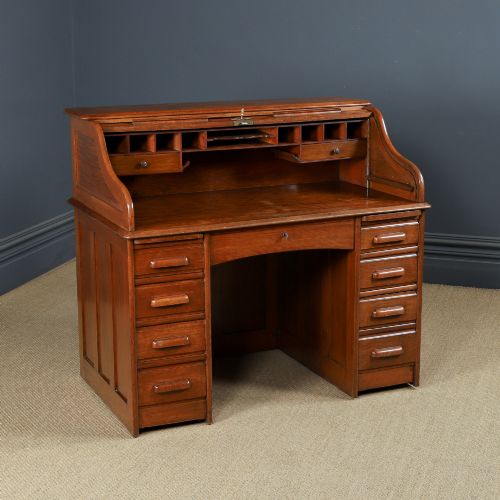
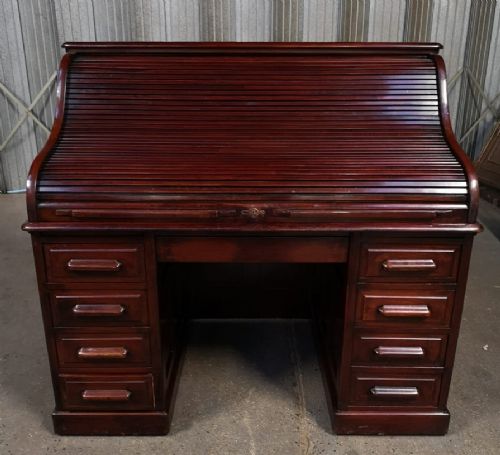
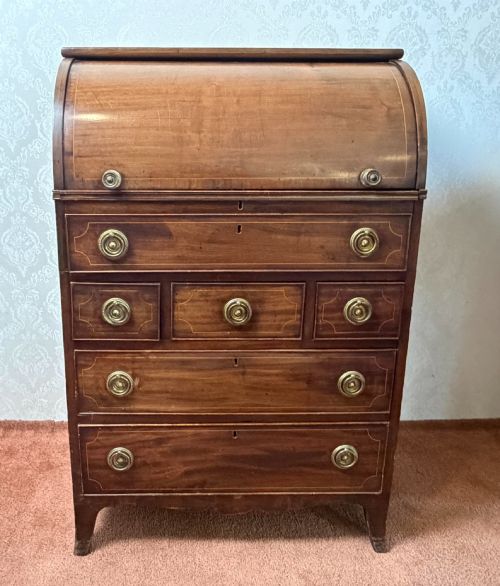
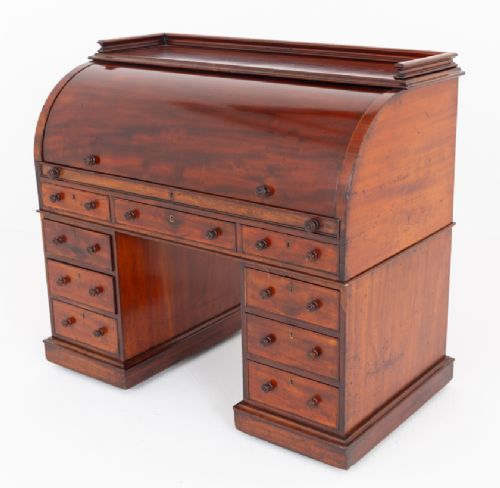

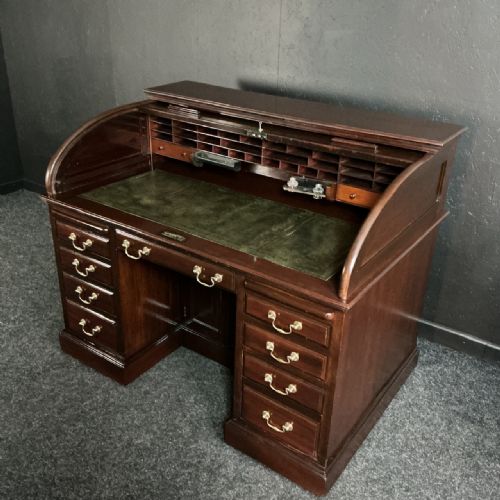


Rolltop Office Desk
A rolltop office desk offers a private, enclosed workspace that conceals daily paperwork behind a slatted timber curtain.
Rolltop Office Desk
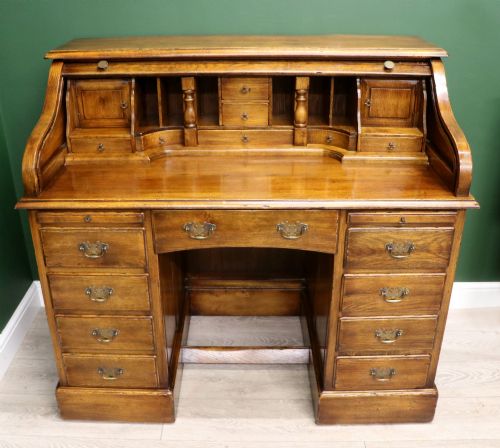
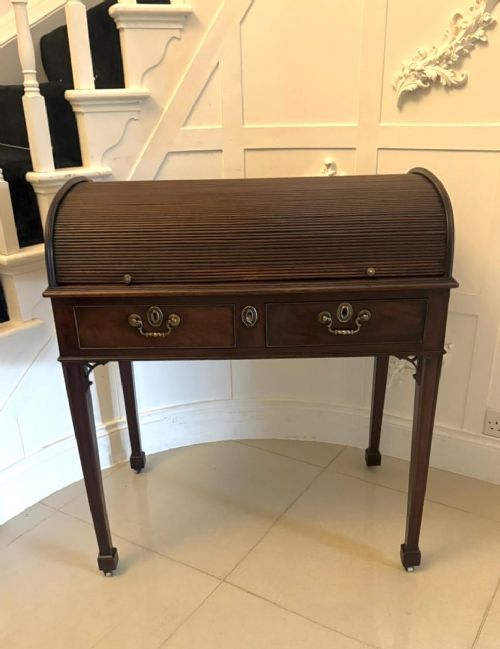
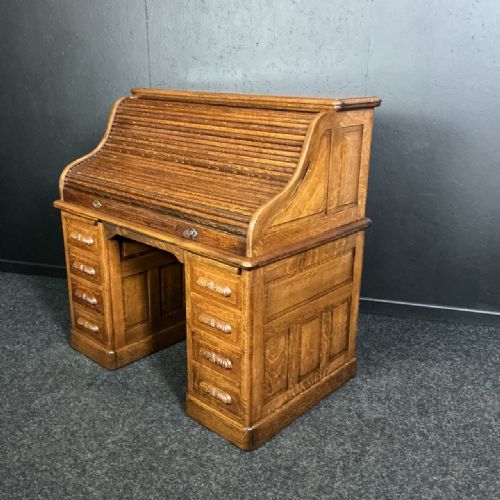
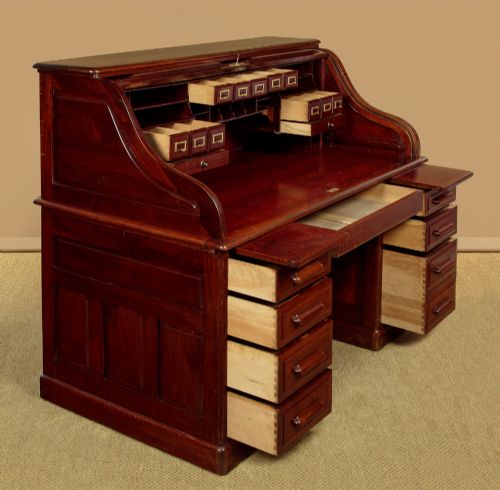
When you search for a rolltop office desk, you examine substantial working furniture designed for storage and private correspondence. These pieces are most commonly encountered from the Edwardian and Victorian periods, constructed as large pedestal desks or smaller writing tables.
The defining characteristic is the flexible tambour shutter that slides over the pigeonholes and small drawers of the upper writing surface. Oak and mahogany are the predominant timbers found in these working desks, shaped into robust pedestals and kneehole configurations.
The selection ranges from compact walnut writing desks to large oak pedestal versions built for nineteenth and early twentieth-century offices. Many incorporate pull-out writing slides, internal letter compartments, and panelled sides suited for professional or domestic studies.
How they were made
Cabinet makers built the rolling shutter by gluing narrow strips of solid timber, such as oak, mahogany, walnut, or satinwood, onto a flexible canvas or fabric backing. This allowed the curved wooden top to slide smoothly within concealed tracks around the back of the writing compartment.
Solid woods and selected veneers formed the structural pedestal carcases, drawers, and writing surfaces. Brass hardware, including handles and drawer pulls, accompanied leather writing inserts and interior compartments designed for organisational utility.
Listings feature solid oak, mahogany, walnut, satinwood, and brass materials across Victorian, Edwardian, and Georgian periods.
What varies in quality
The standard of timber selection and the precision of the tambour mechanism distinguish different grades of these desks. Superior examples utilise solid oak or finely figured mahogany with tight, smooth-running wooden slats that glide effortlessly along their tracks without catching.
Internal joinery, such as dovetailed drawer construction and the complexity of the internal pigeonhole arrangement, marks the difference between utilitarian office furniture and high-grade cabinet work. Finer models incorporate inlaid satinwood details and well-fitted pull-out writing slides.
Boston Chair Company·Maples of London and Paris·Horrocks Desk Company
The Rolltop Office Desk Glossary
- Tambour
- A flexible shutter or curtain composed of narrow strips of wood glued to canvas, allowing it to slide around a curved track. This mechanism closes over the desk top to secure the writing surface.
- Pedestal desk
- A heavy freestanding writing desk supported by two banks of drawers or cupboards beneath the top. The user sits in the kneehole space positioned centrally between the pedestals.
- Cylinder desk
- A desk featuring a solid, rotating cylindrical wooden shutter rather than a flexible tambour slat. It performs a similar concealing function for the writing implements.
- Writing slide
- A pull-out board positioned above the drawers that extends the surface area for paper or ink placement. These slides tuck away flush when not in use.
- Pigeonhole
- A small compartment within the upper section of the desk used for sorting letters and documents. They sit directly behind the rolling tambour shutter.
Rolltop Office Desk: Frequently Asked Questions
How do I maintain the rolltop mechanism?
Keep the wooden tracks clean of dust and debris so the tambour slats move freely without binding. A light application of appropriate furniture wax helps preserve the sliding action.
Avoid placing heavy objects on top of the closed shutter, as excessive weight can warp the tracks and jam the slats.
What is the difference between a tambour and a cylinder desk?
A tambour desk uses a flexible curtain made of narrow wooden strips glued to canvas that bends around a track. A cylinder desk employs a single solid curved piece of wood that rotates on an axis.
Both serve to hide the desk contents, but the tambour mechanism is far more common in standard office desks.
Are these desks suitable for modern computer use?
Many larger examples provide ample surface area and kneehole space for contemporary working needs. The internal compartments accommodate small stationery items well.
Ensure you measure the depth and width of the writing surface before attempting to place large electronic equipment inside the enclosed area.
How can I date a rolltop desk?
Examine the timber choices, hardware materials, and overall construction style to determine the period. Edwardian and Victorian pieces frequently display distinct moulding profiles, brass drawer pulls, and wood selections like oak and mahogany.
Interior drawer construction, such as hand-cut dovetailing, also provides clues regarding the manufacturing era.