





Rococo Storage Chest
A rococo storage chest brings flowing, asymmetric lines and serpentine fronts to a room, offering practical storage through grand decorative craft.
Rococo Storage Chest
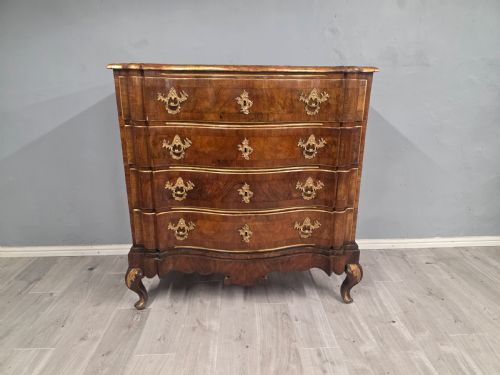
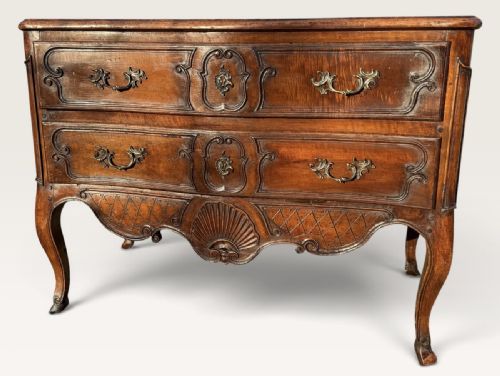
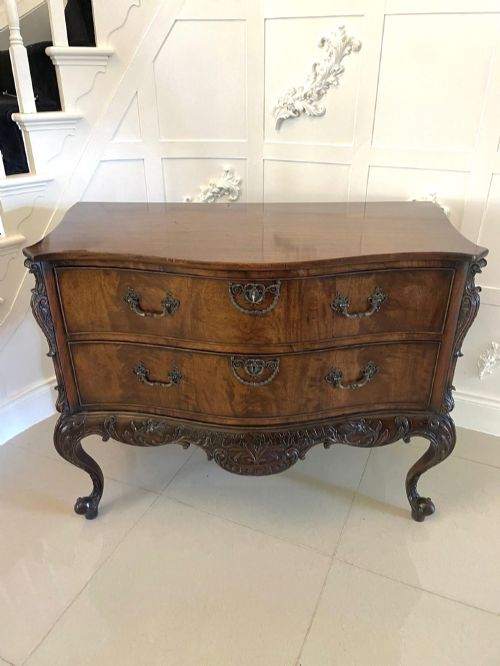
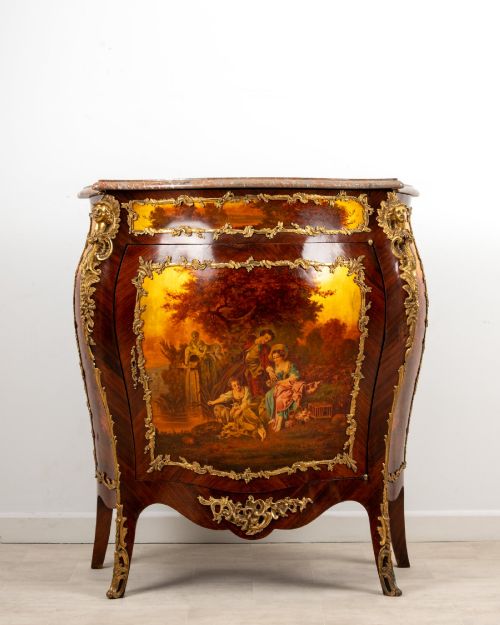
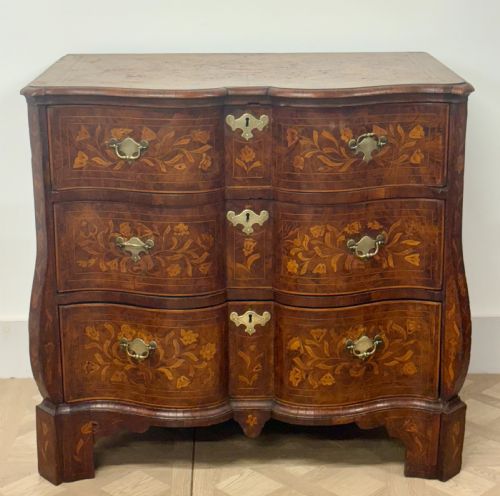
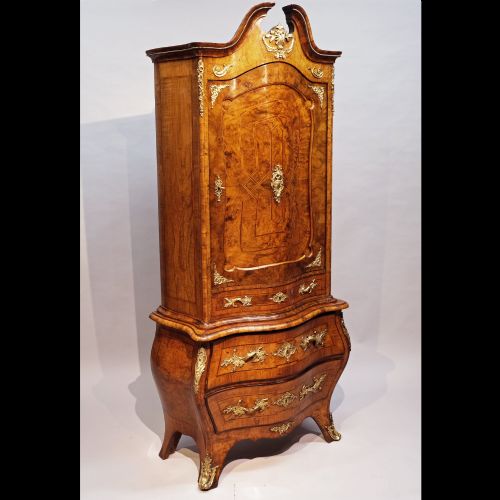
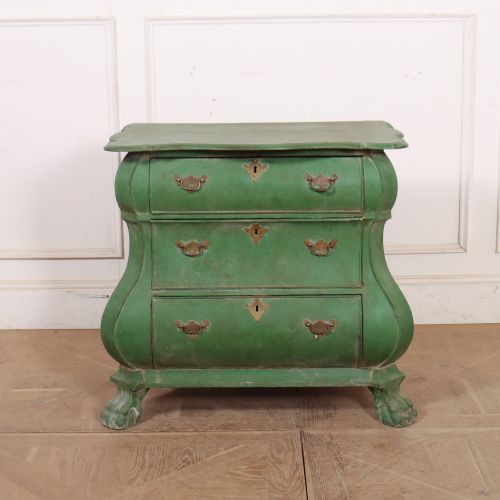
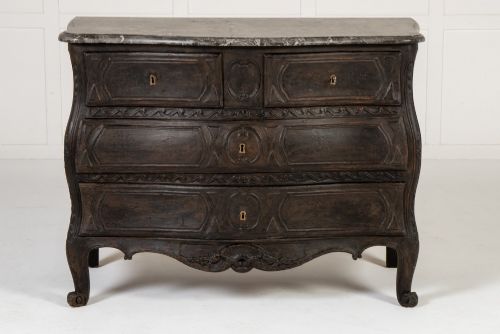
A rococo storage chest typically manifests as a commode, a cabinet, or a chest of drawers built with sweeping curves. These pieces originate from various European regions including France, Italy, Germany, the Netherlands, and Britain, spanning the eighteenth century through later revival periods.
Makers shaped these storage forms using regional vernaculars such as French provincial, Dutch rococo, and Louis XV styles. The silhouettes rely on rhythmic movement, scrollwork, and bombé bulges that set them apart from rigid rectilinear furniture.
Materials and Construction
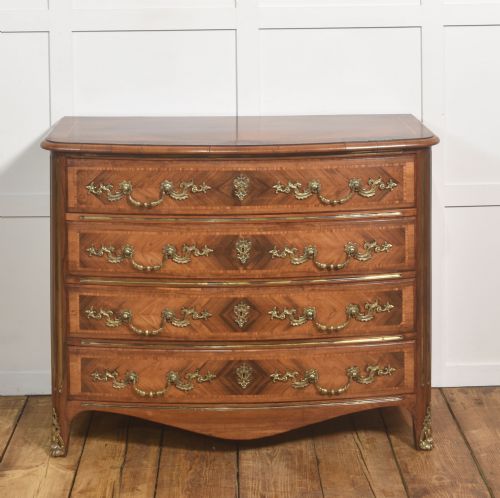
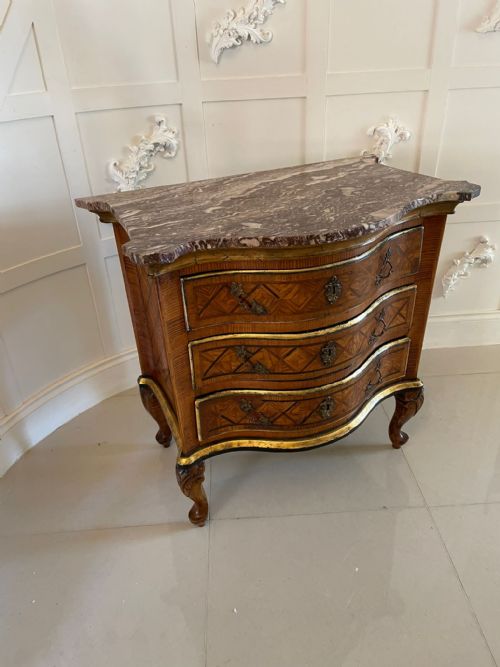
Construction relies heavily on dense timbers like walnut, kingwood, and burr walnut, often paired with oak for internal framing. Marquetry and parquetry patterns layer contrasting woods into intricate geometric or floral designs across the surfaces.
Many examples incorporate thick marble tops, particularly breccia and scagliola, resting above sculpted carcases. Cast or gilt bronze ormolu mounts punctuate the corners and handles, while painted wood and Chinoiserie lacquer provide colourful alternative finishes.
Rococo Storage Chest Retail Price Guide 2026
Typical asking prices for rococo storage chest among the pieces listed under this phrase on Sellingantiques today, from the lower quarter to the upper quarter. They describe what is for sale here now, not the wider market.
Periods range from early eighteenth-century origins through nineteenth-century Louis XV revival iterations.
Judging Quality
Quality rests in the fluidity of the carved lines and the precision of the veneer work. Superior examples display seamless grain matching across undulating drawer fronts, whereas lesser pieces show stiffness in their curves.
The integration of mounts and stone tops distinguishes the output. Heavy, finely chased ormolu that hugs the wooden contours without gaps indicates superior workshop production.
Gonçalo Alvest
The Rococo Storage Chest Glossary
- Bombé
- A swelling, outward-curving chest profile that expands toward the base. This bulging shape requires advanced timber bending and shaping techniques.
- Serpentine
- A front edge curving outward at the centre and inward at the sides. This contour creates a distinct S-shape when viewed from above.
- Ormolu
- Gilded bronze applied as decorative mounts and handle plates. It highlights the structural corners and adds metallic contrast to the timber.
- Marquetry
- Inlaid wood veneers forming pictorial or decorative patterns. Artisans cut different timber species to fit tightly into complex designs.
- Scagliola
- A composite material made from selenite, glue, and pigments, mimicking marble. Craftsmen polish it to create durable, colourful decorative tops.
Rococo Storage Chest: Frequently Asked Questions
What is a rococo storage chest?
A rococo storage chest is a decorative cabinet or commode characterised by asymmetrical curves, serpentine shaping, and elaborate surface ornamentation.
These pieces served as functional storage for domestic spaces while displaying the social status and taste of the owner through rich materials.
Where were these chests made?
Production centres spanned across Europe during the eighteenth century and subsequent revival periods. France, Italy, the Netherlands, Germany, and England generated distinct regional interpretations.
French workshops favoured marquetry and ormolu mounts, while Dutch and German makers often utilised bold bombé forms and painted finishes.
How do I spot an eighteenth-century piece?
Dating relies on timber construction methods, tool marks on internal secondary woods, and the natural ageing of veneers. Eighteenth-century examples demonstrate hand-cut dovetails and structural joinery appropriate to the period.
Revival pieces from later centuries often mimic these characteristics but employ nineteenth- or twentieth-century manufacturing traces.
How do I care for marble and wood?
Protect the polished wooden surfaces by avoiding direct sunlight and excessive humidity. Use dry cloths for dusting and maintain consistent indoor room temperatures.
Marble tops require gentle cleaning with neutral soap solutions to prevent staining or etching of the stone.