




Rococo Revival Walnut Cabinet
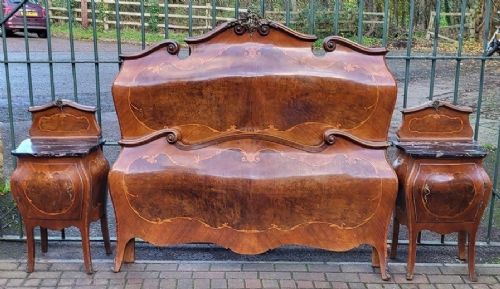
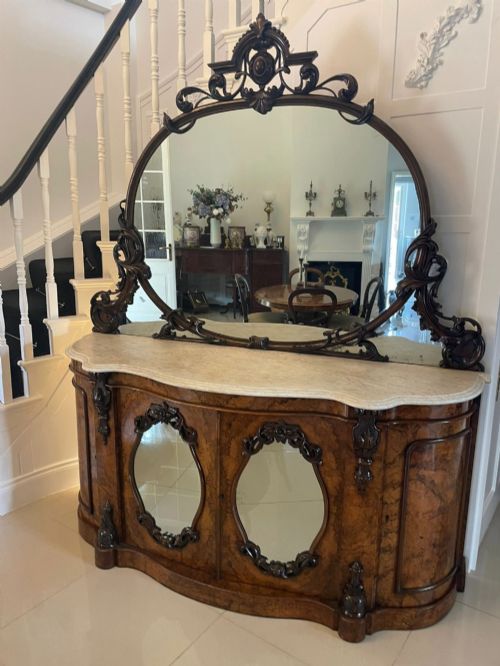
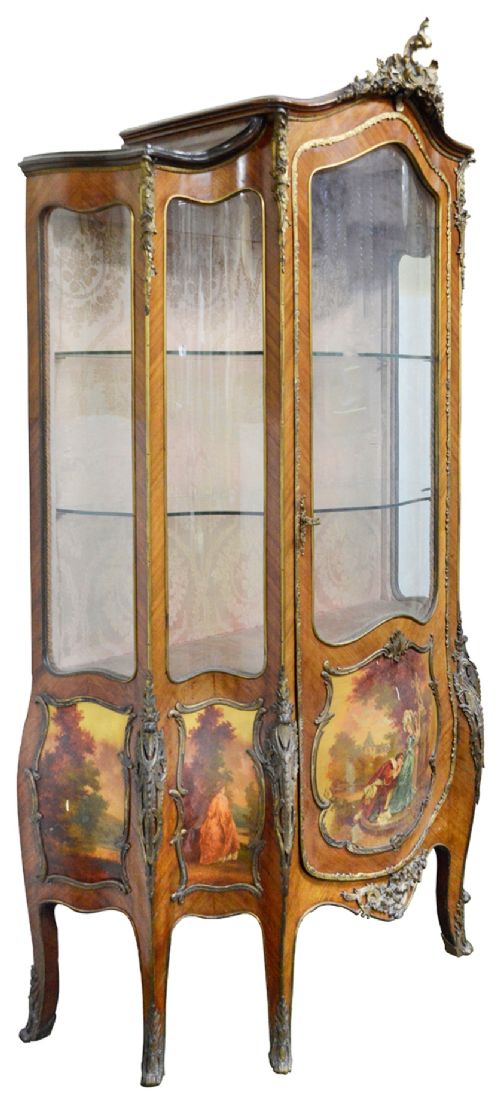
These rococo revival walnut cabinet pieces bring exuberant Victorian curves and rich burr figures into modern rooms.
Rococo Revival Walnut Cabinet
A rococo revival walnut cabinet combines serpentine woodwork with the rich grain of walnut and burr walnut. These pieces originate across the nineteenth and early twentieth centuries, spanning Victorian and continental revival movements.
Credenzas, sideboards, bedside tables, and armoires dominate the selection available to buyers. The French Louis XV revival and Victorian iterations provide the strongest representation on this page.
Makers utilised figured timbers and marquetry inlay to achieve depth across curved surfaces. The scale ranges from compact bedside chests to large mirrored display credenzas.
Materials and construction
Makers selected solid walnut and applied burr walnut veneers to curved carcases. The distinct figuring of the wood provides visual movement that complements serpentine drawer fronts and bombé sides.
Ormolu mounts, brass fittings, and marble tops appear across many items to accent the woodwork. Glass doors and mirror backs frame display sections within credenzas and cabinets.
Rococo Revival Walnut Cabinet Retail Price Guide 2026
Typical asking prices for rococo revival walnut cabinet among the pieces listed under this phrase on Sellingantiques today, from the lower quarter to the upper quarter. They describe what is for sale here now, not the wider market.
Listings span from eighteen-fifty through to nineteen-thirty, uniting Victorian, Edwardian, and continental revival periods.
Assessing quality
The choice of veneer figure dictates the initial visual impact of the timber. Selecting pieces with balanced burr grain across matched doors reveals greater cabinetmaker skill.
Carving depth and the crispness of applied ormolu mounts separate standard production from finer workshop output. Robust timber selection in structural frames ensures doors and drawers retain their alignment.
Gillows
The Rococo Revival Walnut Cabinet Glossary
- Burr walnut
- A timber harvested from the burl growth of a walnut tree, yielding intricate, swirling grain patterns. This veneer was prized for high-status Victorian cabinetry.
- Ormolu
- Gilded bronze mounts cast in ornamental scrollwork and foliage. These metal decorations highlight the curves of French and English revival furniture.
- Credenza
- A low cabinet traditionally used for serving or display. Victorian examples often incorporate central cupboards flanked by curved glass doors and mirror backs.
- Marquetry
- Inlays of different coloured wood veneers forming decorative patterns. Craftsmen utilised this technique on French revival tables and desks.
- Serpentine
- A furniture front or edge shaped with a central convex curve flanked by concave sections. This undulating line defines much of the rococo revival aesthetic.
Rococo Revival Walnut Cabinet: Frequently Asked Questions
What rooms suit a burr walnut credenza?
A credenza works well in a dining room or living space where its surface and display capacity can be utilised. The reflective mirror backs and glass panels help brighten darker corners.
Ensure adequate floor space is available, as these items often feature generous serpentine depths and heavy marble tops.
How do I care for nineteenth century walnut?
Keep walnut furniture away from direct sunlight and heat sources to prevent the burr veneers from drying and lifting. Regular dusting with a soft, dry cloth maintains the polish.
Apply a quality beeswax occasionally to nourish the timber and protect the grain without building up heavy residues.
How do I distinguish French from English revival pieces?
French pieces often display lighter marquetry inlay, gilt ormolu mounts, and more flamboyant cabriole curves associated with Louis revival styles. English examples tend to use heavier solid carcases with rich burr walnut veneers and carved mirror backs.
Both traditions draw on eighteenth-century motifs but express them through distinct nineteenth-century workshop practices.
Are bedside tables from this period sturdy?
Bedside tables and nightstands from the nineteenth and early twentieth centuries employ solid construction methods designed for daily use. Their walnut frames offer good stability for lamps and bedside items.
Check that the doors and drawers operate smoothly within their serpentine housings to confirm structural integrity.