


Rococo Revival Seating
Rococo revival seating brings extravagant nineteenth-century curves, carved walnut frames and rich upholstery into contemporary rooms.
Rococo Revival Seating
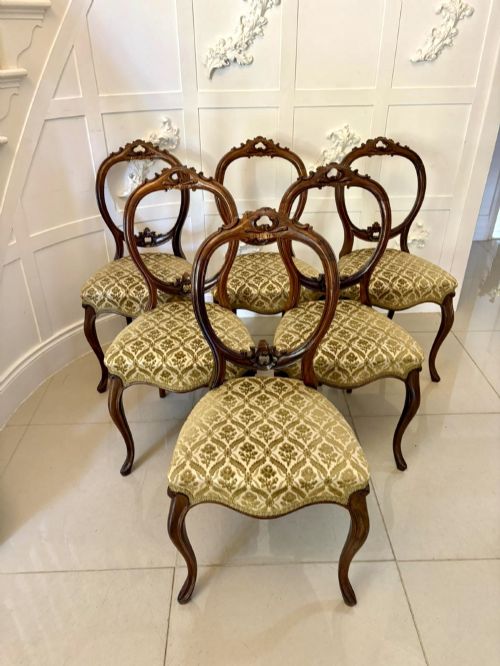
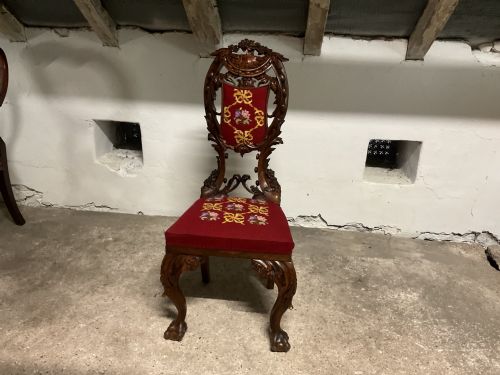
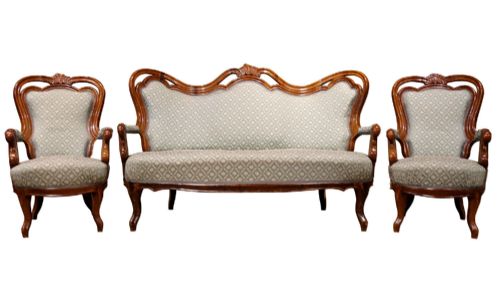
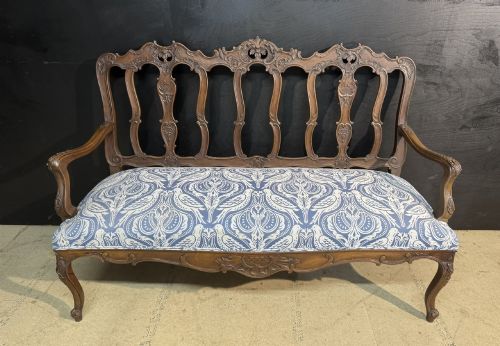
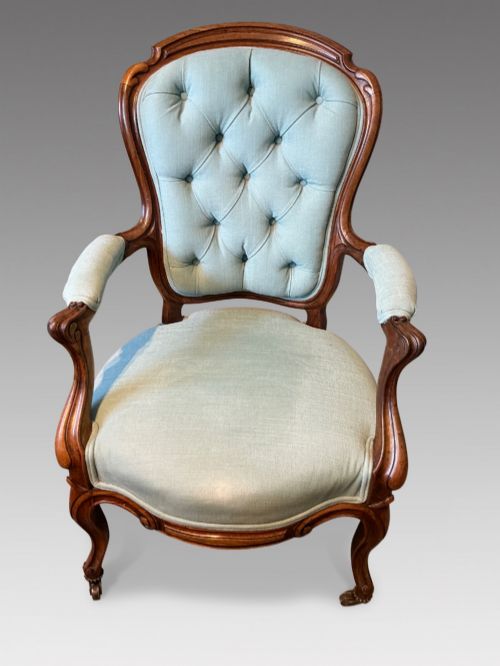
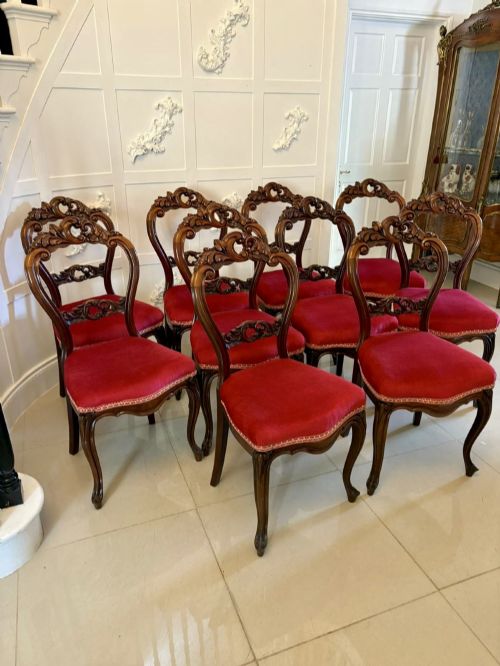
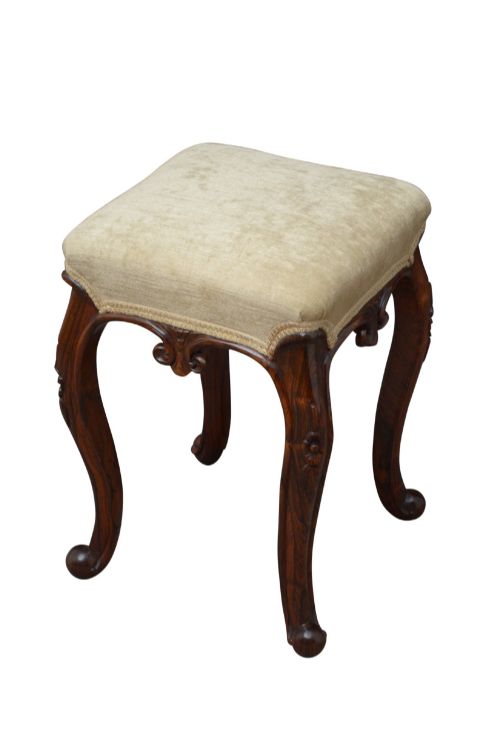
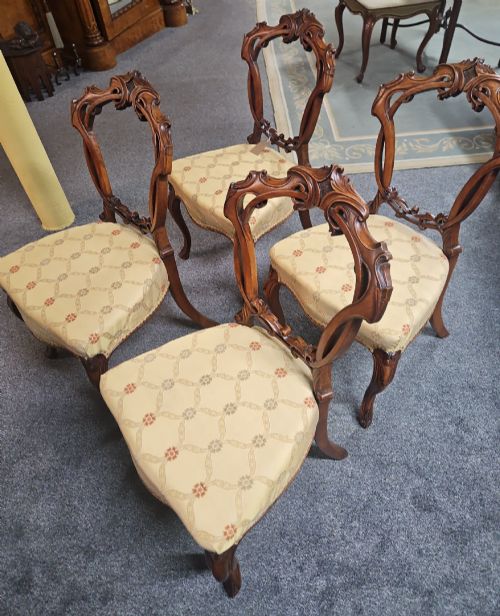
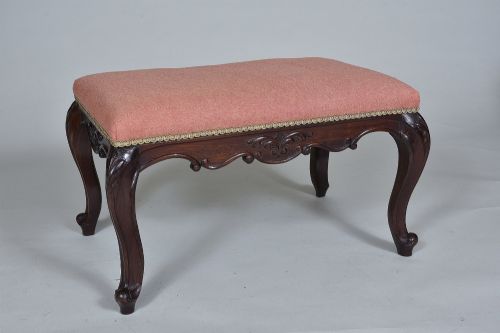
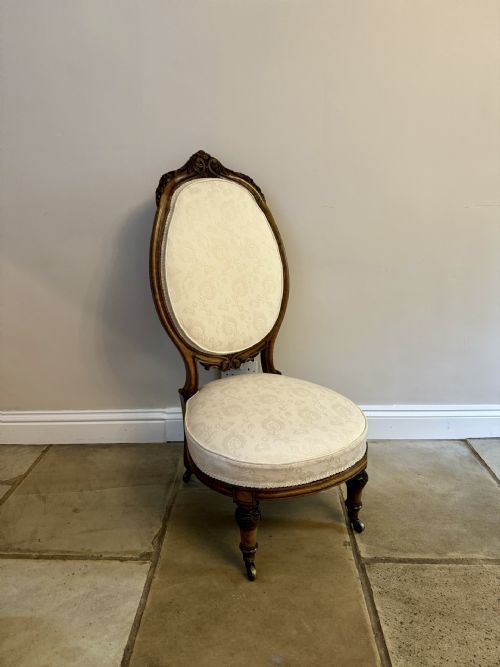
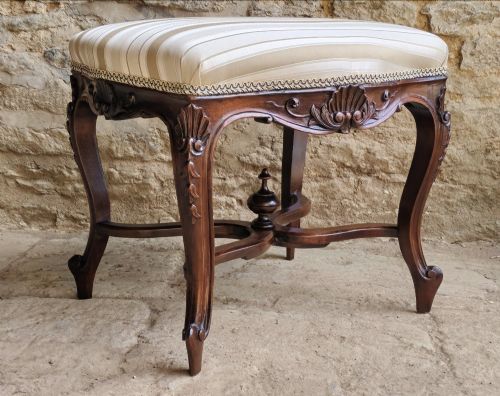
When you search for rococo revival seating, you encounter nineteenth-century pieces drawing heavily on eighteenth-century French Louis XV design. The forms on this page include armchairs, side chairs, dining chairs, stools, sofas, settees and complete salon suites.
Victorian walnut and rosewood pieces dominate the selection, often featuring cabriole legs and elaborate carved woodwork. You also find mahogany items, French giltwood open armchairs and occasional pieces dated from the mid-nineteenth century onwards.
The category spans intimate nursing chairs and spoon-back chairs alongside larger multi-piece salon suites and couches. These furnishings combine ornamental scrolls with practical seating, reflecting the revival tastes of the nineteenth century.
Materials and construction
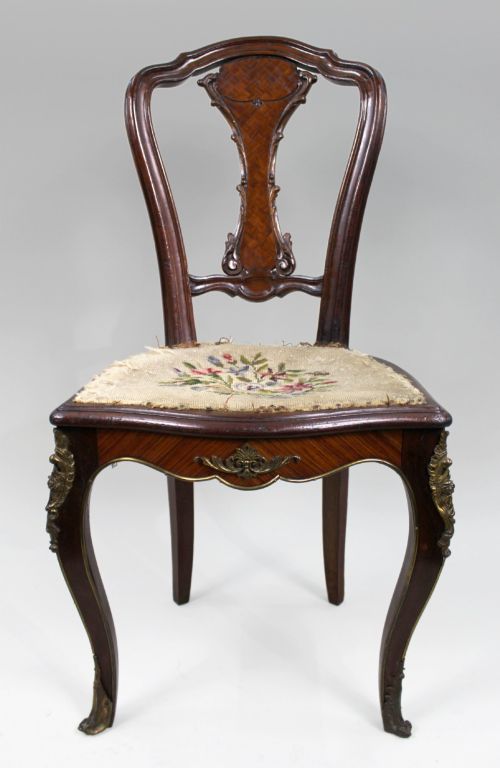
Cabinetmakers built these frames primarily in solid walnut, mahogany and rosewood, applying hand-carved floral and scroll motifs. Selected pieces incorporate giltwood finishes, kingwood parquetry and brass or ormolu mounts.
Upholstery forms an integral part of the construction, utilising traditional textiles such as velvet, needlework covers and contemporary replacement fabrics. Frames utilise sturdy joinery to support the characteristic serpentine rails and cabriole legs.
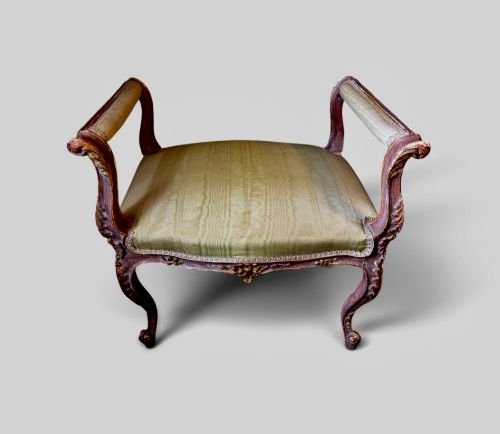
Object forms span dining chairs, salon suites, nursing chairs and window seats.
Assessing quality and craftsmanship
Quality reveals itself in the crispness and depth of the wood carving, particularly around the crest rails, knees and cabriole legs. Superior examples display fluent, hand-chiselled organic detail rather than shallow or mechanical shaping.
The integrity of the timber frame and the precision of the joinery dictate the structural success of each chair or sofa. Original mounts, undamaged parquetry and harmonious proportions separate standard production items from finer salon pieces.
The Rococo Revival Seating Glossary
- Cabriole leg
- A furniture leg that curves out and then narrows down in an S-shape, ending in a pad or scroll foot. This form derives from ancient Chinese bronze work and defines mid-nineteenth-century revival seating.
- Spoon-back
- An upholstered chair back shaped in a concave oval resembling the bowl of a spoon. This design supports the human spine closely and appears frequently on Victorian nursing chairs.
- Salon suite
- A matching set of upholstered seating comprising a settee and several armchairs or side chairs. These groupings furnished formal nineteenth-century reception rooms.
- Ormolu
- Gilt bronze mounts applied to furniture for decorative effect. French makers utilised this technique to accent fine wood surfaces.
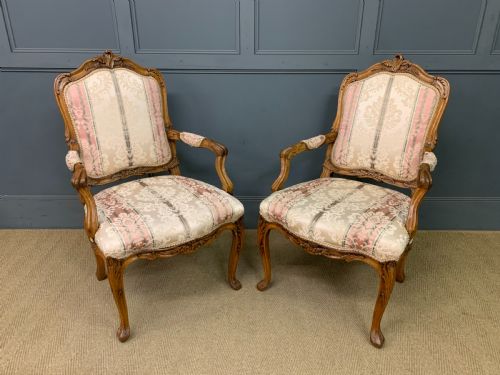
- Fauteuil
- An open-armed French armchair with upholstered armrests and a wooden frame. These chairs originated in the seventeenth century and returned to popularity during nineteenth-century revivals.
Rococo Revival Seating: Frequently Asked Questions
How do I clean the wood?
Dust the carved walnut or mahogany frames regularly with a dry, soft cloth to prevent particulate buildup. Apply a quality microcrystalline wax periodically to nourish the timber without damaging historic finishes.
Avoid liquid cleaners and silicone sprays, which penetrate open grain and soften old polishes. Gentle maintenance preserves the original lustre of the wood.
Are these seats comfortable?
Nineteenth-century seating offers robust support through traditional horsehair and spring stuffing methods. Many pieces feature deep padding designed for extended parlor use.
Upholstery comfort depends heavily on whether the internal webbing and springs have been restored. Contemporary fabric replacements often sit over traditional sprung foundations.
Where should I place a settee?
Position a walnut settee or chaise longue as a focal point in a living room or bedroom. The elaborate carved backs and exposed wood frames look best when viewed from multiple angles.
Keep upholstered pieces away from direct sunlight and heat sources to protect delicate velvet and textile covers from fading.
How do I identify a salon suite?
A salon suite consists of matching seating pieces, such as a settee paired with armchairs and side chairs, sharing identical wood types and carving details. These groups were manufactured together to furnish formal reception spaces.
Individual chairs within a suite often mirror the proportions and decorative motifs of the central sofa.