

Rococo Marble Commode
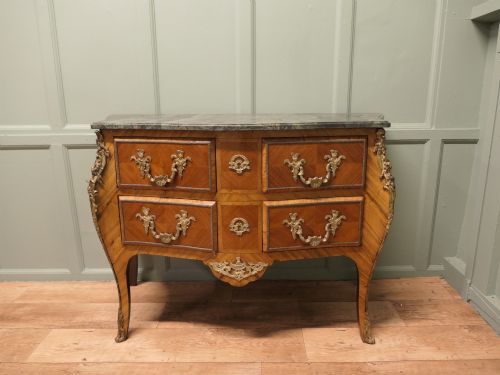
A rococo marble commode brings sculptural curves and substantial stone tops into a room, offering both display space and deep storage.
Rococo Marble Commode
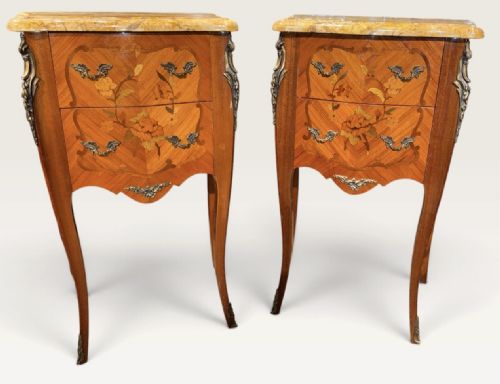
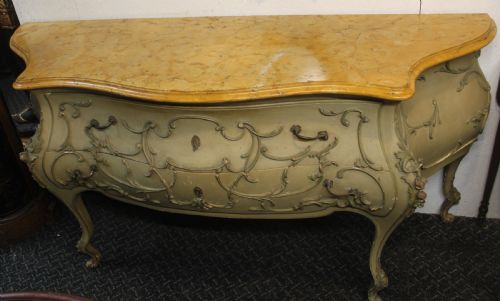
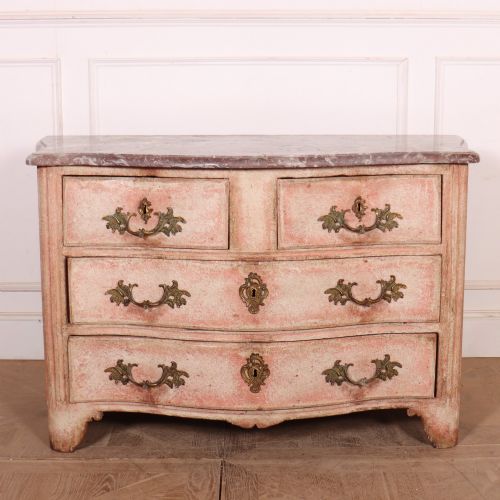
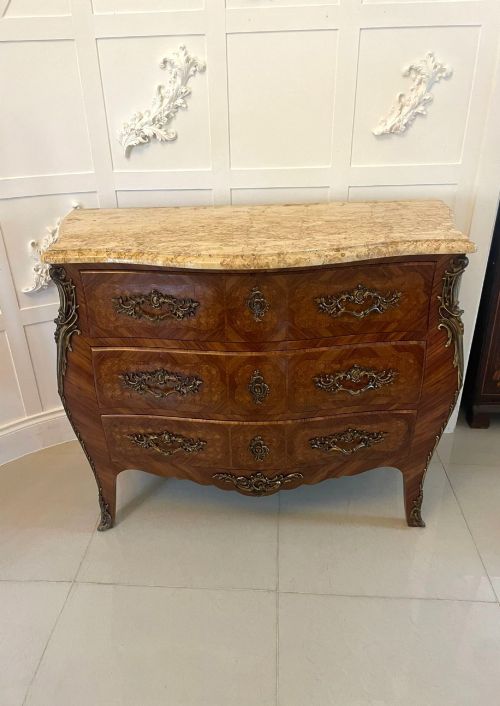
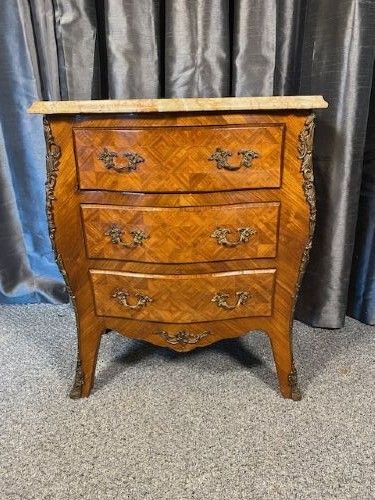
A rococo marble commode typically takes the form of a low chest of drawers or a serpentine cabinet designed for formal interiors. The pieces on this page span the eighteenth, nineteenth, and early twentieth centuries, capturing authentic period work alongside later revivals.
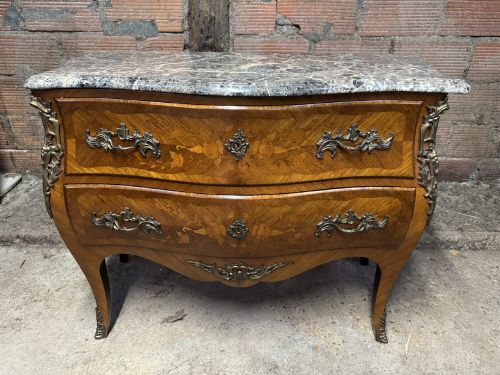
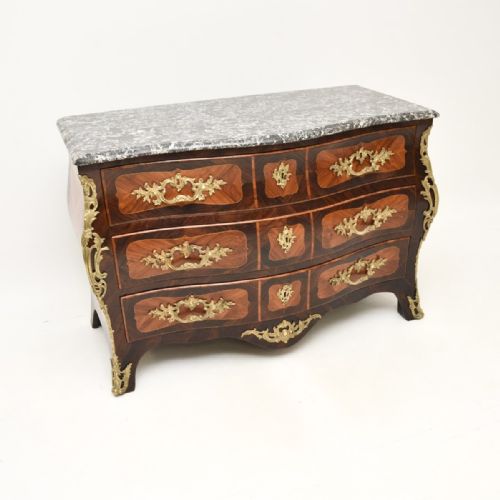
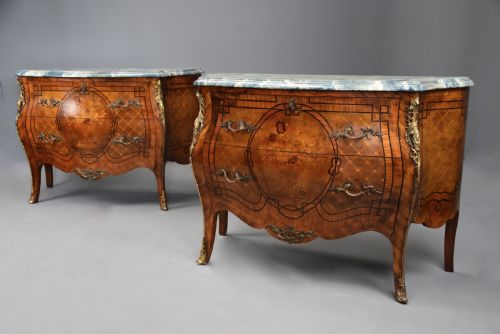
Makers utilised rich hardwoods such as kingwood and walnut, shaping carcasses into bombe or serpentine contours. These forms are frequently surmounted by fitted marble tops that follow the sweeping contours of the wood beneath.
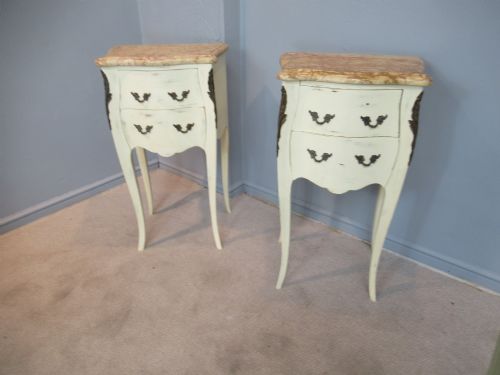
French origins dominate the selection, referencing Louis XV designs and subsequent nineteenth-century revivals. Alongside these, Italian examples appear, showing regional variations in painted finishes and stone choice.
Materials and Construction
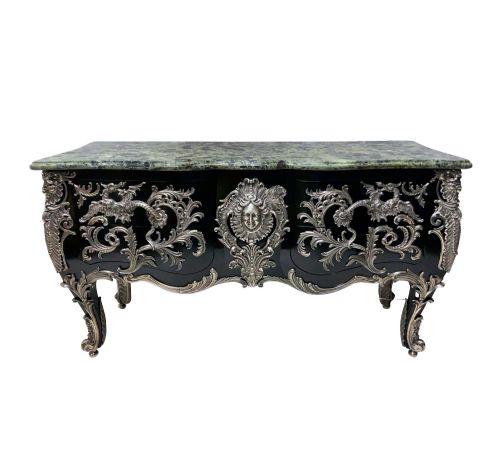
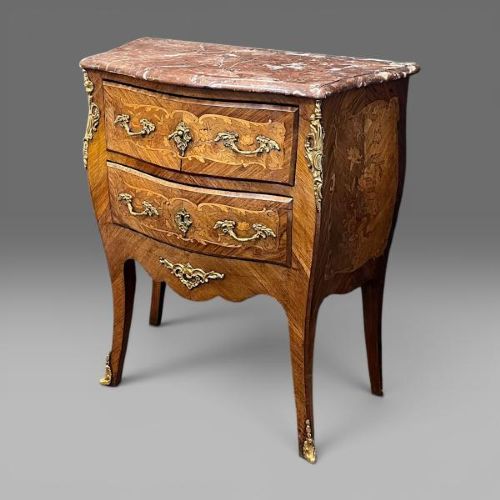
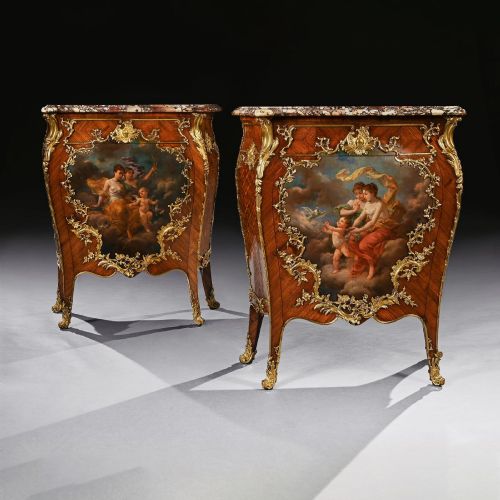
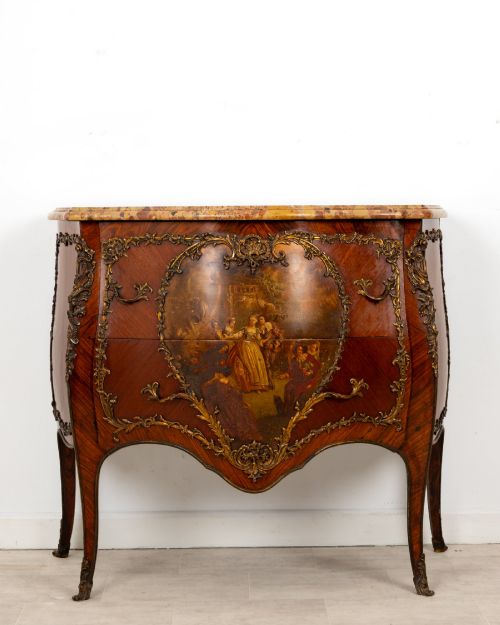
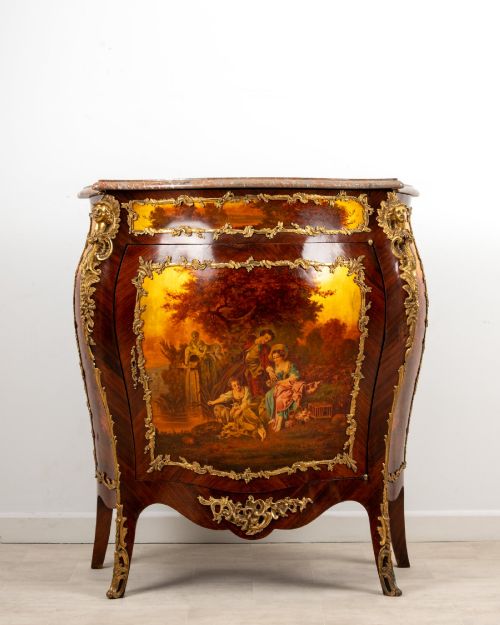
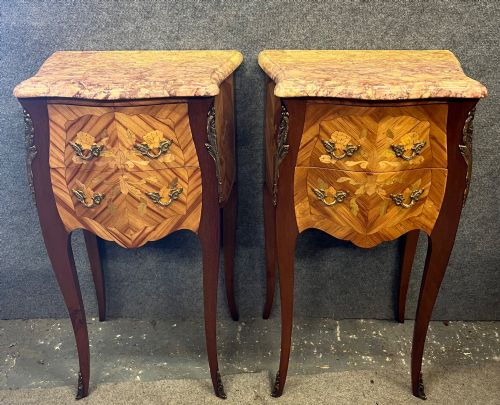
Carpenters constructed these carcasses from native and exotic timbers, applying veneers of kingwood, walnut, or mahogany in parquetry and marquetry patterns. Some variations employ painted wood, japanned lacquer, or Vernis Martin techniques to achieve pictorial surfaces.
Cast gilt bronze and ormolu mounts trace the asymmetrical scrolls typical of the style, protecting vulnerable corners and framing drawer fronts. Fitted marble slabs complete the structure, providing a heavy, veined surface tailored to each individual serpentine frame.
Rococo Marble Commode Retail Price Guide 2026
Typical asking prices for rococo marble commode among the pieces listed under this phrase on Sellingantiques today, from the lower quarter to the upper quarter. They describe what is for sale here now, not the wider market.
Several cabinets conceal their contents behind swelling bombe doors, hiding practical storage inside curving wooden bellies.
Assessing Craftsmanship
Quality rests in the fluidity of the carved carcass lines and the precision of the veneer matching across curved surfaces. Finer items display crisply chased ormolu mounts that integrate seamlessly with the timber contours rather than sitting rigidly apart.
The choice and thickness of the marble top also distinguish tiers of production, with heavier breccia and shaped slabs showing superior integration to the cabinet. Structural integrity in the dovetailed drawers and the retention of original mounting hardware dictate the standing of an individual piece.
Jacques Bircklé·E. Kahn
The Rococo Marble Commode Glossary
- Bombe
- A swollen, convex shape that curves outward on the front and sides of a cabinet. This bulging contour requires advanced veneer work to fit wooden grains smoothly over complex angles.
- Ormolu
- Gilded bronze cast and chased to adorn furniture mounts. It provides metallic highlight against dark hardwoods and painted surfaces.
- Vernis Martin
- A simulated Japanese lacquer developed in France using multiple coats of varnish. It creates translucent, polished painted scenes on cabinet doors and panels.
- Parquetry
- Geometric wood veneer patterns arranged in repetitive motifs such as cubes or chevrons. It demonstrates the precision of the cabinetmaker in cutting thin hardwood tiles.
- Breccia marble
- A multicoloured stone composed of angular fragments embedded in a contrasting matrix. Its varied natural patterns make each table slab distinct.
Rococo Marble Commode: Frequently Asked Questions
What rooms suit a rococo marble commode?
These pieces function well in reception rooms, bedrooms, or hallways as statement surfaces with practical storage. Their decorative presence anchors a room while providing a sturdy display area for lamps or objects.
The stone top handles everyday use reliably, though placing heavy items requires care to protect polished wooden edges and delicate ormolu mounts.
How do I distinguish 18th-century pieces from later revivals?
Eighteenth-century examples display hand-cut joinery, period-specific timber ageing, and mounts cast and chased by hand. Nineteenth and twentieth-century revivals often utilise machine-sawn timbers and mass-produced casting methods.
Examining drawer linings, interior secondary woods, and the wear patterns on the base provides clear clues to the exact age of construction.
How should I care for the marble top?
Marble requires gentle cleaning with warm water and neutral soap to preserve the polish without eroding the calcium content. Avoid acidic liquids or harsh chemical cleaners that can etch the stone surface permanently.
Using coasters and protective mats prevents staining from oils and moisture, keeping the natural veining clear and bright over decades of use.