
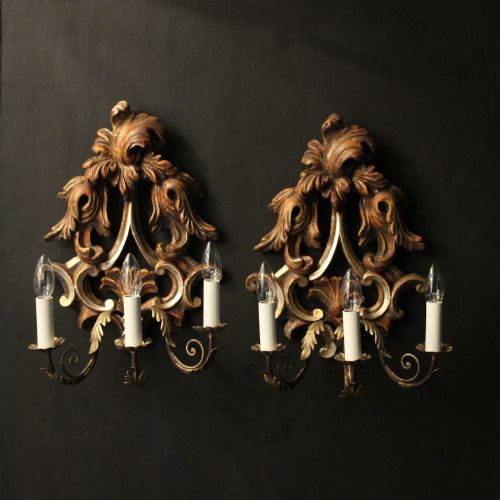


Rococo Giltwood Appliques
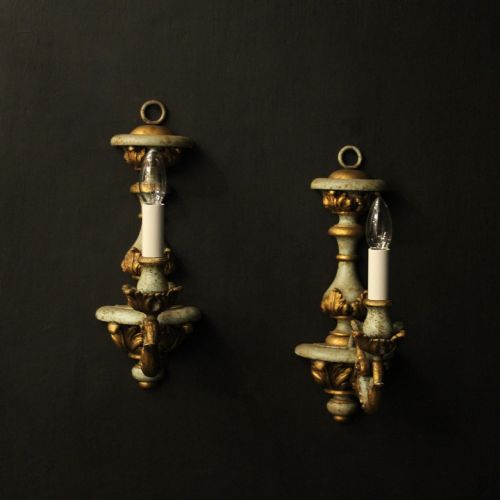
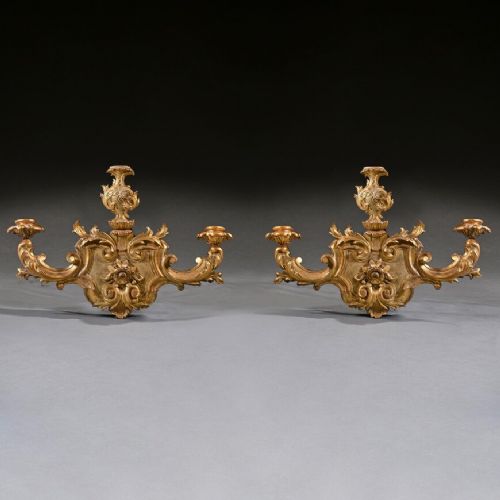
These rococo giltwood appliques bring ornamental carved lighting to a wall, offering rich surface texture and historical presence.
Rococo Giltwood Appliques
When you search for rococo giltwood appliques, you encounter carved wooden wall lights and sconces designed to illuminate interiors while adding decorative sculptural form. These pieces emerge from origins such as eighteenth-century Venice, nineteenth-century France, and twentieth-century Florentine workshops.
You are most likely to meet pairs of wall lights featuring single, twin, or triple arms for candles or bulbs. The forms encompass Venetian and Florentine rococo styles alongside Italian baroque and French chateau aesthetics.
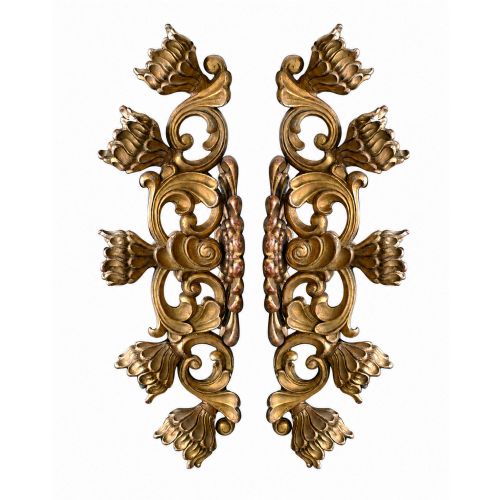
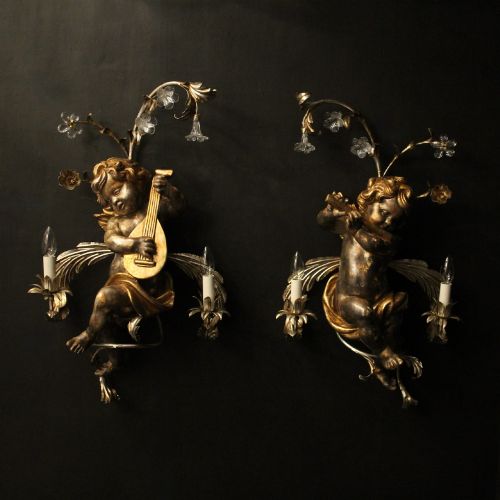
The selection includes architectural fragments and carved wooden sconces that demonstrate the enduring appeal of asymmetrical scrolls, foliage, and gilding. Each pair reflects regional interpretations of decorative lighting from various centuries.
How they were made
Carvers shaped the foundational wooden elements from pine and carved wood, creating the sweeping asymmetrical lines characteristic of the style. Artisans applied gesso to smooth the surface before adding layers of gold leaf or silver leaf.
Polychrome finishes occasionally appear alongside traditional gilding, introducing colour to the carved details of the wall lights. Metal components integrate with the wooden structures to form the candle arms and branches.
Listings span periods from the eighteenth century through to the 1930s, featuring materials such as carved wood, gesso, gold leaf, and silver leaf.
What varies in quality
Depth and crispness of the hand-carved detail separate ordinary examples from superior ones. The finesse in the execution of foliage, scrolls, and cherub motifs dictates the visual impact of the piece.
The application and preservation of the gold leaf or silver leaf determine the richness of the surface. Intact original gilding and careful conservation of the underlying gesso uphold the integrity of the antique.
The Rococo Giltwood Appliques Glossary
- Appliqué
- A decorative wall-mounted light fitting or architectural ornament applied to a surface. This term often describes antique wall sconces.
- Giltwood
- Wood that has been coated with gold leaf or metal leaf. This material provides the characteristic reflective surface on antique wall lights.
- Gesso
- A plaster mixture applied to wood as a base for gilding. It allows carvers to achieve sharp details before applying gold leaf.
- Rococo
- An ornate design style marked by asymmetry, scrolls, and shell motifs. It dominates the appearance of these eighteenth-century and revival pieces.
- Sconces
- Wall-mounted light fixtures designed to hold candles or electric lamps. They frequently feature multiple arms branching from a carved backplate.
Rococo Giltwood Appliques: Frequently Asked Questions
How were rococo giltwood appliques used?
These wall lights were positioned on drawing room and salon walls to provide ambient illumination by candlelight. Their reflective gilt surfaces helped bounce and amplify the flickering light across the room.
They functioned as permanent decorative fixtures that complemented matching chandeliers and mirrors. Today they serve a similar purpose, adding historical character and subdued lighting to a hallway or reception room.
How do I install antique wall lights?
Most antique wall sconces require mounting securely to wall studs or reinforced plaster due to the weight of the carved wood. Professional installation ensures the fixture hangs safely without damaging the historic backplate.
Wiring must be adapted to meet modern safety standards while preserving the original arm structures. A qualified electrician can integrate these pieces into your existing household lighting circuit.
How do I date these appliques?
Dating relies on examining the carving style, the preparation layers under the gold leaf, and the construction of the wooden backplate. Eighteenth-century pieces exhibit hand-carved nuances distinct from later nineteenth-century and twentieth-century revivals.
Material analysis of the pine, gesso, and metal components also helps establish the period of manufacture. Stylistic shifts between Venetian rococo and Florentine revival provide further clues to the age of the fixture.
How do I care for giltwood?
Giltwood requires gentle dusting with a soft, dry brush to prevent the accumulation of dirt on the delicate carved surfaces. Moisture and abrasive cleaning products must be avoided to protect the fragile gold leaf and gesso layers.
Keeping the fixtures away from direct heat sources and strong sunlight prevents the wood from drying and cracking over time. Careful handling preserves the original finish for future generations.