
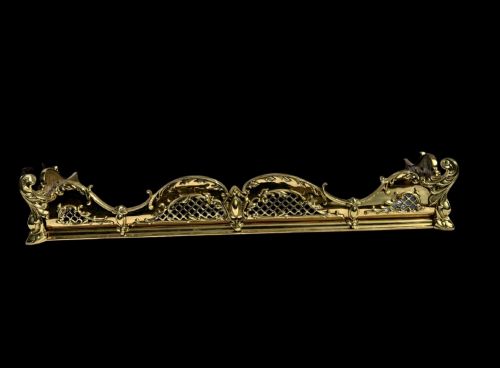


Rococo Fire Guard
A rococo fire guard is a decorative metal hearth screen designed to deflect sparks, bringing ornate French curves and scrolling brasswork into the room.
Rococo Fire Guard
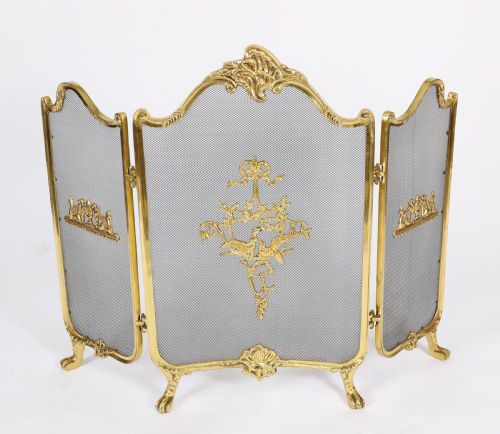
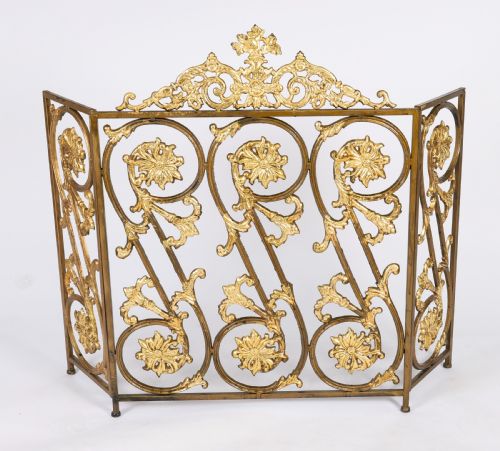
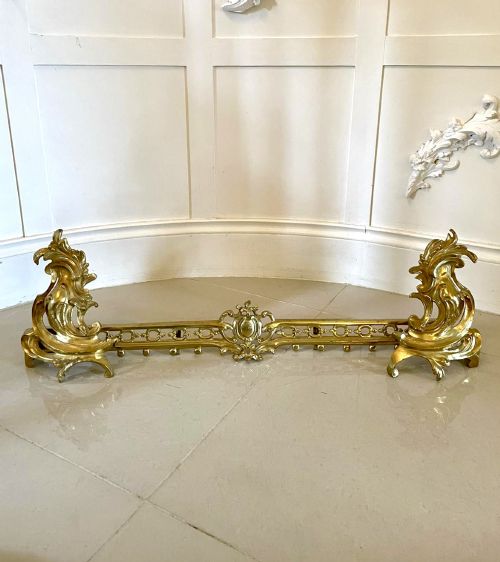
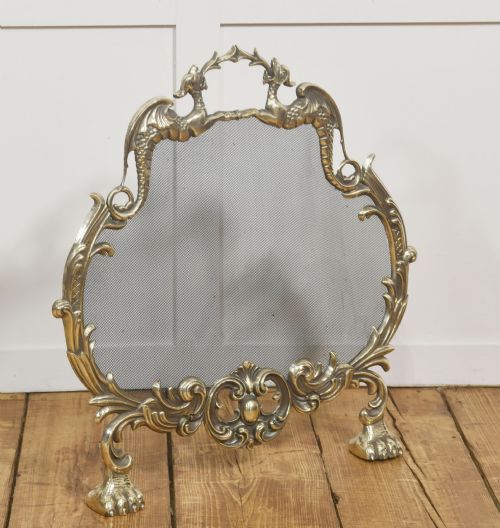
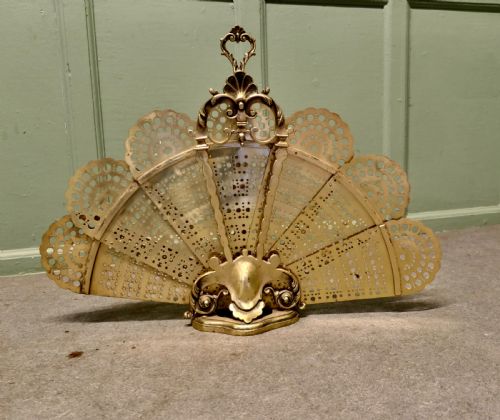
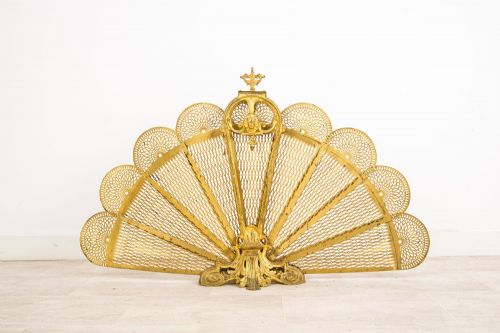
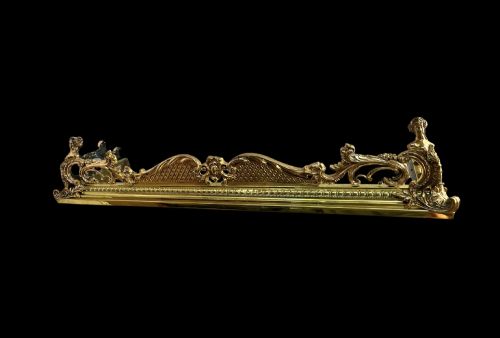
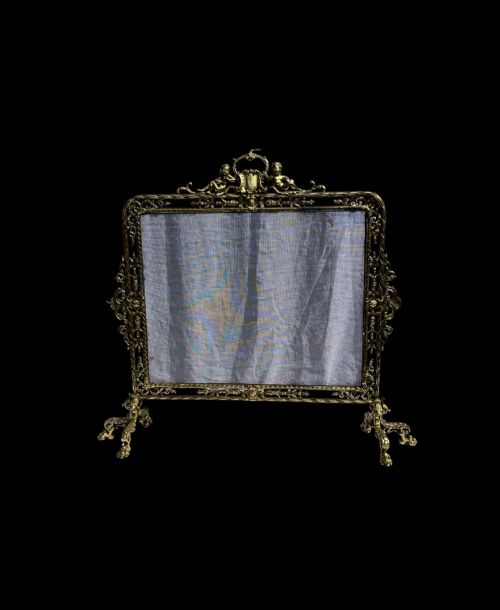
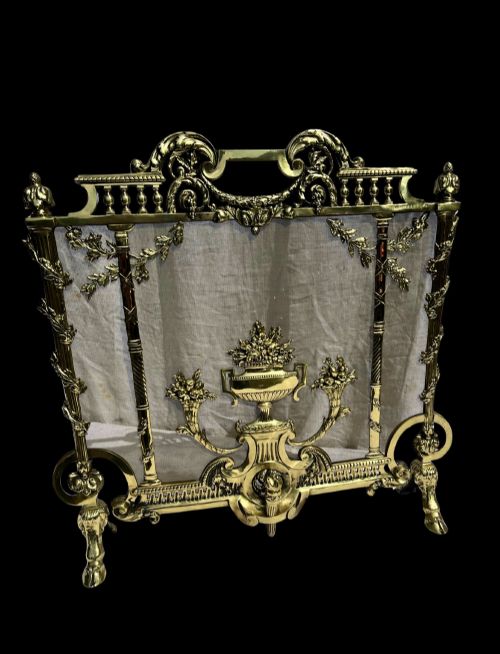
When you search for a rococo fire guard, you are looking at hearth protection that draws directly on nineteenth-century revival styles. The pieces on this page span from the nineteenth century into the early twentieth century, taking the form of folding spark screens, rigid panels, and extendable fenders.
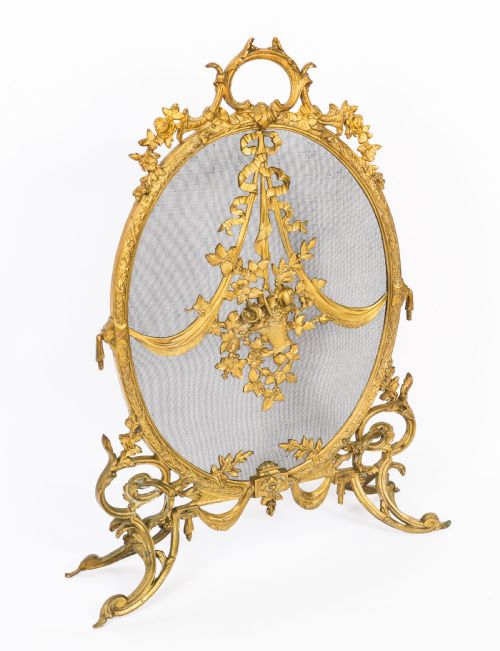
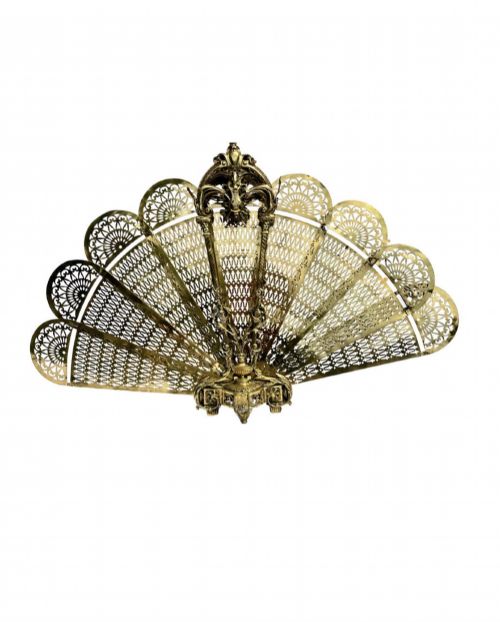
The dominant forms are French in origin, often described through Louis styles and executed in heavy cast brass, gilt bronze, or ormolu. You will encounter folding peacock fan screens alongside static mesh guards designed to shield the room from open hearths while displaying elaborate asymmetrical scrollwork.
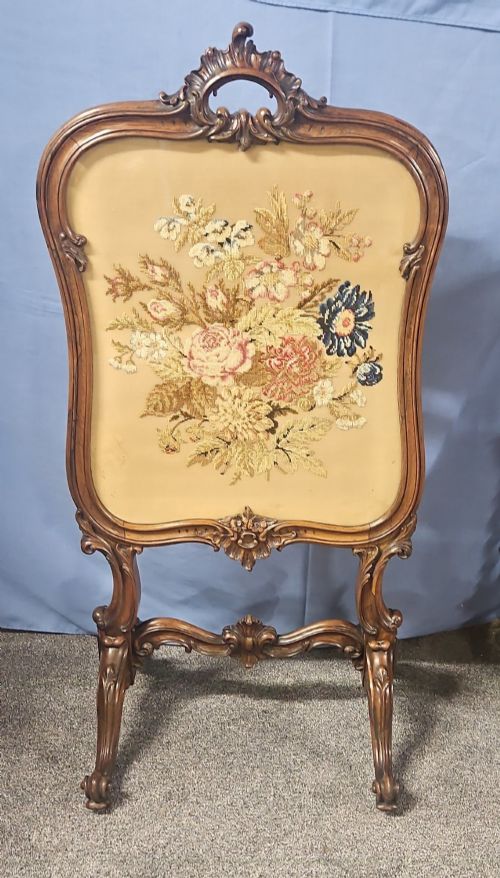
Alongside metal spark guards, the evidence includes wooden frames in walnut and oak holding hand-woven wool tapestry panels and needlepoint scenes. These provide a solid frame variation to the open brasswork, though metal remains the standard for functional spark containment.
How they were made
Makers utilised cast brass, gilt bronze, and ormolu to achieve the characteristic high-relief scrolling and pierced ornamentation of the style. Metal components were cast, chased, and gilded, then combined with fine wire mesh or steel frames to handle the heat of the hearth.
Wooden frames rely on carved walnut and oak, housing fitted wool tapestry and needlepoint panels that required careful hand weaving. Metal folding screens employed articulated joints and pressed metal elements to allow the fan or panel sections to expand smoothly.
Periods represented span from the nineteenth century, including specific years like 1800, 1860, 1870, 1880, 1900, and 1910, alongside the Victorian era.
What varies in quality
The distinction between standard production and the top of the range rests on the crispness of the casting and the depth of the chasing in the bronze or brass. Superior examples exhibit finely detailed asymmetrical foliage and crisp, hand-finished pierced work rather than soft, mass-produced edges.
Materials also dictate the tier, with fire guards mounted in heavy gilt bronze or ormolu standing apart from lighter pressed metal alternatives. The integrity of the folding mechanisms and the tightness of the wire mesh or the hand-woven quality of the tapestry panel complete the division.
The Rococo Fire Guard Glossary
- Ormolu
- Gilded bronze, where a gold-mercury amalgam is applied to a bronze base. This technique creates a rich, durable surface finish found on high-end French guards.
- Chenets
- Andirons or firedogs placed at the front of the hearth. They often accompany fenders and fire screens in matching rococo brass or bronze.
- Needlepoint
- Embroidery stitched on a canvas mesh backing. These hand-worked wool panels form the decorative insert within wooden screen frames.
- Spark Screen
- A fine wire mesh barrier designed to catch embers from an open fire. Many rococo brass guards double as functional spark screens.
- Fender
- A low metal guard placed around the hearth perimeter. Extending versions adjust to fit different fireplace widths.
Rococo Fire Guard: Frequently Asked Questions
Are these guards suitable for an active open fire?
Many examples incorporate fine wire mesh or sturdy metal panels specifically designed to act as functional spark screens. They stand independently before the hearth to catch debris.
Heavier gilt bronze and decorative fender combinations require checking the mesh condition to ensure safe daily usage with an open fire.
How do I tell a nineteenth-century piece from a later one?
Nineteenth-century examples frequently show heavier cast brass, hand-chased surface details, and traditional joinery in the associated frames. Walnut and oak wooden frames from this era exhibit period-specific hand carving and traditional tapestry panels.
Later twentieth-century reproductions often feature lighter pressed metal components and less defined casting crispness in the scrollwork.
What is the difference between a fire screen and a fender?
A fire screen stands upright to block radiant heat and sparks from the room, often featuring folding panels or a central tapestry. A fender sits flat on the hearth floor around the perimeter of the fireplace.
Some configurations combine adjustable metal fenders with integrated screens or matching chenets to form a complete hearth surround.