





Rococo Display Shelf
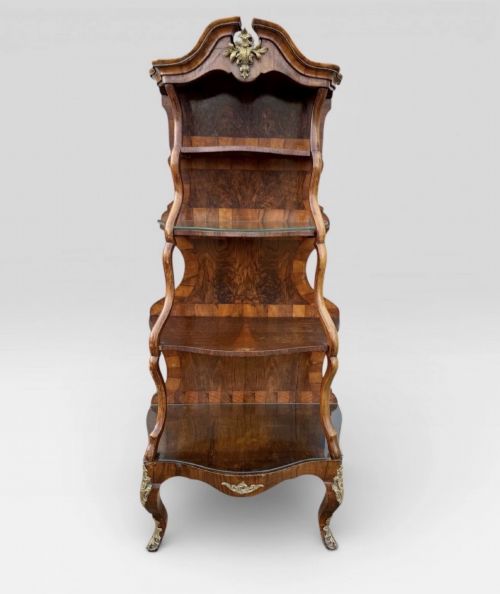
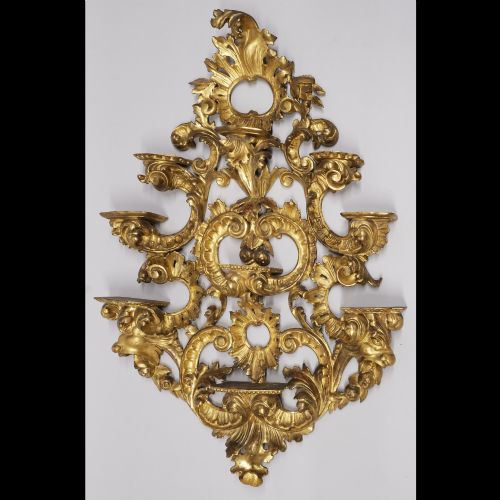
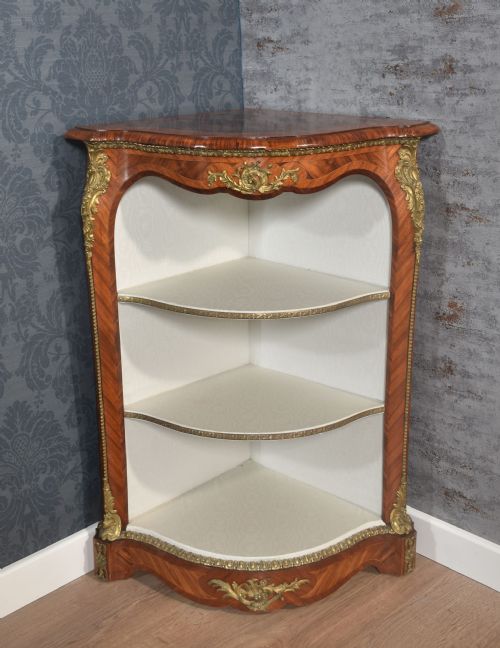
These rococo display shelf examples bring curved frames, carved giltwood and serpentine walnut into your rooms to hold your small treasures.
Rococo Display Shelf
When you search for a rococo display shelf, you are looking at ornate wall brackets, corner cabinets, etageres, and bookcases designed to showcase decorative objects. These pieces bring the curved, decorative lines of the eighteenth century and its later revivals into domestic spaces.
You are most likely to meet nineteenth-century interpretations on this page, alongside Georgian and Victorian examples. The forms range from small wall-hung corbels and giltwood shelves to floor-standing walnut etageres and large corner cupboards.
Makers and craftsmen drew on French Rococo and Victorian Rococo Revival styles to shape wood into serpentine profiles. These pieces serve both a practical storage function and a purely ornamental role on a wall or in a corner.
Materials and construction
Makers utilised solid timbers such as mahogany and walnut for the primary structure of these shelves and cabinets. They frequently applied carved gesso, gold leaf, and giltwood to create the rich, reflective surfaces characteristic of the style.
Metal mounts in ormolu and gilt metal often accent the corners and edges of the woodwork. Glass panels appear in the doors of display cases, while painted and parcel gilt finishes adorn eighteenth-century corner cupboards.
Rococo Display Shelf Retail Price Guide 2026
Typical asking prices for rococo display shelf among the pieces listed under this phrase on Sellingantiques today, from the lower quarter to the upper quarter. They describe what is for sale here now, not the wider market.
Porcelain cherubs often peer out from the corners of these wall brackets, watching over the room from their gilded perches.
Judging quality
The standard of carving sets the better pieces apart from standard workshop output. Crisp depth in the gesso and giltwood indicates skilled hand-working rather than a hurried application.
The choice of timber and the integration of ormolu mounts dictate the finish of the piece. Well-matched walnut veneers and solid mahogany structures hold their shape and decorative impact far better over time.
The Rococo Display Shelf Glossary
- Giltwood
- Wood that has been coated with gold leaf. This finish provides a bright, reflective surface that catches light in a room.
- Ormolu
- Cast bronze that has been gilded with gold leaf or mercury. It adds metallic detail to corners and mounts.
- Etagere
- A piece of furniture with a set of open shelves for displaying small objects. It often stands freely in a room.
- Gesso
- A plaster mix applied to wood as a base for gilding and carving. It allows for intricate relief details.
- Serpentine
- A curved line that undulates inwards and outwards. This shape defines the fronts of many cabinets and shelves.
Rococo Display Shelf: Frequently Asked Questions
What is a rococo display shelf?
A rococo display shelf is an ornate piece of furniture designed to hold and exhibit decorative objects. These items use curved lines, carved wood, and gilt finishes to draw the eye.
They appear in various forms, from small wall brackets to large corner cupboards and etageres.
How do I use a wall bracket?
Wall brackets mount directly onto a wall to support small ornaments, porcelain figures, or clocks. They lift display items off the floor and onto vertical surfaces.
Position them at eye level to make the most of their carved details and the objects placed upon them.
What is a whatnot?
A whatnot is an open piece of tiered shelving used for storing and displaying ornaments. They became popular in the nineteenth century for domestic display.
They sit against a wall or in a corner, offering multiple levels for books, ceramics, and curiosities.
How do I date these shelves?
Dating relies on examining the timber, construction methods, and decorative styles used by the maker. Eighteenth-century pieces show different timber preparation and paint applications compared to Victorian revivals.
Reference points include Georgian construction traits, nineteenth-century revival motifs, and specific material combinations like walnut and ormolu.