

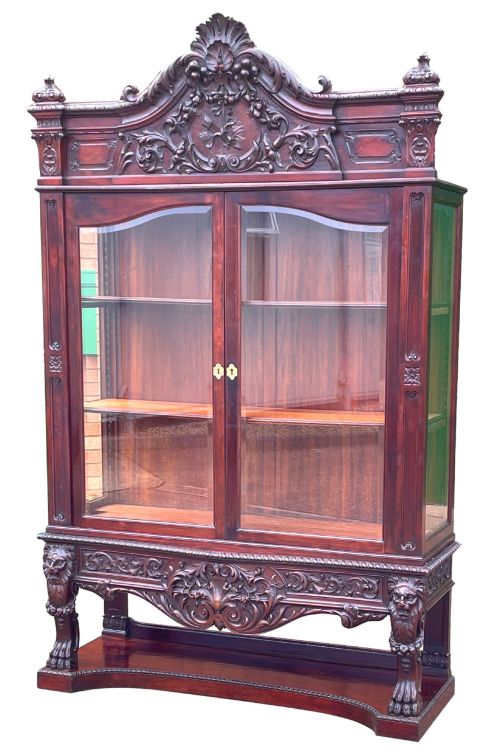
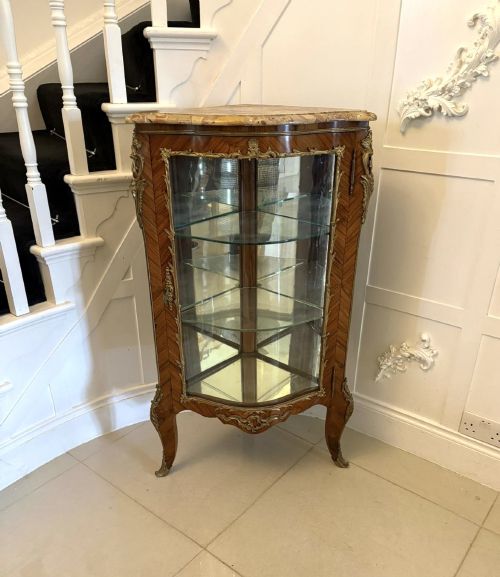
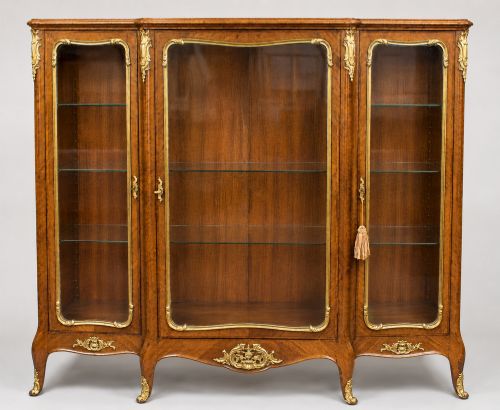
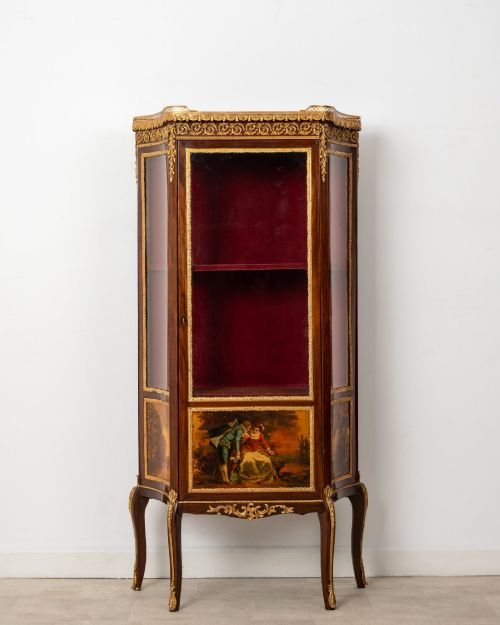



Rococo Display Case
A rococo display case brings theatrical curves and polished timber together to show off porcelain, silver and small treasures in a room.
Rococo Display Case
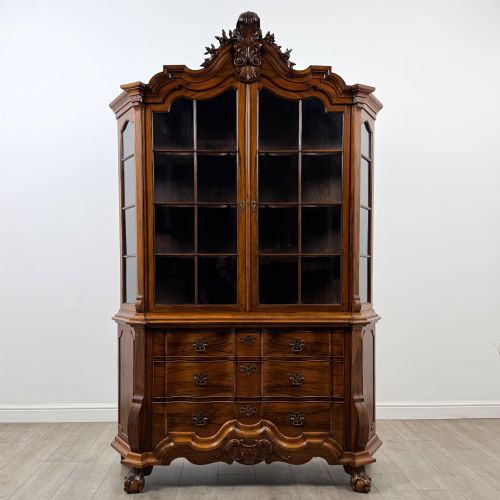
A rococo display case encompasses glazed cabinets, vitrines and serpentine counters designed to exhibit cherished possessions. Most examples met on this page date from the nineteenth century, channeling earlier French and Dutch aesthetics through revival periods.
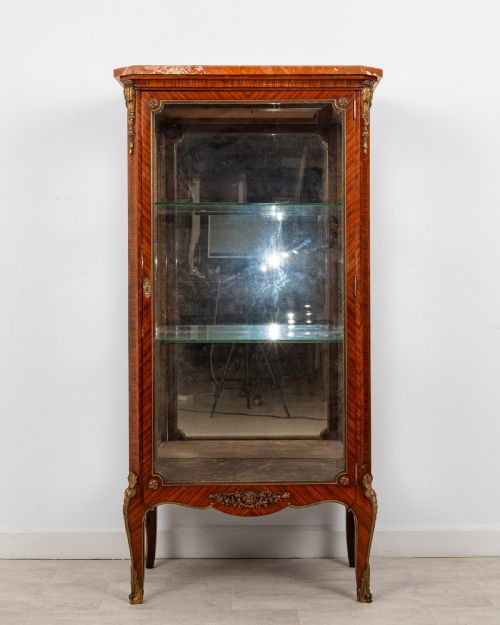
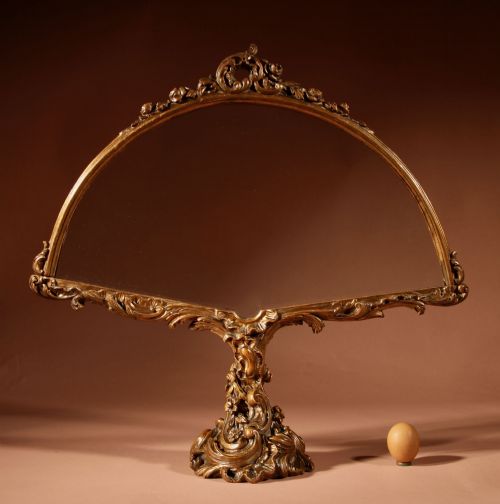
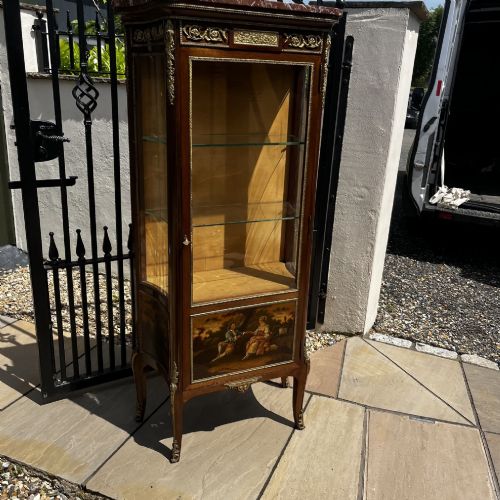
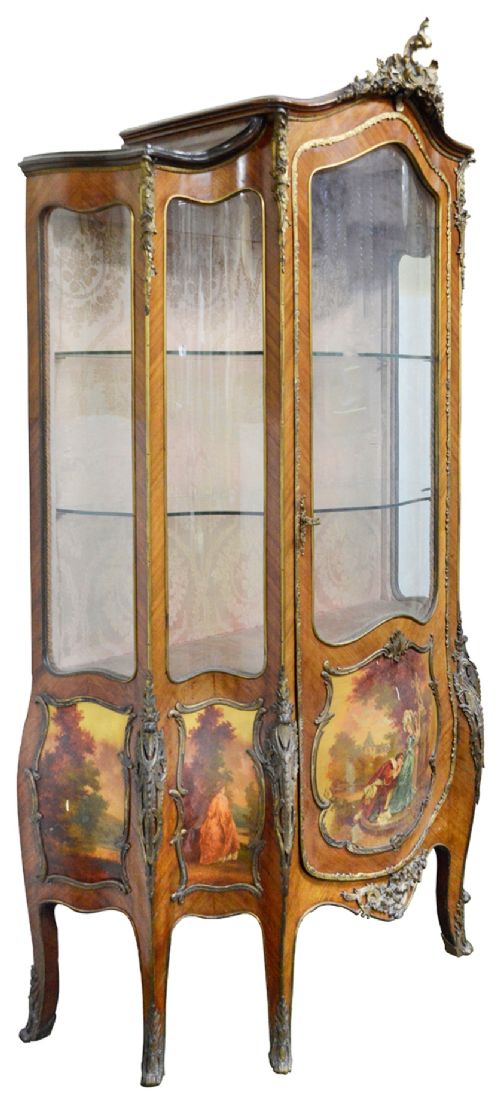
Forms range from tall freestanding cabinets and corner vitrines to low bijouterie tables and fan display stands. Cabinets often feature glass panels on the sides as well as the front, allowing light to fall across the interior shelves.
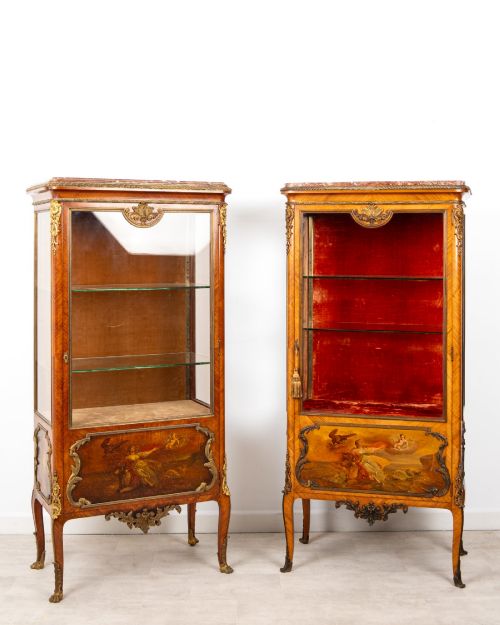
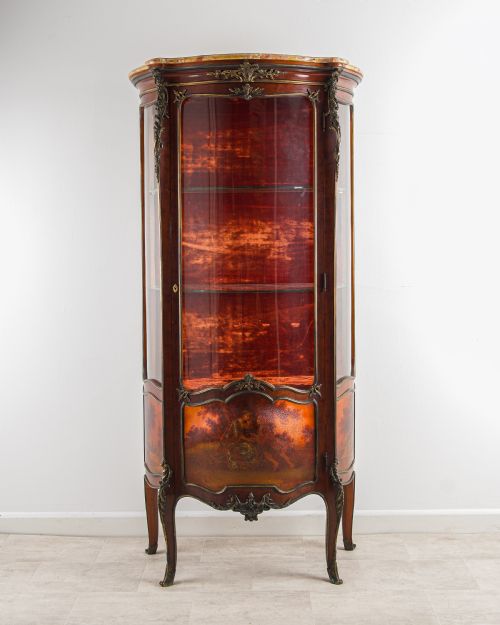
Makers drew heavily on eighteenth-century design vocabulary, producing bombe bases, serpentine fronts and glass doors flanked by shaped mounts. These pieces served as the social focal point of a nineteenth-century drawing room or parlour.
What varies in quality
The refinement of the ormolu chasing and the crispness of the gilt bronze mounts separate ambitious workshop productions from standard commercial stock. Hand-chiselled detailing on metalwork indicates a higher grade of craftsmanship.
Veneer selection and joinery execution dictate longevity and visual depth, particularly on curved bombe surfaces where grain alignment requires specialist skill. Vernis Martin panel execution ranges from mechanical reproduction to meticulous hand-painted pastoral scenes.
Rococo Display Case Retail Price Guide 2026
Typical asking prices for rococo display case among the pieces listed under this phrase on Sellingantiques today, from the lower quarter to the upper quarter. They describe what is for sale here now, not the wider market.
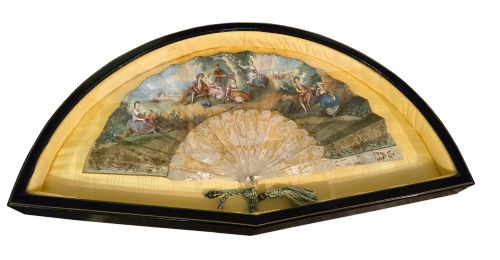
Folding fans required dedicated display furniture, proving that past generations took accessorising their walls and tables very seriously indeed.
François Linke·Gouffel
The Rococo Display Case Glossary
- Ormolu
- Gilded bronze used for decorative mounts and feet. This technique involved applying a mercury and gold amalgam to bronze before firing.
- Vernis Martin
- Simulated lacquer work developed in eighteenth-century France. Cabinetmakers applied multiple layers of varnish to create glossy painted panels.
- Bombe
- A swelling, outward-curving shape found on the front and sides of furniture bases. This contour requires advanced woodworking skill to veneer successfully.
- Parquetry
- Geometric wood inlay patterns arranged on a surface. Pieces utilise contrasting timber grains to create visual rhythm.
- Vitrine
- A glass-fronted cabinet designed for displaying porcelain and curiosities. Glazed sides allow maximum light penetration.
Rococo Display Case: Frequently Asked Questions
What fits inside a display case?
Owners traditionally placed porcelain collections, silver miniatures, fans and delicate glassware inside these cabinets to protect them from dust while keeping them visible to guests.
The glass panels and mirrored backs of nineteenth-century vitrines were specifically engineered to bounce light across small, prized objects from every angle.
How do I clean marble tops?
Marble surfaces require simple dusting with a soft cloth and occasional wiping with a damp sponge. Avoid acidic cleaners or household detergents that etch polished stone.
Waxing is rarely necessary on sealed antique marble, but gentle buffing helps maintain the natural sheen acquired over centuries of use.
Where should I place a vitrine?
Position these cabinets away from direct sunlight to protect timber veneers from fading and to prevent interior temperature fluctuations that could stress antique glass.
Drawing rooms, studies and formal dining spaces suit the decorative weight of ormolu-mounted cabinetry, provided the floor is level enough to keep doors aligned.
How do I identify revival styles?
Nineteenth-century revival pieces combine eighteenth-century serpentine silhouettes with industrial-era machine sawing and mechanical veneer slicing. Look for nineteenth-century secondary timbers behind the mahogany or kingwood facades.
Ormolu casting quality and interior construction methods usually point to Victorian or Edwardian workshops rather than original eighteenth-century Parisian ateliers.