
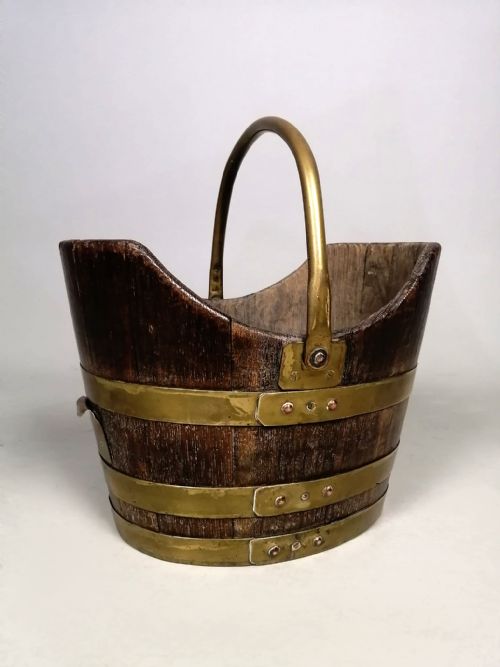
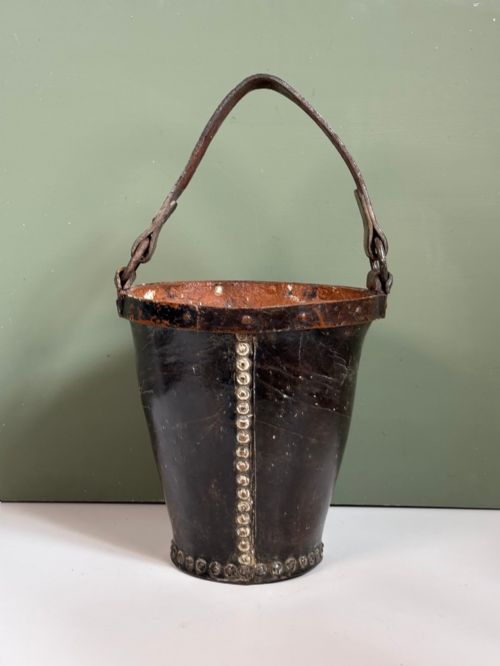
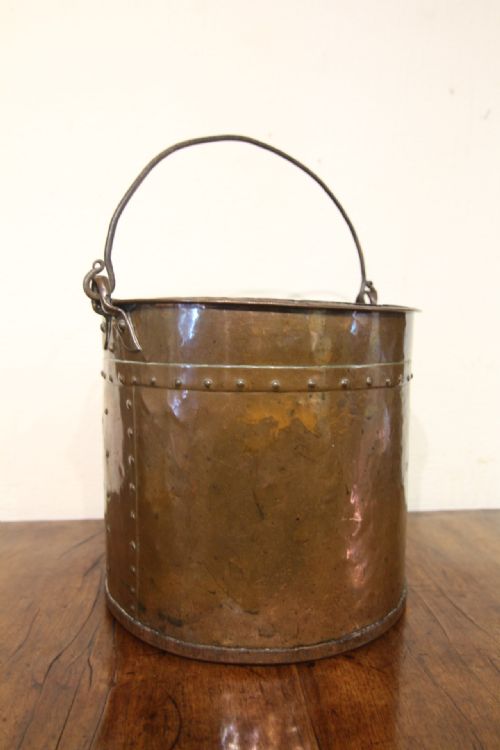


Riveted Copper Holder
A riveted copper holder brings heavy hand-beaten character to a hearth, combining robust utility with warm metallic tone.
Riveted Copper Holder
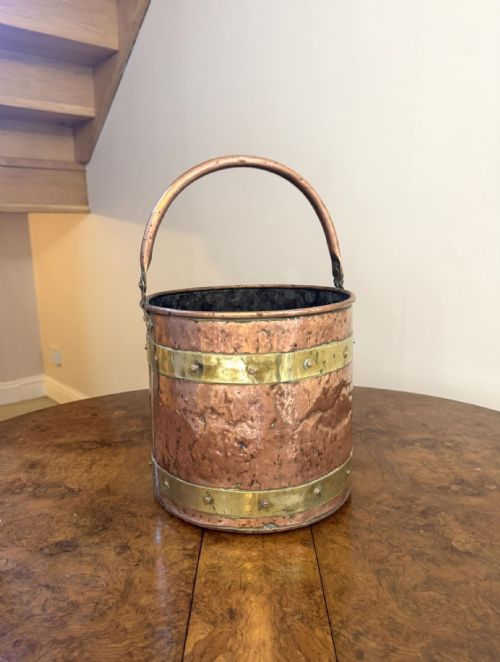
A riveted copper holder serves primarily as a utilitarian vessel for fuel, functioning as a log bin, coal bucket, or coal hod near a fireplace. These domestic items appear across the nineteenth century, including Victorian and Georgian examples alongside Arts and Crafts designs.
The form frequently extends beyond fuel storage to include stick stands, umbrella stands, jardinières, and grain measures. Buyers on this page will most commonly encounter copper buckets and bins secured with visible metal fixings.
Originating largely from British and French domestic contexts, these heavy metal containers bridge the gap between practical farmhouse utility and decorative fireside furnishing.
How they were made
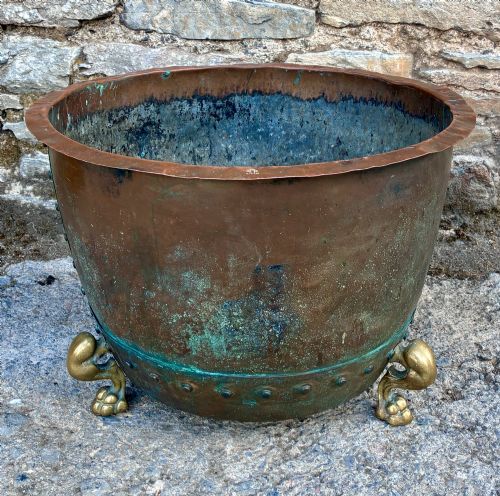
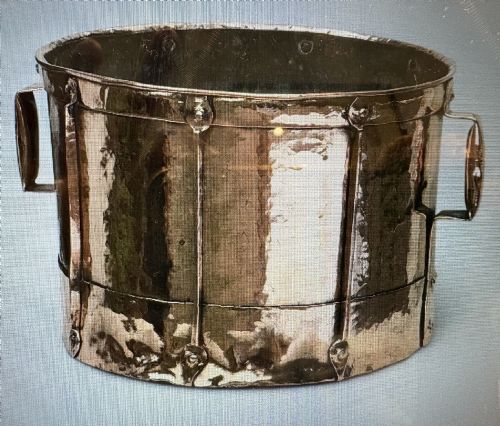
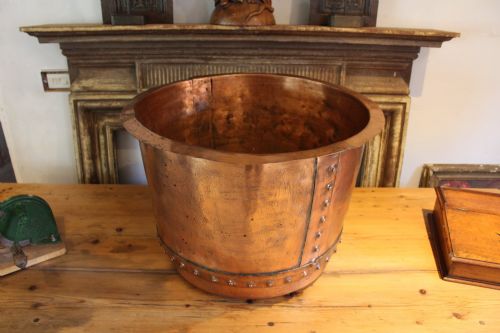
Construction relies on heavy sheet copper joined with visible rivets, often reinforced by wrought iron bands or brass fittings for structural rigidity. Handles commonly incorporate wrought iron or brass attachments secured firmly to the main body.
Materials span copper, brass, iron, and occasional additions of oak or boiled leather, reflecting durable construction methods intended for daily household service. Surface patination develops naturally from the interaction of hammered metal and time.
Listings span the eighteenth, nineteenth, and early twentieth centuries, incorporating oak, boiled leather, and wrought iron alongside copper.
What varies in quality
Quality rests upon the weight of the metal gauge, the regularity of the riveting, and the integrity of any iron or brass banding. Heavier copper bodies with substantial wrought iron handles indicate superior domestic grade manufacture.
Proportion and surface finish distinguish standard utilitarian vessels from refined Arts and Crafts or Georgian pieces. The presence of original patination without excessive modern intervention preserves the visual authority of the metal.
The Riveted Copper Holder Glossary
- Riveted
- Joined with metal pins hammered flat at the ends. This technique provides both structural strength and distinct industrial decoration.
- Log bin
- A large floor-standing container designed to hold firewood by a hearth. These vessels often feature reinforced iron rims.
- Jardiniere
- An ornamental pot or stand for holding plants or flowers. In metalwork, these items share construction methods with coal buckets.
- Ferrat
- A traditional French measure typically rendered in copper. These cylindrical containers find secondary life as fireside bins.
- Coal hod
- A specialised bucket featuring a tilted opening and handle placement for pouring fuel. They are standard components of Victorian fireplace equipment.
Riveted Copper Holder: Frequently Asked Questions
How do I clean a copper holder?
Wash the surface gently with warm soapy water and a soft cloth to remove dust and soot. Avoid harsh chemical polishes that strip away historical patination.
Allow the metal to dry completely to prevent spotting. Maintaining the dull glow preserves the character accumulated over decades of use.
Can I use these for logs indoors?
These vessels were built specifically to hold solid fuel and firewood near a hearth. Their robust metal construction handles the weight and rough texture of logs without difficulty.
Place a protective mat underneath if the base shows wear or moisture. They function equally well holding umbrellas in an entryway.
How do I date a copper bucket?
Examine the construction methods, including the style of the rivets and the composition of the handles. Hand-beaten seams and wrought iron fittings typically point towards earlier Georgian and Victorian origins.
Compare the form against documented Arts and Crafts or nineteenth-century manufacturing traits. Subtle shifts in rim design and metal thickness help narrow the decade.
Are iron bands original to the piece?
Wrought iron and brass bands were commonly integrated into the original construction to reinforce heavy copper bodies. They provide necessary structural support for carrying dense loads of coal or wood.
Inspect the fixings where the band meets the copper body to check for period-appropriate attachment methods. Original bands show consistent wear matching the rest of the vessel.