


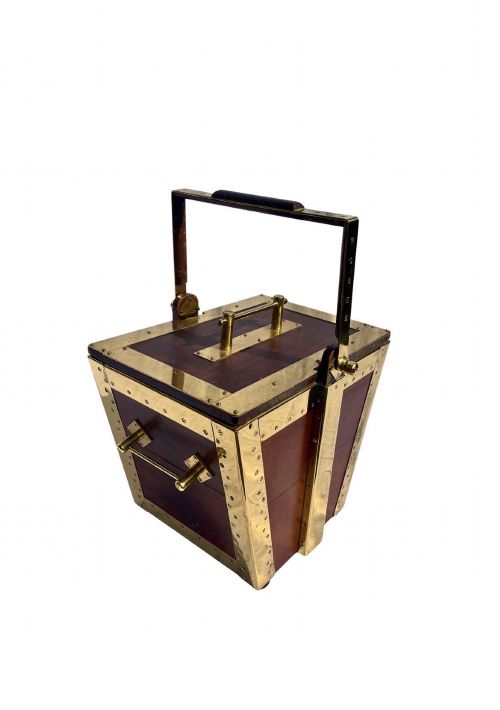
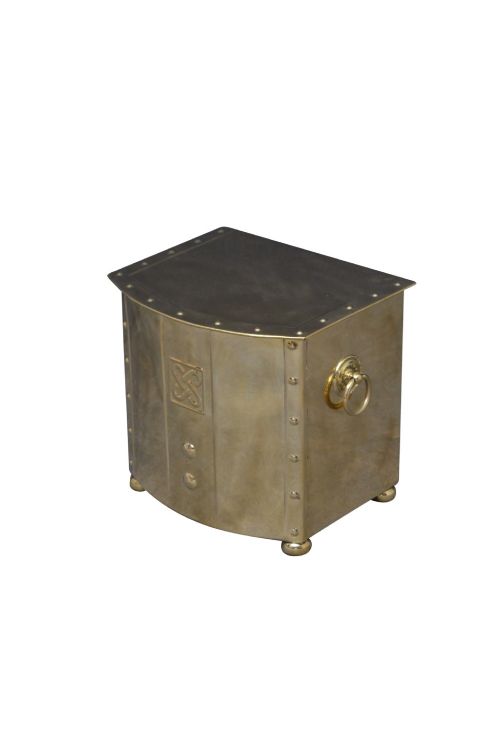


Riveted Brass Container
These riveted brass container examples are robust hearth vessels built to hold coal and logs, bringing functional utility and warm metallic texture to a fireplace.
Riveted Brass Container
When you search for a riveted brass container, you encounter heavy hearth accessories designed for domestic fuel storage, predominantly taking the form of coal buckets, log bins, and scuttles. These pieces function as both utility objects and decorative furnishings beside the fireplace.
The versions most commonly met on this page span the eighteenth, nineteenth, and early twentieth centuries, encompassing Georgian, Victorian, and Arts and Crafts styles. They arrive in various shapes including oval lidded bins and helmet scuttles, often combining brass with copper, iron, or wood.
How they were made
Makers constructed these containers primarily from sheet brass and copper, shaping the metal sheets by hand or machine before joining the overlapping seams with visible metal rivets. This method provided the structural strength required to bear heavy loads of coal and wood without buckling.
Many examples incorporate secondary materials such as oak, mahogany, and iron for handles, feet, or internal framing, adding stability to the metallic body. The combination of brass bodywork with iron handles or copper plating reflects the practical engineering of nineteenth and early twentieth century metalworkers.
Riveted Brass Container Retail Price Guide 2026
Typical asking prices for riveted brass container among the pieces listed under this phrase on Sellingantiques today, from the lower quarter to the upper quarter. They describe what is for sale here now, not the wider market.
The listings show materials spanning brass, copper, iron, oak, mahogany, and galvanised steel across periods from the eighteenth century through the 1930s.
What varies in quality
Quality in these hearth vessels rests upon the substance of the metal gauge and the precision of the riveting work along the seams. Thicker brass and evenly spaced, tight rivets indicate superior construction designed to withstand decades of daily use.
The refinement of decorative detailing also sets finer pieces apart, such as hand-beaten surfaces, well-fitted lids, and sturdy applied handles. Simpler utility boxes rely on plain sheet construction, whereas Georgian and Victorian interpretations often exhibit more considered proportions and material combinations.
The Riveted Brass Container Glossary
- Riveted
- Joined together using metal pins whose ends are hammered flat to secure overlapping sheets. This technique ensures durable joints on heavy storage vessels.
- Coal scuttle
- A container specifically designed for carrying coal to a fireplace, often featuring a shaped mouth and a hinged handle for pouring. These pieces frequently adopt a distinctive helmet silhouette.
- Log bin
- A large tub or box intended for storing firewood near the hearth. They appear in brass, copper, and wood.
- Arts and Crafts
- A design movement valuing handcraftsmanship and visible construction methods over mass production. Pieces from this period often highlight the physical marks of making.
Riveted Brass Container: Frequently Asked Questions
What were riveted brass containers used for?
These vessels served primarily as functional hearth storage for solid fuel like coal and logs. Their robust metal construction contained soot and debris while keeping fuel close to the fire.
Over time, many of these utility items transitioned into decorative interior pieces. Today they frequently serve as umbrella stands or large planters.
How do I date a brass container?
Dating relies on observing stylistic markers, manufacturing techniques, and material combinations. Georgian examples often show simpler hand-beaten construction, while Victorian pieces incorporate varied metal platings and heavier cast mounts.
Examining the type of rivets and handles also provides clues to the era of manufacture. Earlier pieces display hand-finished details distinct from twentieth-century mass production.
Can I use these containers outdoors?
While metal construction makes these vessels durable, prolonged exposure to damp outdoor conditions can cause corrosion on iron components and degrade wooden elements. Most pieces are intended for interior domestic environments.
If utilised as planters or garden ornaments indoors, use an internal liner to protect the historic metal from moisture and soil contact.