



Riverbank Painting
A riverbank painting captures water, reeds and figures in quiet rural settings across centuries of artistic change.
Riverbank Painting
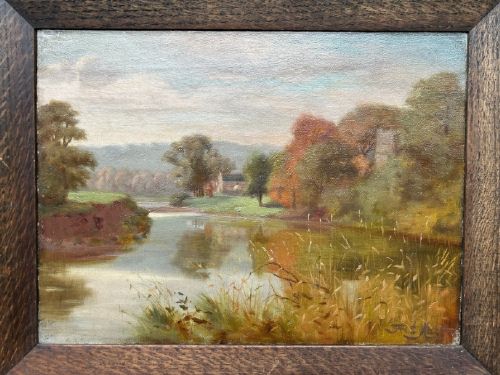
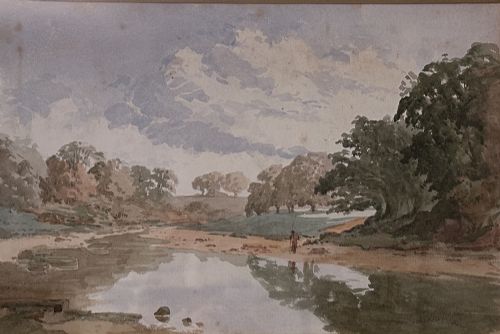
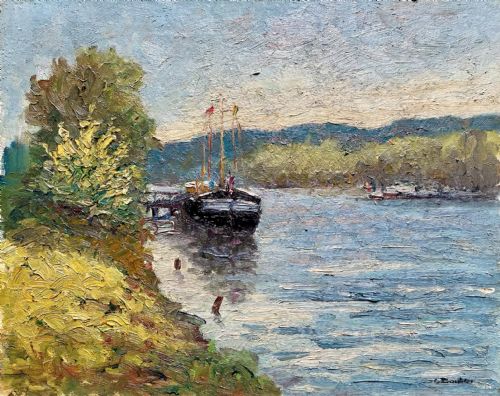
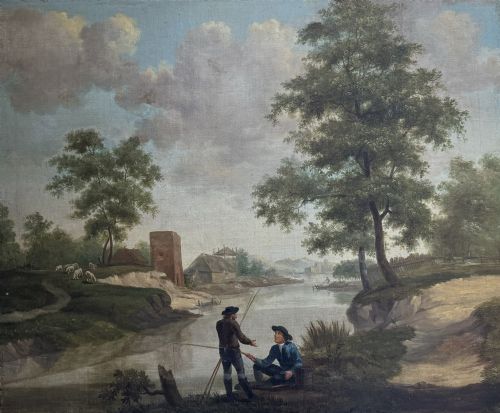
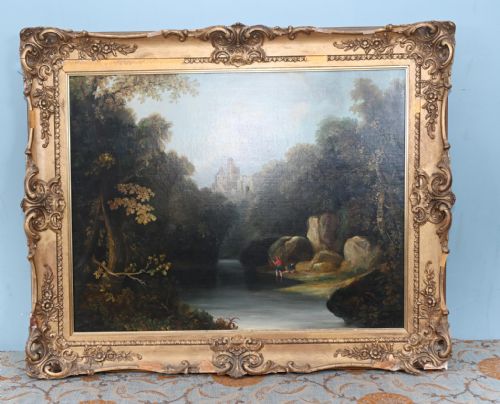
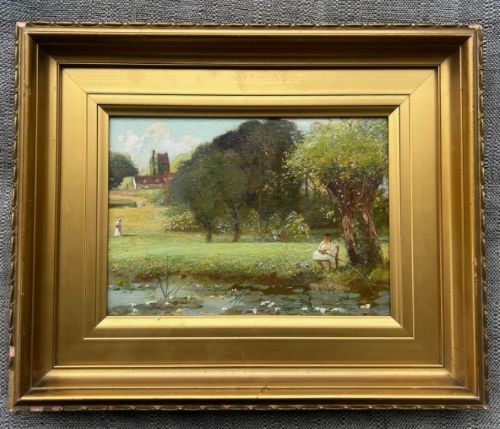
A riverbank painting portrays inland waterways, fishermen, cattle and pastoral scenery rendered in oil or watercolour. These works range from informal sketches on wood panel to large canvases executed in studio settings.
The selections available here lean heavily toward nineteenth century British and French compositions, incorporating styles from Victorian realism to mid century impressionism. Subjects frequently include anglers, livestock or wooded shores beside streams.
Makers recorded in these works extend from named regional artists to continental painters working within the Barbizon and post impressionist traditions. Many unsigned canvases remain attributed simply to nineteenth or twentieth century British and French schools.
Materials and methods
Artists painted primarily with oil paint on stretched canvas or prepared wood panels, applying pigment to capture shifting daylight on water and foliage. Watercolour on paper was also utilised extensively for detailed landscape studies.
Support frames frequently feature period gilt wood framing which complements the palette of autumn tones and rural greens found within the compositions.
Riverbank Painting Retail Price Guide 2026
Typical asking prices for riverbank painting among the pieces listed under this phrase on Sellingantiques today, from the lower quarter to the upper quarter. They describe what is for sale here now, not the wider market.
Ducks, ducklings and resting cattle make regular appearances to supervise the human fishermen.
Judging visual distinction
Distinction rests upon the confidence of brushwork and the handling of atmospheric light rather than the mere presence of signature or date. Stronger examples demonstrate deft control over tonal values in water and sky.
Compositional balance separates routine topographical records from compelling artistic interpretations of river life, where figures and animals integrate naturally into the surrounding landscape.
Frederick Marriott·Honore Cavaroc·Archibald Kay·Sir David Murray·Frank Hyde·Walter Follen Bishop·William Manners·Phyllis Morgans·Pierre Emmanuel Eugene Damoye·Harry Pennell·Constant Ludovic Artz·Henry Cheadle·T.B. Garvie·Henry John Sylvester Stannard·Robert John Hammond·Augustus William Ennes·Sonia Mervyn·Thomas E Francis·George Neil·David Adolph Constant Artz·Harry Davis
The Riverbank Painting Glossary
- Barbizon School
- A nineteenth century French movement dedicated to realistic landscape painting en plein air. Practitioners focused on natural scenery rather than classical mythology.
- Wood Panel
- A rigid support used by painters before canvas became standard. These surfaces offer smooth resistance to the brush.
- Watercolour
- Pigment ground in a water-soluble binder and applied to paper. This medium relies on the white of the paper to provide luminosity.
- Impressionism
- A style emphasising transient effects of light and spontaneous brushstrokes. This approach prioritises visual sensation over precise detail.
Riverbank Painting: Frequently Asked Questions
How do I date a riverbank painting?
Dating relies on stylistic clues, framing methods and the material of the canvas or wood panel support. Costume details on figures by the water also offer clear chronological markers.
Signatures, artist registry records and inscriptions on the reverse provide further verification for pieces produced during the nineteenth and twentieth centuries.
Where should I hang these paintings?
These landscapes suit traditional living spaces, studies or dining rooms where natural light enhances the painted tones. Pair them with period wooden furniture or neutral walls.
Keep works out of direct sunlight to protect oil pigments and paper watercolours from fading over time.
Are these works signed by the artist?
Many examples feature original signatures or monograms, while others originate from recognised regional schools without direct attribution. Unsigned canvases often carry attribution based on technique and palette.
Documentation on the reverse or framing labels frequently helps connect an unsigned piece to a specific period or maker.
What subjects appear in these scenes?
Common motifs include fishermen standing among reeds, cattle watering at the edge of a stream and boats moored near riverbanks. Autumnal woodlands and rural pastoral views recur frequently.
Figures picking flowers or resting under trees add human narrative to the landscape compositions.