




Riverbank Landscape Art
Riverbank landscape art captures the quiet life of riversides and streams across centuries of painting, offering a glimpse into pastoral scenes that buyers value for their tranquil atmosphere.
Riverbank Landscape Art
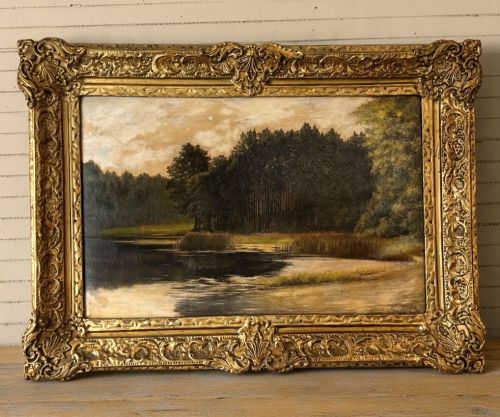
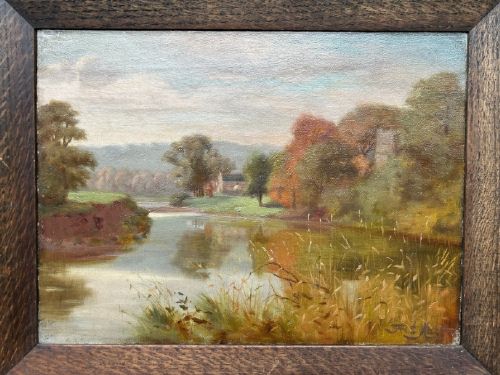
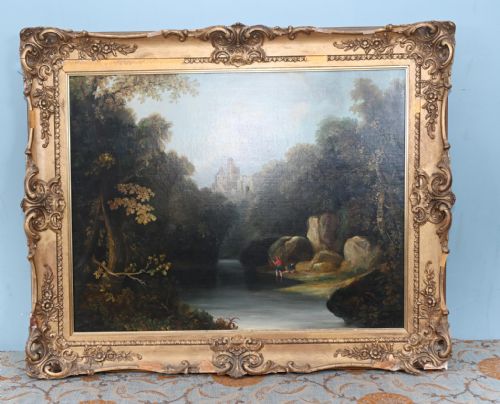
Riverbank landscape art encompasses painted scenes of rivers, streams, and banks populated by figures, fishermen, livestock, or boats. When you search for riverbank landscape art, you meet works spanning from the eighteenth century through the mid-twentieth century, with a strong presence of nineteenth-century examples.
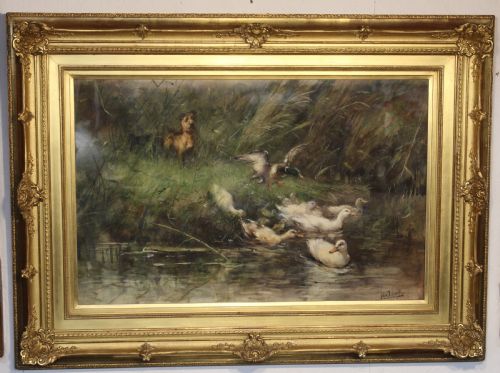
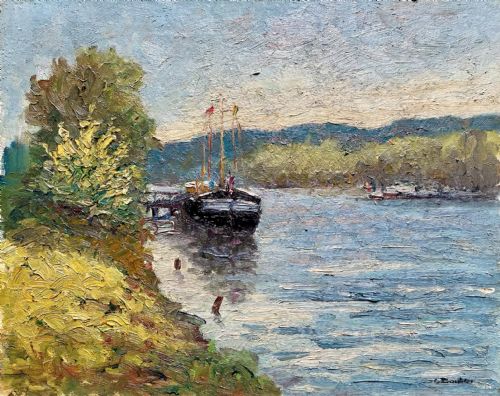
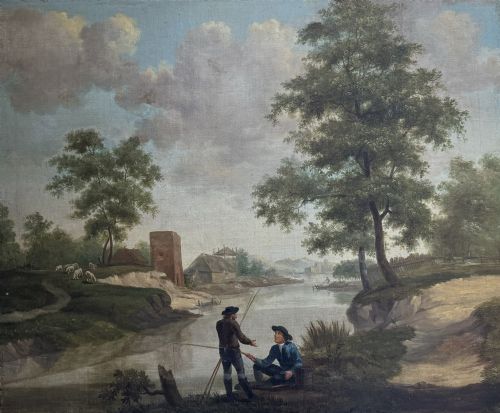
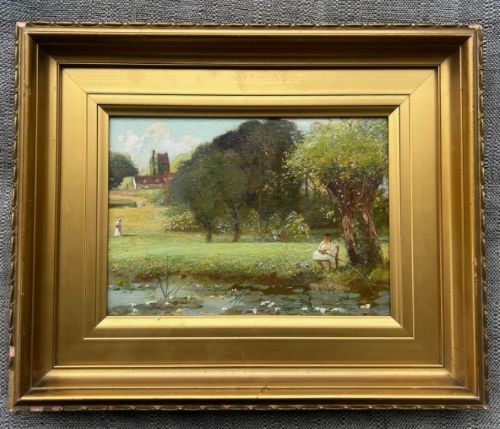
The subjects range from British rural waterways and Scottish scenes to French riversides influenced by the Barbizon school and post-impressionism. Many pieces feature human activity such as fishing or children playing by the water, alongside depictions of cattle and ducks.
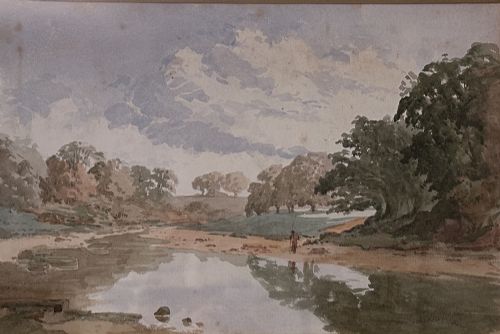
Oil paintings on canvas and wood panel dominate the selection, accompanied by watercolour paintings on paper. These works reflect stylistic shifts from Victorian realism and British impressionism to mid-century impressionist interpretations.
How these artworks were made
Artists painted primarily with oil paint on stretched canvas or prepared wood panels, building up layers of pigment to capture light on water and foliage. Watercolours on paper provide a lighter, more fluid medium for capturing the transparent qualities of streams and atmospheric riverbanks.
Many pieces retain their original gilt wood frames, which complement the painted composition and protect the edges of the canvas or panel. The physical support ranges from fine linen canvas to solid timber panels, dictating the texture and preservation of each brushstroke.
Riverbank Landscape Art Retail Price Guide 2026
Typical asking prices for riverbank landscape art among the pieces listed under this phrase on Sellingantiques today, from the lower quarter to the upper quarter. They describe what is for sale here now, not the wider market.
Listings feature canvases, wood panels, and paper supports spanning the eighteenth through the twentieth centuries.
What varies in quality
Quality rests in the handling of light, brushwork confidence, and the artist's ability to render the atmosphere of the riverbank convincingly. Works by listed academic painters demonstrate a superior command of perspective, tone, and naturalism compared to unsigned or generic school pieces.
The depth of composition and the integration of figures or animals into the natural setting distinguish finer works from more formulaic pastoral views. Preservation of the original paint surface and the quality of the surrounding gilt wood frame also influence the standing of an individual piece.
Frederick Marriott·Honore Cavaroc·Archibald Kay·Sir David Murray·Frank Hyde·Walter Follen Bishop·William Manners·Pierre Emmanuel Eugene Damoye·Harry Pennell·Constant Ludovic Artz·Henry Cheadle·T B Garvie·Henry John Sylvester Stannard·Robert John Hammond·Augustus William Ennes·Sonia Mervyn·Thomas E Francis·George Neil·David Adolph Constant Artz·Phyllis Morgans
The Riverbank Landscape Art Glossary
- Barbizon School
- A nineteenth-century French movement focused on realistic landscape painting en plein air. These artists drew inspiration directly from rural scenery and riverbanks.
- Post-Impressionism
- An art movement following impressionism that explored expressive colours and brushwork. French examples from this style capture river scenes with heightened visual intensity.
- Wood Panel
- A rigid support for oil paintings used extensively before canvas became dominant. Artists valued wood for its smooth surface and durability.
Riverbank Landscape Art: Frequently Asked Questions
What periods do these riverbank paintings date from?
The works span multiple centuries, starting from eighteenth-century British school pieces and extending through nineteenth-century Victorian and impressionist works. Twentieth-century examples reach into the nineteen-fifties and sixties with mid-century interpretations.
Most pieces cluster in the nineteenth and early twentieth centuries, reflecting the high popularity of pastoral landscape painting during those eras.
Are these paintings executed in oil or watercolour?
The selection consists primarily of oil paintings executed on canvas or wood panels, capturing rich textures and deep tones. A smaller number of works are created in watercolour on paper, offering lighter and more translucent qualities.
Both mediums were favoured by artists depicting rural waterways, though oils provide greater durability and surface buildup.
What subjects appear alongside the riverbanks?
Human figures frequently animate the riverbanks, including fishermen waiting for a bite, children playing by the water, and figures gathering flowers. Domestic animals and wildlife also feature prominently, such as cattle grazing, ducks with ducklings, and horses near the stream.
These pastoral elements connect the landscape paintings to rural daily life of the nineteenth and early twentieth centuries.