



River Landscape Watercolour Painting
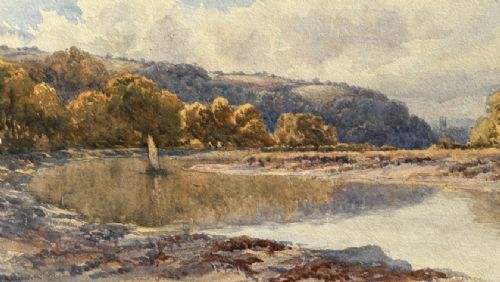
These pieces capture fluid river landscape watercolour painting scenes through nineteenth and early twentieth century British and European traditions.
River Landscape Watercolour Painting
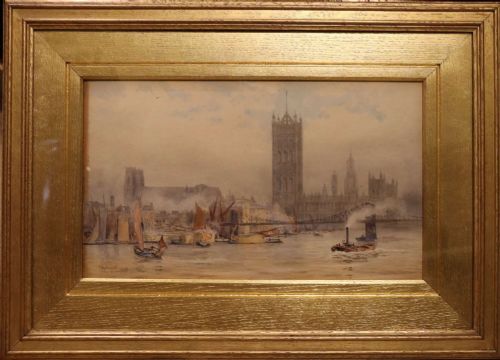
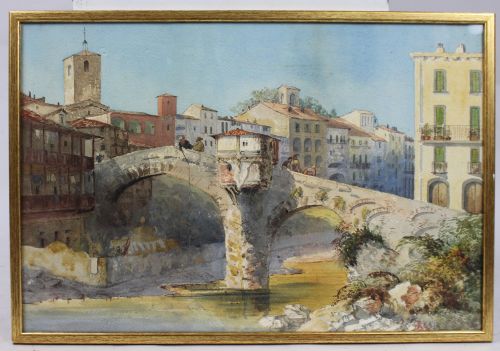
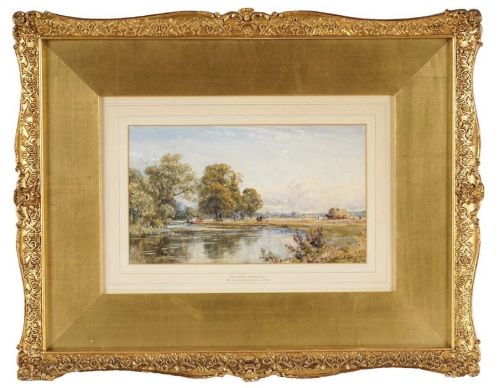
A buyer seeking a river landscape watercolour painting explores historic works depicting rivers, estuaries, and coastal waterways across Britain and continental Europe. These watercolours record pastoral scenes, historic bridges, and shipping traffic along major rivers such as the Thames, Severn, and regional tributaries.
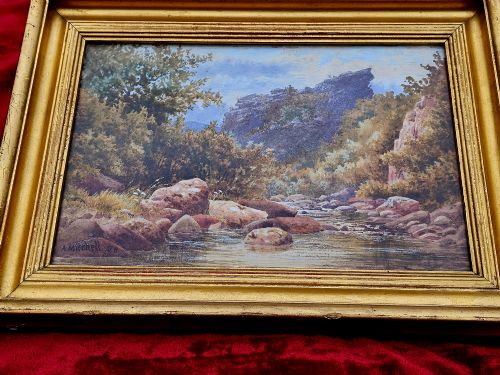
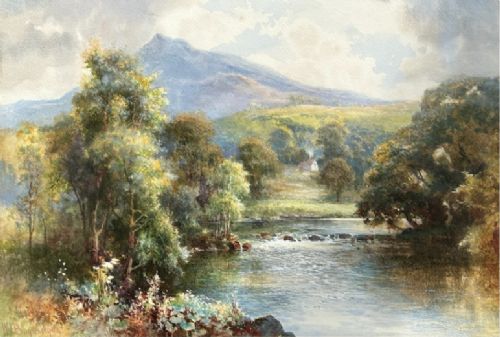
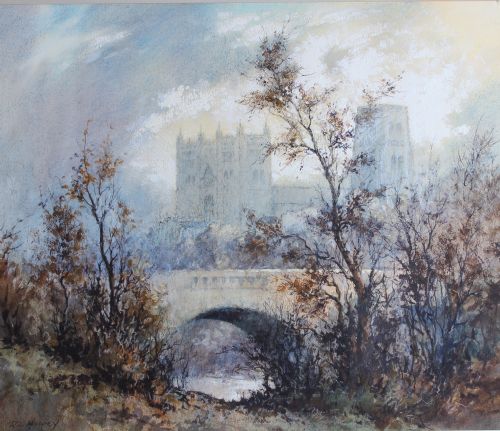
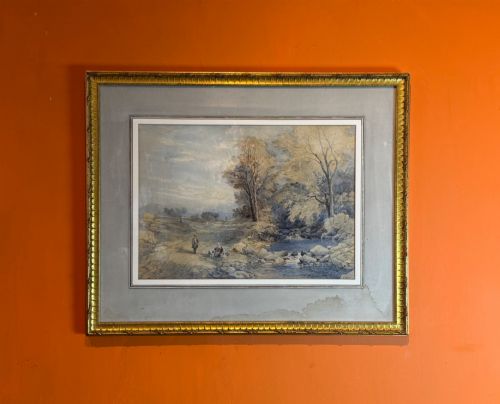
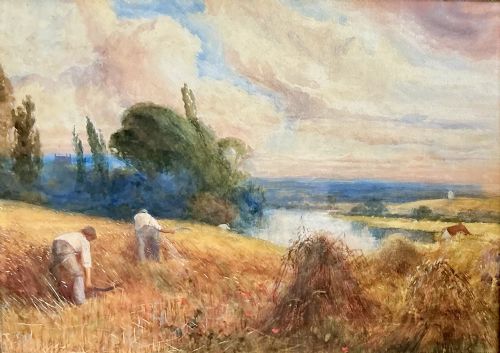
The selection on this page centres predominantly on nineteenth-century and early twentieth-century British school pieces, alongside Victorian and Edwardian works. Common formats include framed fine art paintings on paper, showcasing rural valleys, Welsh mountains, and architectural landmarks beside water.
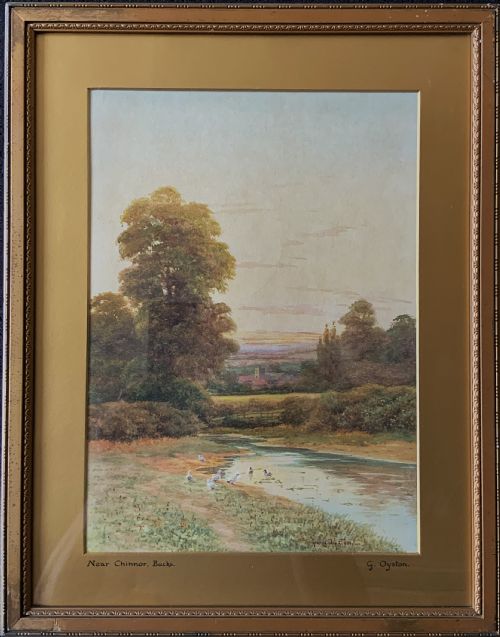
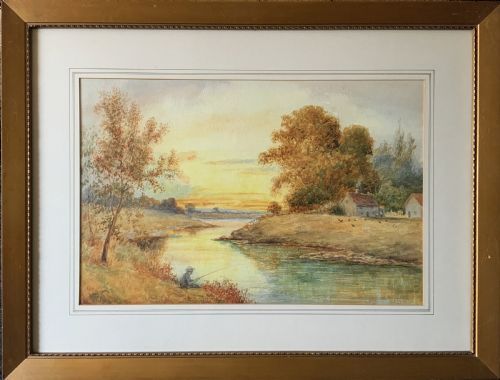
Works range from detailed topographical views by known Victorian practitioners to atmospheric pastoral compositions created by regional artists. Collectors encounter both intimate village scenes and large-scale framed watercolours capturing river life at sundown or dusk.
How They Were Made
Artists executed these compositions utilising watercolour pigment applied directly to prepared paper surfaces, sometimes supported by wood frames and glass protection. Painters built transparency through washes of colour while retaining the luminous white of the paper for highlights on water and sky.
Many historic pieces combine watercolour paint with pencil or ink underdrawing to define architectural details, shipping vessels, and figures along the riverbank. Gilt wood frames frequently house these works, preserving delicate paper sheets from environmental damage over generations.
Cows appear with surprising frequency standing patiently in nineteenth-century British rivers.
What Varies in Quality
Quality rests upon the artist's handling of light, atmospheric perspective, and fluid movement within the water. Superior examples demonstrate confident brushwork and precise control over pigment transparency, capturing the shifting reflections of a river at different hours.
The strength of composition and the fidelity of topographical detail distinguish accomplished works from standard decorative pieces. Provenance and documentation linking the painting to a Royal Academy artist or recorded exhibition history elevate the standing of an individual work.
H Medlycott·Alfred Young Nutt·William Joseph Boyes·Robert Thorne Waite·George Oyston·Robert Leslie Howey·Frederick Hines·William Frederick Settle·Alfred George Morgan·Cornelius Pearson·Edwin Lord Weeks·Arthur Reginald Smith·Henry John Kinnaird·Stuart Lloyd·Thomas Bush Hardy·Thomas Hunn·David Cox Jnr·J Laporte·Colin H Greenwood·John Syer·Robert Winchester Fraser·Alfred Grey·George Arthur Fripp·Harold Lawes·Frederick G Coulridge
The River Landscape Watercolour Painting Glossary
- Watercolour pigment
- Finely ground colour particles mixed with a water-soluble binder, forming the primary medium for these paintings.
- Gilt wood
- Timber framing finished with a thin layer of gold leaf or gold-coloured gilding, commonly seen surrounding antique paper artworks.
- Estuary
- The tidal mouth of a large river where the tide meets the stream, frequently depicted in coastal and river art.
- Topographical
- Representing specific real-world locations and landmarks with geographical accuracy rather than purely imaginative composition.
River Landscape Watercolour Painting: Frequently Asked Questions
How should I hang a watercolour painting safely?
Keep antique watercolours away from direct sunlight to prevent the pigments from fading over time. Maintain stable indoor humidity levels to protect both the paper and the wooden frame.
Ensure backing boards remain sealed and use conservation glass if possible. Professional framing safeguards these historic works against environmental degradation.
What subjects appear most often in these paintings?
British rivers, rural valleys, and historic bridges dominate the available scenes. Artists frequently recorded daily activities such as fishing, cattle watering, and shipping traffic.
Coastal estuaries and Welsh mountain streams also feature prominently among nineteenth-century works. These views offer a record of nineteenth-century waterways before industrial changes.
How can I identify the period of a watercolour?
Examine the framing style, paper texture, and handwritten inscriptions on the reverse or front of the sheet. Signatures often correspond to recorded exhibition dates and artist active years.
Stylistic conventions like Victorian palette choices or Edwardian atmospheric effects provide further chronological clues. Comparing works to documented archive pieces helps confirm dating.
Did Victorian artists paint these outdoors?
Many painters worked outdoors using portable sketching boxes to capture immediate weather conditions and natural light. They recorded preliminary watercolours on site before finishing larger compositions in the studio.
This direct observation contributed to the luminous atmospheric quality seen in period landscapes. Studio finishes often refined the pencil underdrawings and washes applied in the field.