


Ribbed Glass Lamps
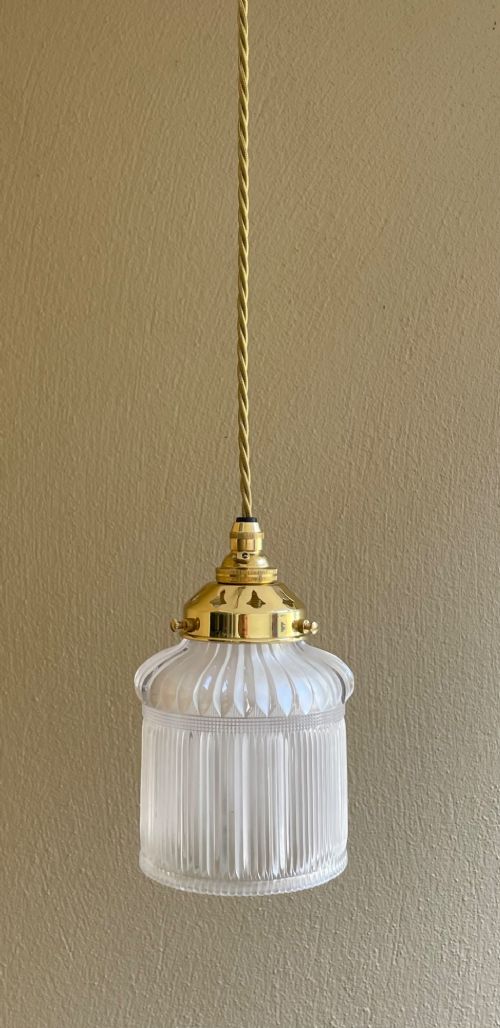
Ribbed glass lamps provide a clear, refractive quality that illuminates a space with industrial precision, spanning Edwardian and Art Deco designs.
Ribbed Glass Lamps
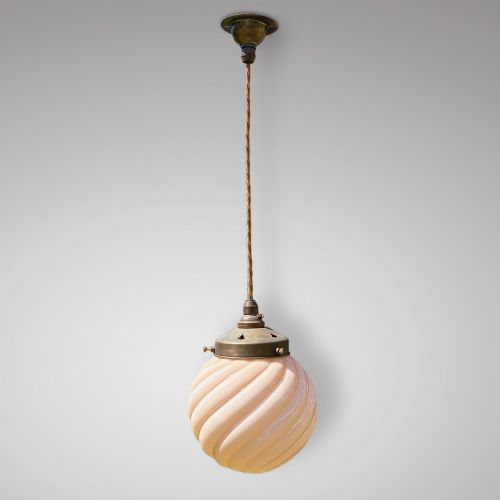
Ribbed glass lamps encompass pendant lights, table lamps, and ceiling light shades originating from periods such as the Victorian era, the Edwardian period, and the 1920s, 1930s, and 1940s. These pieces frequently manifest as industrial pendant lights featuring specialised prismatic or opaline shades designed to diffuse light evenly across a room.
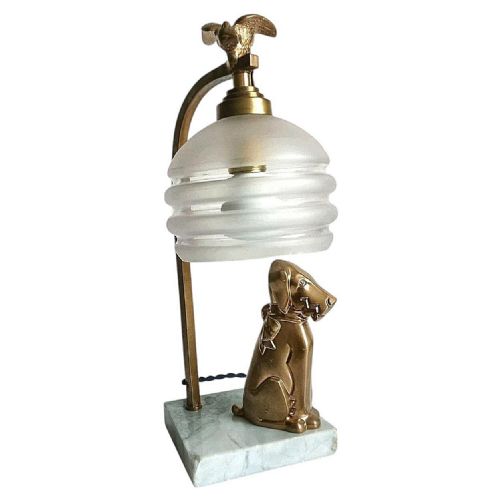
Buyers encountering this selection will most frequently meet pendant lights equipped with Holophane shades, alongside French novelty figural table lamps and large pharmacy moonstone glass fixtures. The forms range from diminutive English light shades to double prismatic pendants supported by brass or chrome galleries.
Originating from British and French workshops, these lamps combine utility with the distinctive aesthetic movements of the early twentieth century, including Arts and Crafts, industrial design, and Art Deco styles.
How they were made
Makers utilised moulded glass to create the characteristic ribs and prismatic patterns that direct and diffuse illumination, employing specialised manufacturing techniques seen in opaline, moonstone, and frosted glass. These glass shades are paired with metal components such as brass and chrome galleries to secure the structure.
Wiring and suspension often integrate modern fabric flex while retaining period-appropriate metal fixtures, marble bases, and multi-component assemblies characteristic of industrial and domestic lighting from the nineteenth and twentieth centuries.
A French novelty table lamp from the 1930s pairs ribbed glass illumination with the charming company of a sculpted dog and parrot.
What varies in quality
Quality varies across the precision of the glassmoulding and the optical clarity of the prismatic or opaline material, where finer pieces display sharp, consistent ribbing and minimal surface imperfections. The distinction between standard utility lighting and superior examples often lies in the weight of the glass and the execution of associated metal galleries in brass or chrome.
The integrity of the original components, such as matched pairs of shades and the retention of maker-associated details like Holophane branding, elevates the standing of an individual lamp within its period.
The Ribbed Glass Lamps Glossary
- Holophane
- A brand of scientific glassware known for its prismatic ribbed design, engineered to direct and diffuse light efficiently. These shades are a defining feature of industrial lighting from the early twentieth century.
- Opaline glass
- An opaque or semi-translucent glass, often white or pale tinted, used to soften light output. It provides a smooth, milky appearance popular in Edwardian and Art Deco fixtures.
- Prismatic glass
- Glass moulded with geometric ribs or prisms on the surface to refract light and reduce glare. Double prismatic variants feature complex patterns for enhanced optical control.
- Gallery
- The metal collar or rim that holds a lampshade in place and connects it to the suspension or base. These fittings are commonly rendered in brass or chrome.
- Moonstone glass
- A type of semi-translucent art glass with a cloudy, ethereal appearance resembling the gemstone. It creates a gentle, diffused glow when illuminated.
Ribbed Glass Lamps: Frequently Asked Questions
What is a Holophane lamp?
A Holophane lamp utilises scientifically designed prismatic glass shades with exterior ribs to control and distribute light effectively. These fixtures were widely adopted in industrial, commercial, and domestic settings during the early twentieth century.
They remain sought after for their combination of robust construction and functional optical properties.
Where were these lamps used originally?
These lamps served diverse environments ranging from factories and pharmacies to Edwardian domestic interiors and French salons. Industrial pendants provided functional illumination for workspaces, while decorative table lamps and opaline shades suited residential rooms.
Their utilitarian origins mean many survived in robust working condition.
Can I use modern bulbs in antique lamps?
Modern bulbs can generally be used provided the fitting and wattage align with the original lamp holder's specifications and safety standards. Many fixtures are adapted with contemporary fabric flex while preserving the historic shade and gallery.
Checking the internal wiring with a qualified professional ensures safe daily use.