


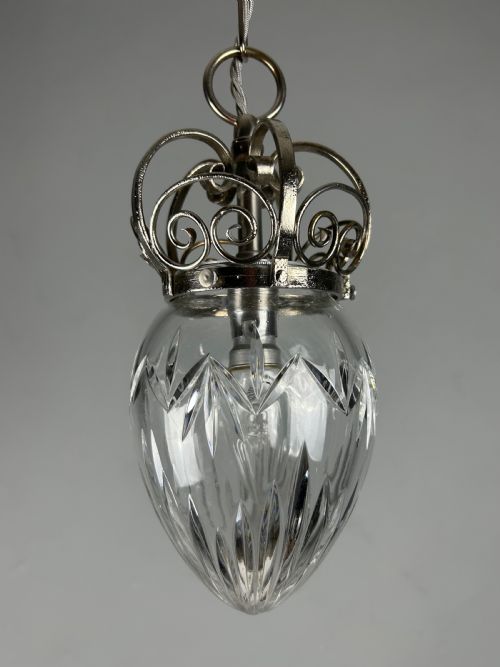


Rewired Lamp
A rewired antique lamp brings period lighting into modern rooms with fresh electrical fittings.
Rewired Lamp
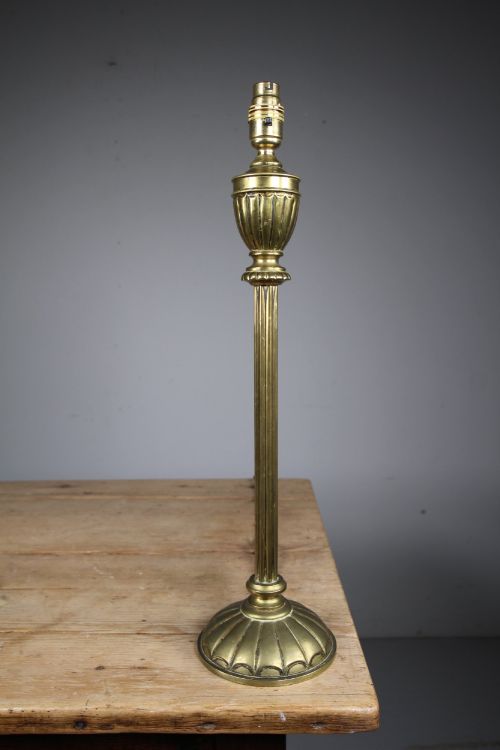
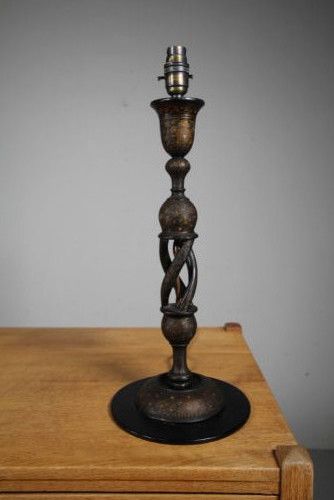
A rewired antique lamp combines historical domestic lighting forms with updated electrical wiring for everyday use. When searching for a rewired antique lamp, buyers encounter table lamps, floor lamps, wall sconces, and desk lamps spanning several centuries of design. Table lamps and floor lamps dominate the selection, often taking the form of twisted wooden columns, brass standards, or ceramic vessels.
The objects originate from multiple design movements, including Edwardian, Art Deco, French Rococo, and Chinoiserie styles. Brass and silver-plated metalwork appear frequently alongside carved wood, lacquer, and porcelain bodies. Many of these pieces retain their original shades, burners, or structural mounts while adopting safe, modern internal flex.
How they were made
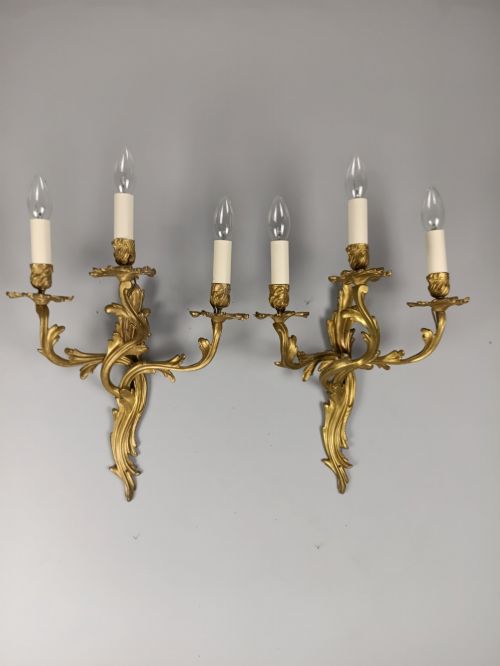
Makers utilised cast brass, silver plate, and ormolu for metal components, often combining telescopic mechanisms or multi-arm brackets on standard lamps and wall lights. Carved wood and turned oak formed the structure for twist table lamps and floor lamps, sometimes finished with lacquer or simulated walnut. Ceramic bodies such as Delftware and Famille Verte porcelain were mounted to metal bases to serve domestic lighting functions.
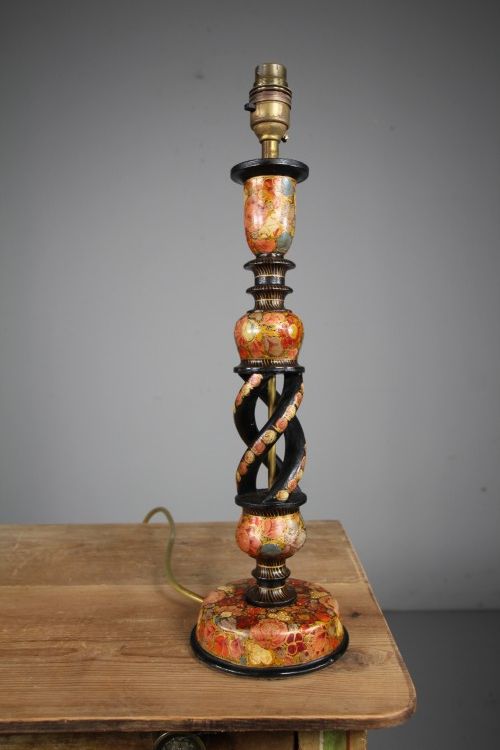
Surface decoration involved hand-carving, gilding, and applied Chinoiserie motifs on wood and papier-mâché substrates. Glass elements included etched shades and cut glass bodies that diffused light from early incandescent or oil setups. Modern rewiring threads through these historical channels to preserve the outer silhouette.
Some tall standard lamps retain telescopic brass mechanisms designed to chase the shifting light of an evening book.
What varies in quality
The calibre of a piece depends on the weight of its cast metal components, the precision of turned wood twists, and the integrity of applied lacquer or gilding. Substantial brass columns and heavy marble or bronze mounts indicate higher-grade construction from workshops of the period. Maker attribution, such as work originating from Faraday and Sons or Heals, distinguishes standard production from notable design.
Proportion and balance also govern the standard of floor and table lamps, particularly in telescopic or extending models. The preservation of original surface finishes, whether unpolished brass or detailed Chinoiserie painting, maintains the material integrity of the object. High-quality examples balance historical patination with cleanly integrated modern wiring.
Faraday and Sons·Heals
The Rewired Lamp Glossary
- Standard lamp
- A tall floor-standing light fixture designed to illuminate a room from a corner or beside furniture. These pieces often feature heavy weighted bases to support extended heights.
- Ormolu
- Gilded bronze ornamentation applied to furniture and lighting fixtures. This technique produces a bright metallic finish popular in French decorative styles.
- Chinoiserie
- European theatrical interpretations of Chinese artistic traditions. Artisans applied these painted and lacquered motifs to wooden lamp bodies and furniture.
- Student lamp
- An adjustable desk or table light engineered for focused reading. These fixtures commonly incorporate sliding arms or brass shades.
- Twist lamp
- A lighting standard featuring a spiraled or fluted wooden column. This turned carpentry style is characteristic of Edwardian interior fittings.
Rewired Lamp: Frequently Asked Questions
What does rewired mean for these lamps?
Rewired means the internal electrical components have been replaced with modern wiring, sockets, and plugs to meet contemporary safety standards. This process ensures the lighting fixture functions reliably in domestic settings.
Historical wiring degrades over time, making updates essential for daily operation. The exterior structure and historical finish remain unaltered while the internal mechanics are made safe.
How do I identify an Edwardian lamp?
Edwardian lamps often feature brass columns, silver plating, or turned oak twists. They reflect the domestic interior styles prevalent during the early twentieth century.
These pieces typically balance functional design with traditional materials like polished brass and etched glass. Their proportions suit standard residential ceiling heights and table placements.
Can I use modern lamp shades?
Most antique lamps accept standard modern shades provided the fitter size matches the bulb holder. Adapters are sometimes used to bridge historical and contemporary fitting dimensions.
Certain pieces retain original glass or fabric shades that dictate the mounting type. Checking the gallery fitter allows for safe pairing with new shades.
Where were floor lamps placed?
Floor lamps were positioned beside seating areas or in corners to provide ambient and task illumination. Tall standards offered adjustable lighting for reading and writing.
Heavier weighted bases kept these tall fixtures stable on carpets and wooden floors. Their movable arms and telescopic stems directed light downward onto specific surfaces.