

Revival Wooden Bench
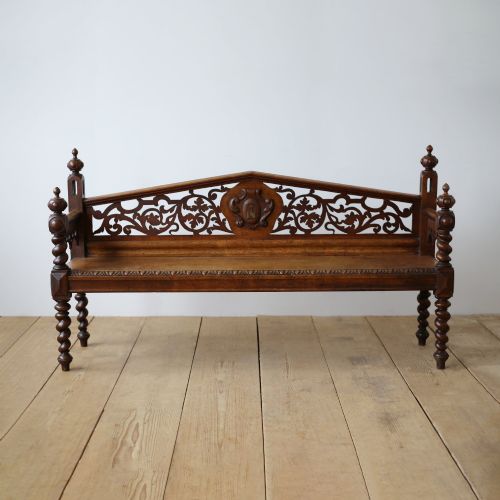
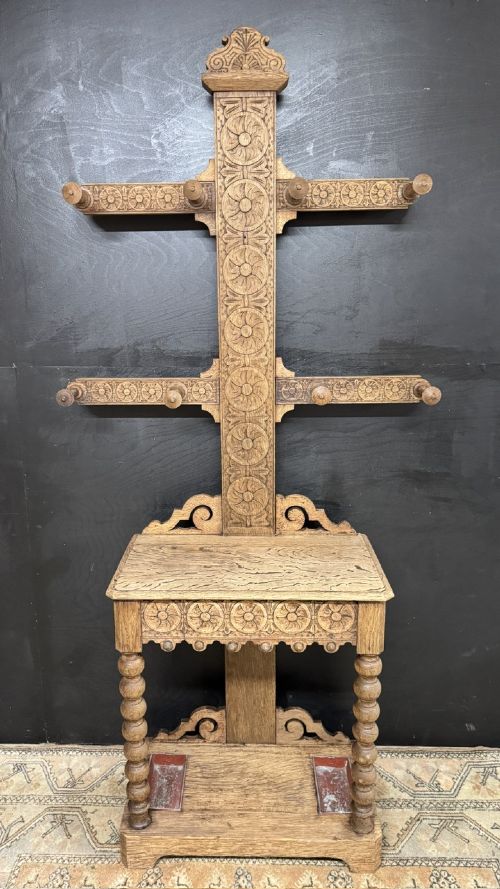
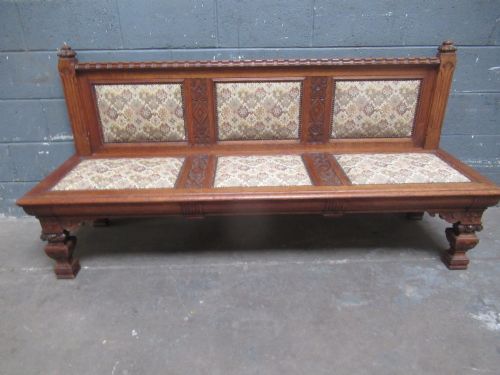
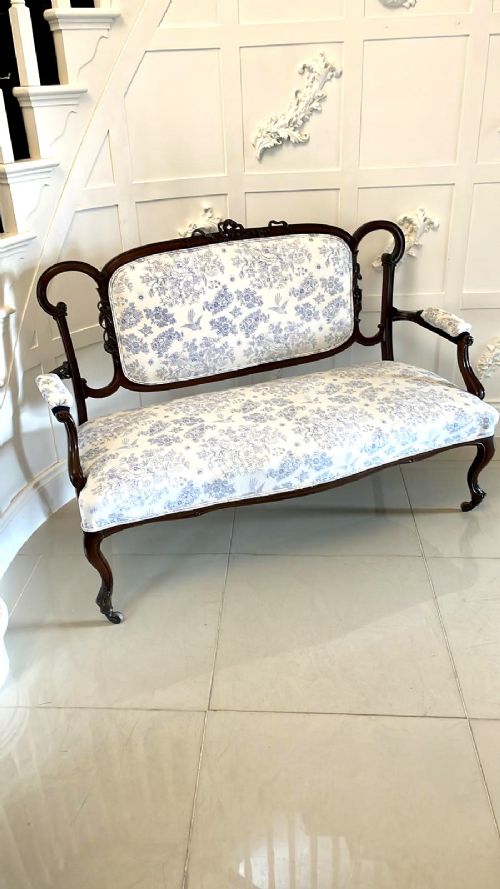
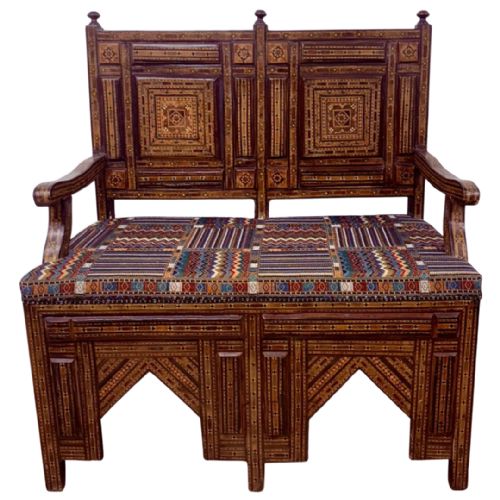
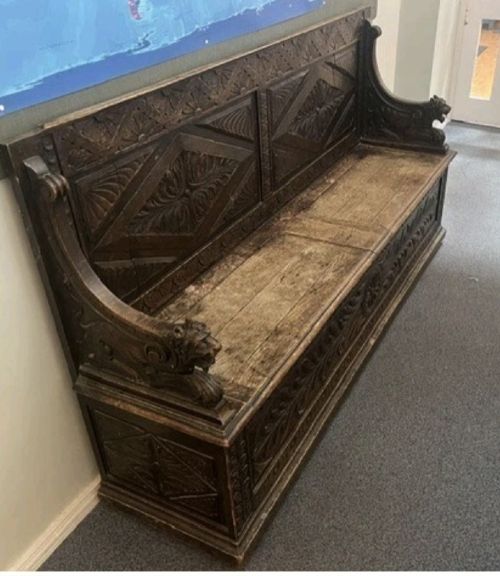
Revival wooden bench examples span nineteenth-century and early twentieth-century interpretations, bringing solid timber seating and historicist carving into domestic halls.
Revival Wooden Bench
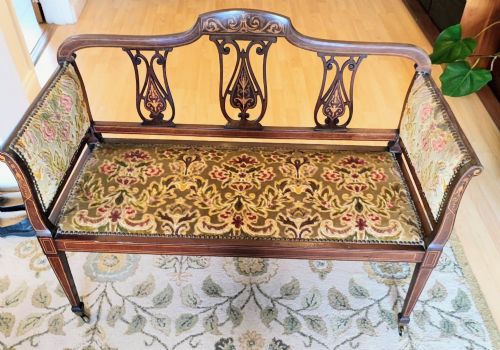
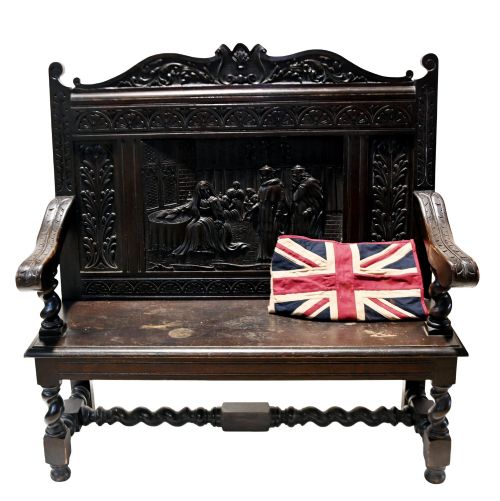
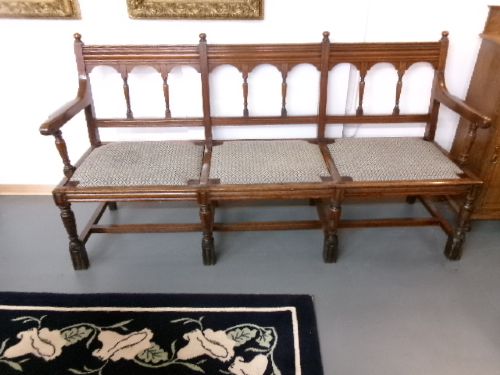
A revival wooden bench draws upon historic design movements such as Jacobean, Gothic, Renaissance, and Sheraton revivals, utilising solid timbers to recreate earlier forms for nineteenth-century and early twentieth-century interiors. These pieces appear primarily as hall benches, box settles, window seats, and church pews originating across the Victorian and Edwardian periods.
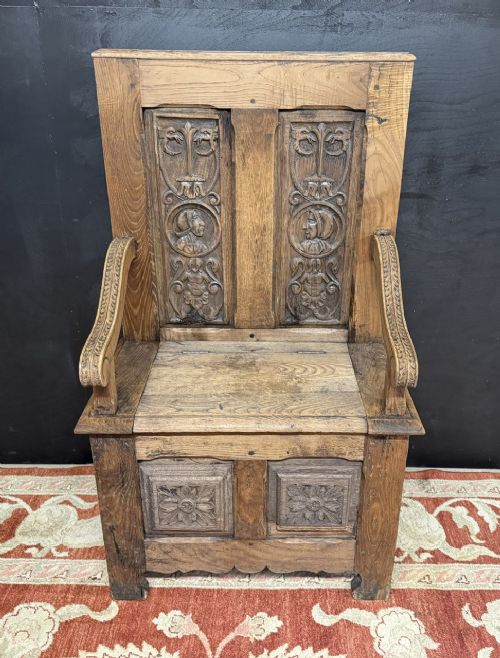
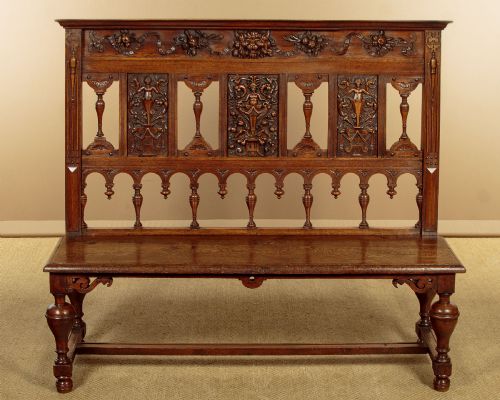
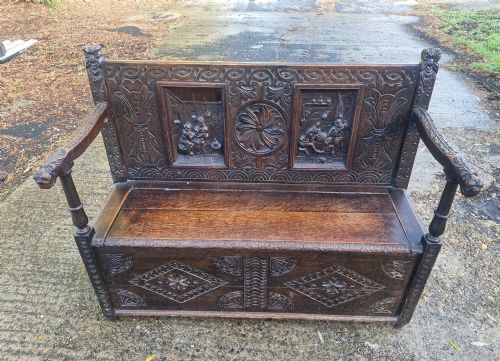
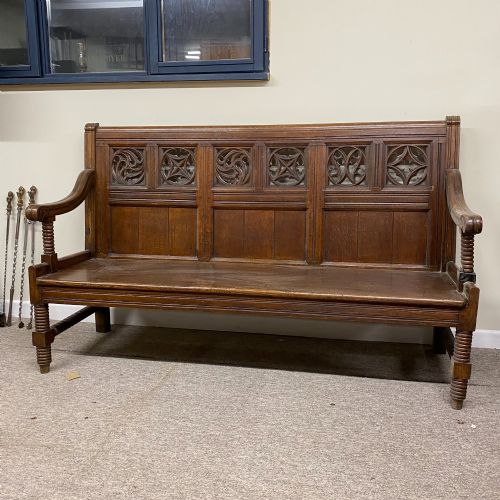
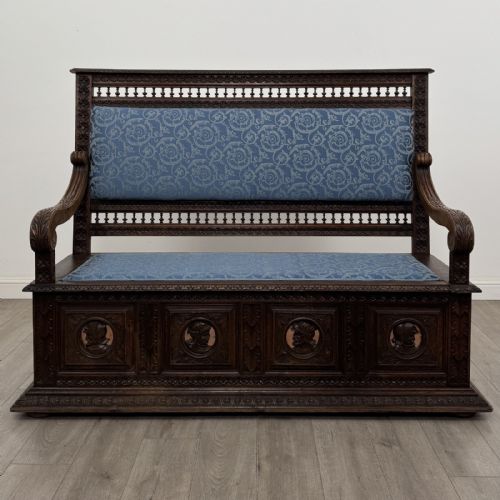
The most common examples on this page are carved oak hall benches and settles dating from the nineteenth century, often displaying architectural elements like panelled backs, lift-up storage seats, and poppy head finials. Alongside these, walnut, mahogany, and pitch pine versions emerge in styles ranging from severe Gothic to ornate Renaissance and arts and crafts forms.
How they were made
Cabinet makers constructed these benches using traditional joinery methods in solid hardwoods, predominantly oak, walnut, and mahogany, supplemented by pitch pine and satinwood. Panels were frame-and-panel constructed to allow for seasonal wood movement, while structural joints relied on mortise and tenon techniques secured with pegs.
Carving was executed by hand to render deep relief motifs such as linenfold, tracery, foliage, and figural supports in the revival styles of the period. Upholstered variants integrated supportive webbing and springs with surface coverings of leather, velvet, fabric, or inlaid wood marquetry.
Revival Wooden Bench Retail Price Guide 2026
Typical asking prices for revival wooden bench among the pieces listed under this phrase on Sellingantiques today, from the lower quarter to the upper quarter. They describe what is for sale here now, not the wider market.
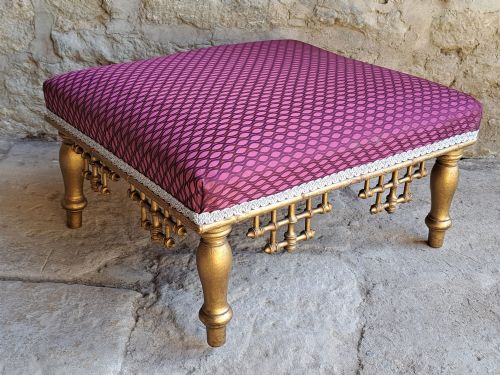
Object forms span hall benches, box settles, church pews, piano stools, and architectural window seats.
What varies in quality
Quality rests upon the crispness of the hand-carved ornamentation and the selection of timber figures, such as burr elm or quartersawn oak, which distinguish bespoke workshop output from mass-produced factory items. Heavy structural timbers and integrated box storage compartments demonstrate a higher standard of construction than lighter, decorative frames.
The sophistication of the historical revival style dictates distinction, where accurate architectural proportions and documented maker attribution elevate a piece beyond standard decorative furniture of the period.
Gillows·James Shoolbred & Co
The Revival Wooden Bench Glossary
- Settle
- A wooden bench with a high back, solid arms, and frequently a box base or enclosed lower section to keep out drafts. This form dates back centuries but saw revivals throughout the Victorian era.
- Cassapanca
- An Italian bench with a chest base and a back, often elaborately carved in the Renaissance revival style with panelled woodwork and armrests. These serve as grand hall seating.
- Poppy head
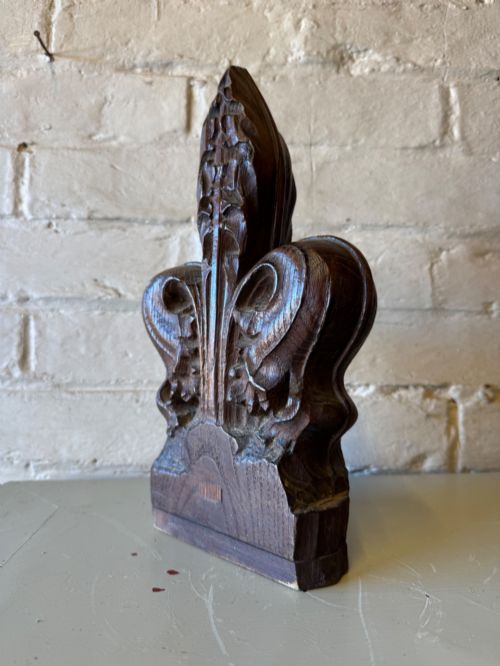
- An ornamental finial carving found on the tops of bench ends or pew standards, shaped like a bud or leaf motif. It is frequently seen in Gothic revival woodwork.
- Box settle
- A bench featuring a hinged seat lifting to reveal a storage compartment underneath. This practical form combined seating with linen or blanket storage in large reception halls.
- Architectural salvage
- Building elements or fittings removed from structures and repurposed, sometimes incorporated into nineteenth-century benches or seats. It reflects the Victorian taste for historic fragments.
Revival Wooden Bench: Frequently Asked Questions
Where were hall benches placed?
Hall benches stood in entrance halls and reception rooms of grand houses, providing a formal seat for guests waiting to be received.
They also served a practical purpose as a place to remove outerwear or store items inside integrated box bases.
How do I date a revival bench?
Dating relies on combining the timber type, construction marks, and the specific historic revival style requested by the maker.
Nineteenth-century interpretations often mix earlier motifs like Jacobean strapwork or Gothic tracery with Victorian joinery techniques.
What is a box settle used for?
A box settle combines a high-backed wooden bench with a built-in chest beneath the hinged seat.
Historically, this enclosed space stored household textiles, boots, or logs while protecting sitters from cold drafts.
Are these benches comfortable to sit on?
Many historical wooden benches feature rigid plank seats and upright panelled backs designed for posture rather than lounging.
Some variants include upholstered pads, leather cushions, or recessed window seat shapes intended for longer periods of seating.