

Revival Wooden Armchair
These revival wooden armchair selections bring historic British and European seating traditions directly into modern rooms through solid oak, walnut, and mahogany frames.
Revival Wooden Armchair
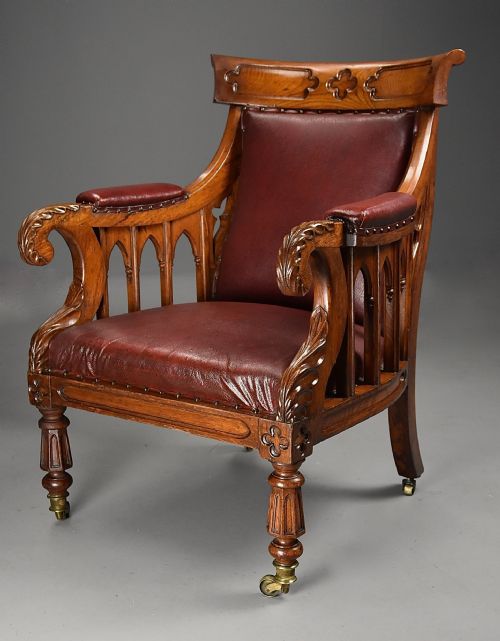
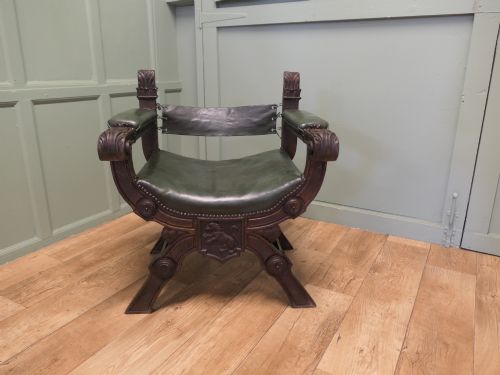
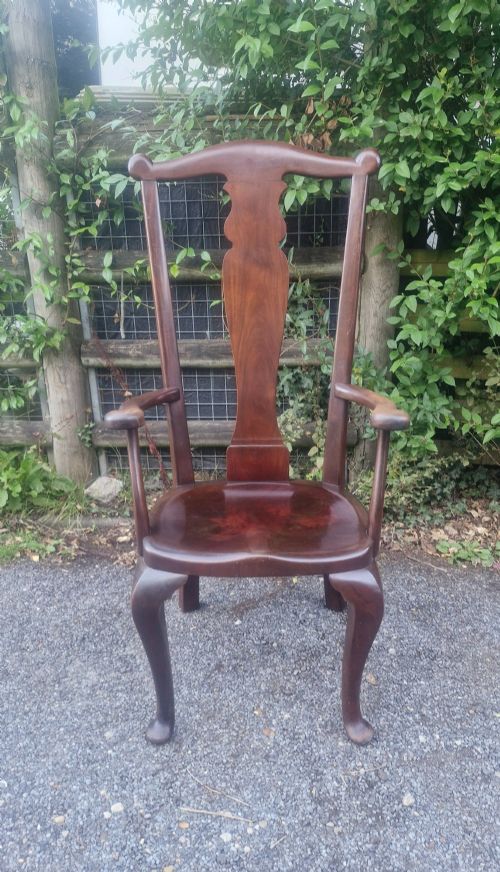
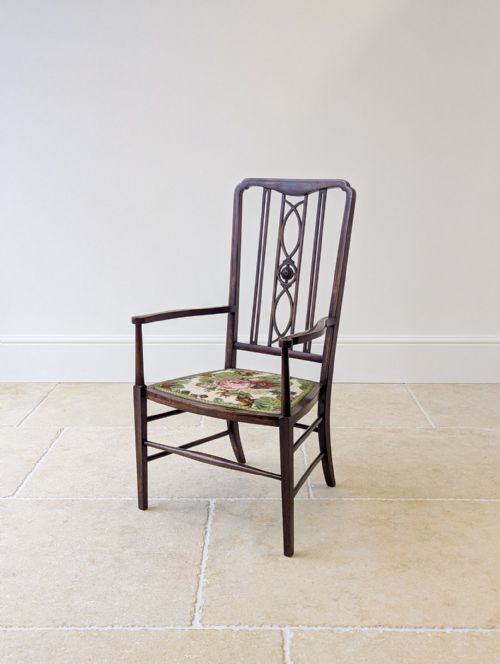
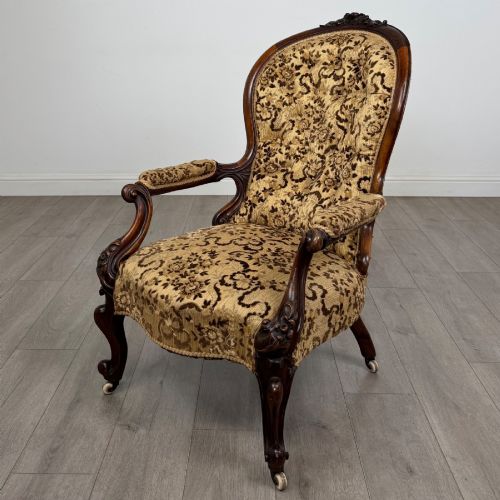
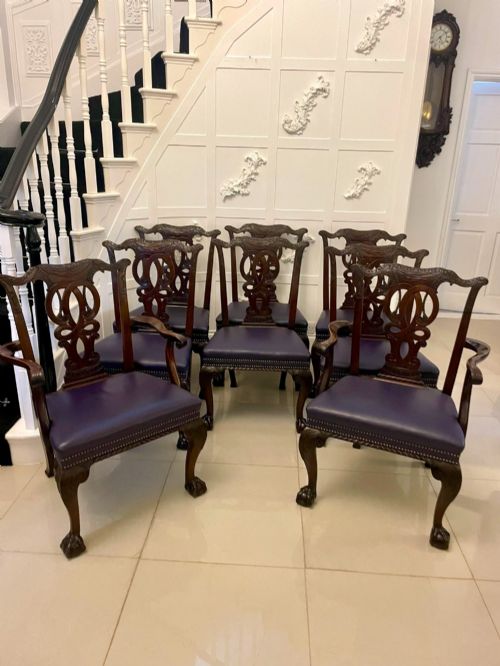
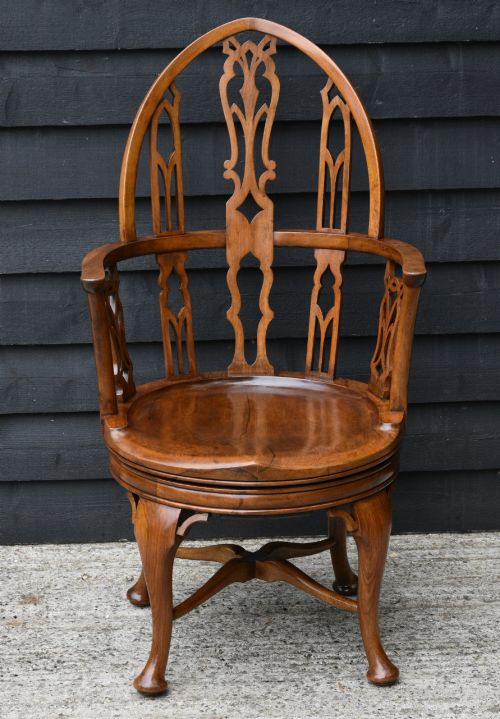
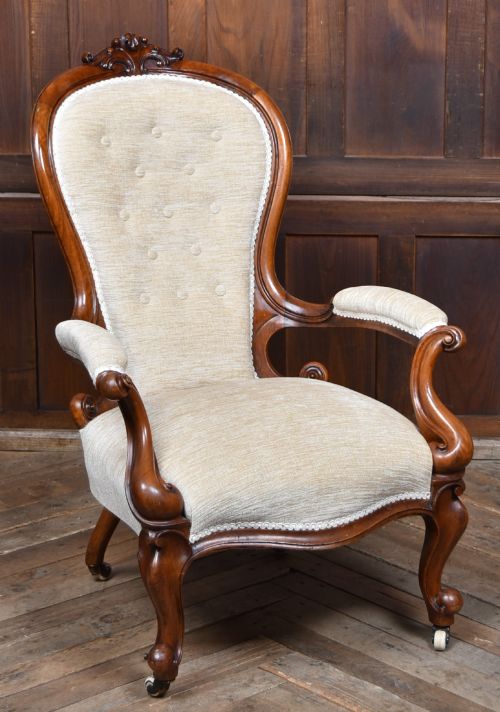
A revival wooden armchair represents a later nineteenth or early twentieth-century interpretation of earlier historic furniture styles, including Gothic, Renaissance, and Georgian periods. When searching for a revival wooden armchair, buyers typically encounter sturdy oak library seats, carved walnut salon chairs, and mahogany elbow chairs originating from Victorian and Edwardian workshops.
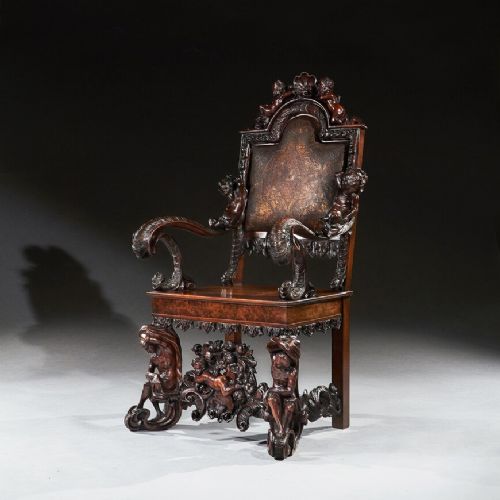
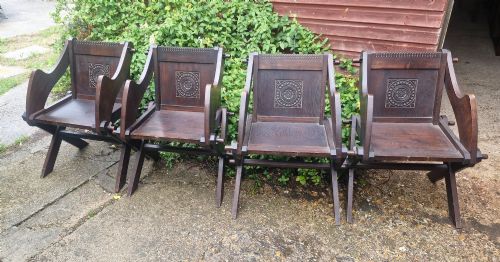
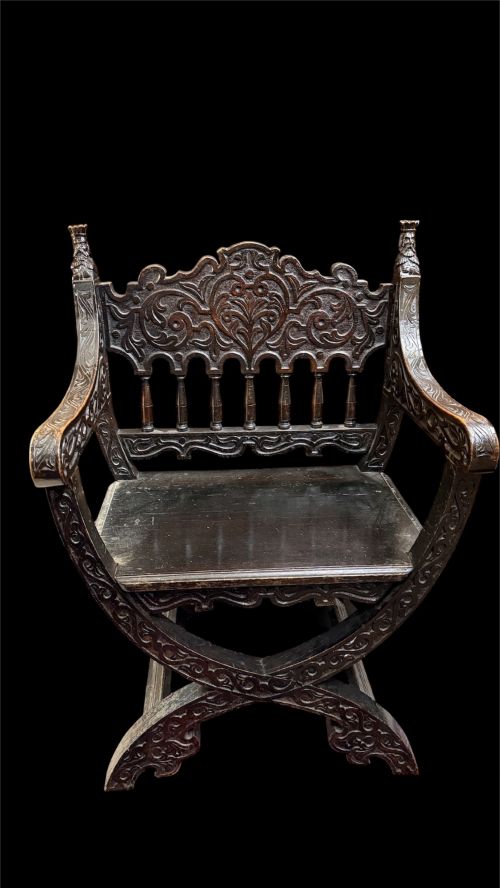
The objects span from domestic desk chairs and upholstered library seats to ecclesiastical Glastonbury forms and grand architectural thrones. Oak and walnut dominate the examples, frequently displaying intricate carved details that echo seventeenth-century or medieval motifs.
Materials and construction methods
Cabinetmakers utilised dense timbers such as oak, walnut, and mahogany, selecting each wood for its strength and grain pattern when shaping heavy frames and curved armrests. Joinery relied on traditional mortise and tenon construction to support structural weight in high-back desk chairs and library armchairs.
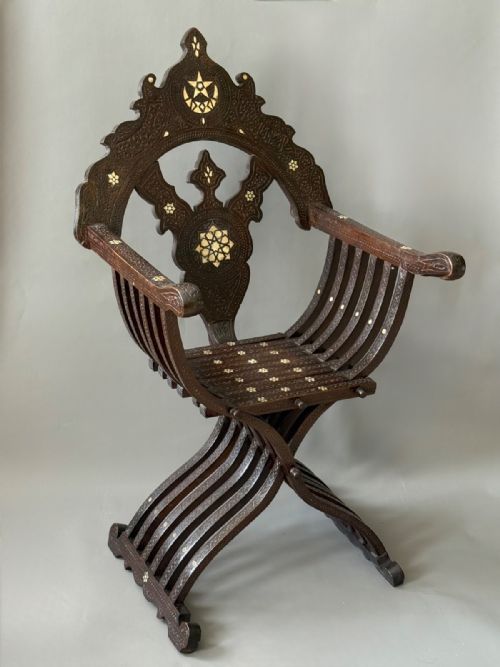
Surface ornamentation involved deep hand carving, delicate satinwood inlay, and occasional brass or mother-of-pearl embellishments set directly into the wood. Upholstered versions incorporated horsehair or fabric padding fixed securely over internal webbing.
Revival Wooden Armchair Retail Price Guide 2026
Typical asking prices for revival wooden armchair among the pieces listed under this phrase on Sellingantiques today, from the lower quarter to the upper quarter. They describe what is for sale here now, not the wider market.
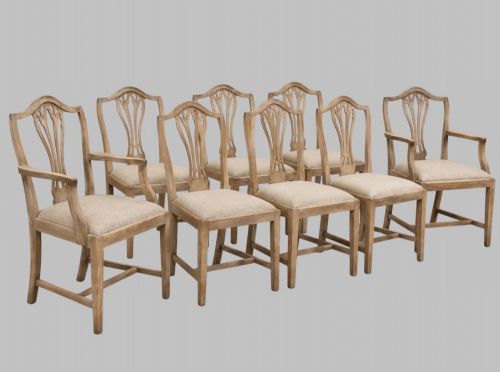
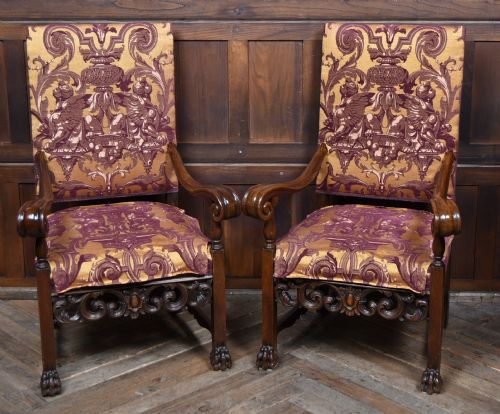
The documented furniture styles include Gothic Revival, Renaissance Revival, Hepplewhite Revival, and Jacobean forms.
Distinctions in craftsmanship
Quality rests primarily in the depth and crispness of the hand-carved ornamentation across the wooden frame, separating standard commercial production from exhibition pieces. Heavy oak and walnut structures with tight, original joinery maintain structural integrity far better than pieces showing excessive movement.
The selection of timber grain and the precision of inlaid satinwood or brass details further indicate the maker's investment of time and skill. Superior examples demonstrate balanced proportions and harmonious revival styling rather than rushed assembly.
Howard and Sons·Andrea Brustolon
The Revival Wooden Armchair Glossary
- Gothic Revival
- A nineteenth-century design movement drawing inspiration from medieval architecture and ecclesiastical furnishings. Pieces often feature pointed arches, tracery, and heavy carved oak.
- Glastonbury chair
- A specific type of folding wooden armchair with slanted armrests and a panel seat, traditionally copied from an ancient monastic relic. Examples frequently appear in solid oak.
- Satinwood
- A pale, lustrous exotic hardwood utilised extensively for fine stringing and decorative inlay work on Edwardian and Georgian revival seating.
- Wainscot chair
- An early heavy wooden armchair constructed with panelled backs and solid wooden seats, recreated during nineteenth-century revival periods.
- Elbow chair
- A traditional term for an armchair, often used to describe seating designed to sit at the head of a dining table or beside a desk.
Revival Wooden Armchair: Frequently Asked Questions
How do I identify a Gothic revival armchair?
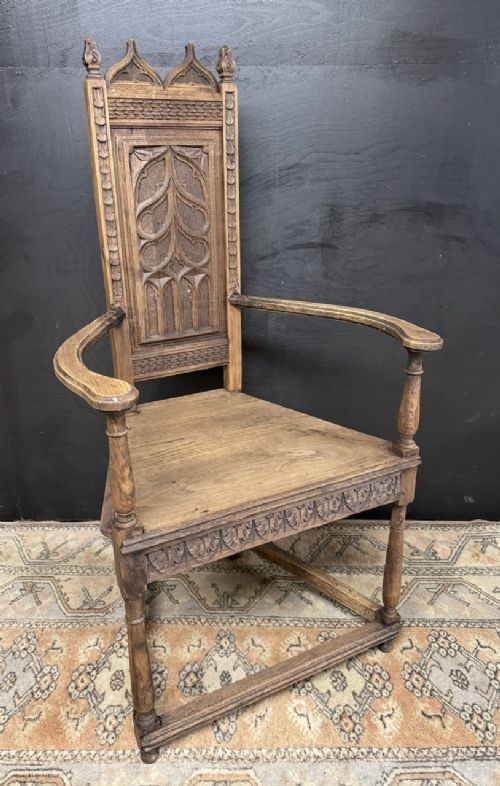
Gothic revival armchairs display architectural motifs such as pointed arches, quatrefoils, and heavy linenfold panelling carved directly into the oak or walnut frame. These seats often possess a solemn, substantial presence reminiscent of medieval choir stalls.
Constructed with strict attention to historic joinery, genuine examples maintain solid proportions and frequently feature high backs designed for libraries or studies.
What is a Glastonbury chair?
A Glastonbury chair is a distinctive wooden armchair featuring sloping arms, a wedge-shaped seat, and an intersecting folding X-frame base. Most revival versions date from the Victorian period and utilise solid oak or pitch pine.
Originally based on a monastic relic preserved in Somerset, these chairs offer a compact footprint combined with a distinct architectural silhouette.
How should I care for a historic wooden armchair?
Maintain the timber by applying a microcrystalline wax polish periodically to nourish the grain and protect the antique finish from drying out. Keep the chair away from direct heat sources and strong sunlight to prevent wood splitting or fabric fading.
Check joint stability regularly, avoiding harsh chemical cleaners that can strip original patination from the oak, walnut, or mahogany surfaces.
What distinguishes Edwardian revival chairs from Victorian ones?
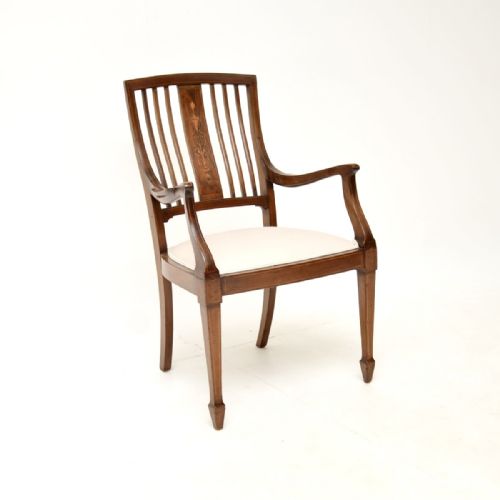
Edwardian revival chairs generally exhibit lighter proportions, brighter satinwood inlay, and a refined delicacy inspired by eighteenth-century Sheraton or Hepplewhite designs. Victorian equivalents tend to be heavier, relying on dark walnut, deep carving, and robust structural mass.
While Victorian makers favoured intense historical interpretations like Gothic and Renaissance revivals, Edwardian workshops preferred elegant painted highlights and neoclassical symmetry.