

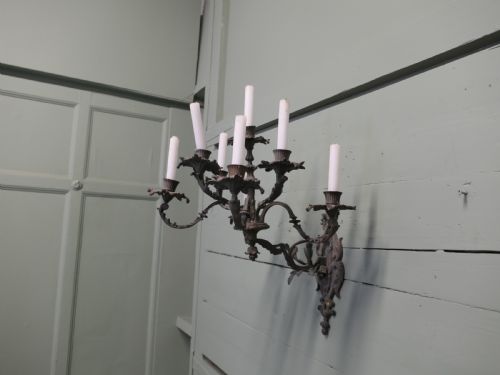


Revival Wall Bracket
These revival wall bracket pieces bring nineteenth and early twentieth century ornamental display into domestic interiors.
Revival Wall Bracket
A revival wall bracket serves as an ornamental shelf or support mounted directly to vertical surfaces, drawing on historic design vocabularies. These decorative ledges and corbels emerge across the nineteenth and early twentieth centuries, spanning Victorian, Edwardian, and later decades.
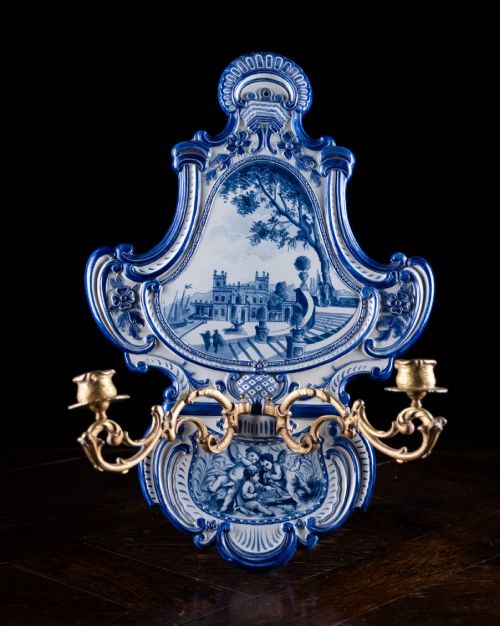
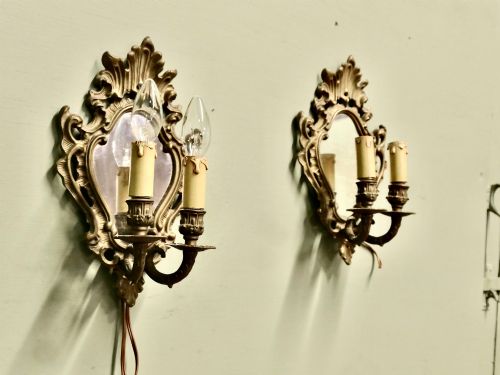
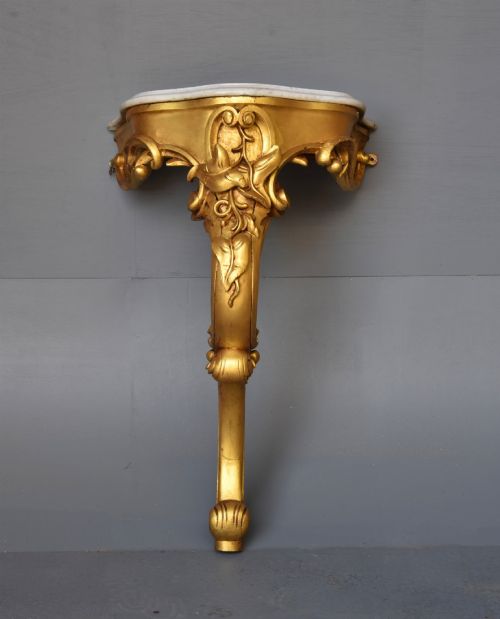
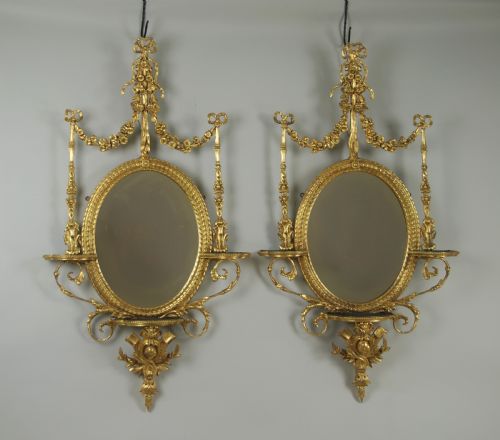
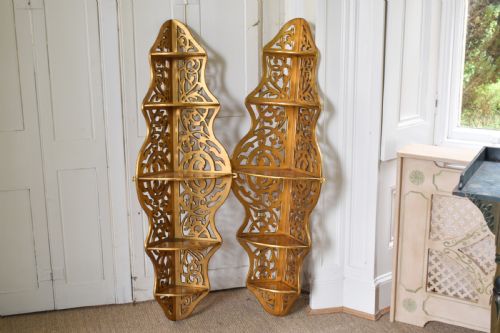
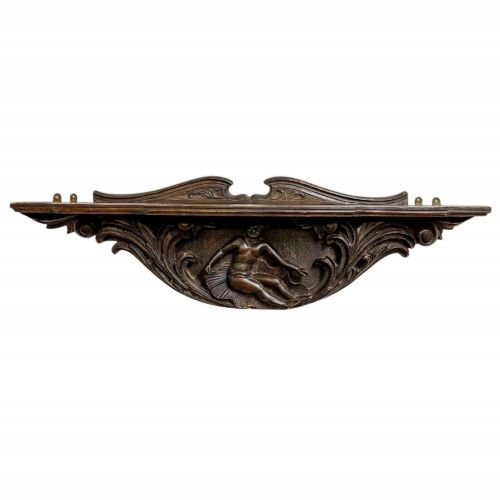
The objects take various forms including wooden ledges, porcelain corbels, and giltwood supports designed to hold small decorative items. Examples range from simple carved timber shelves to elaborate gilt metal and ceramic structures incorporating mirrors or lighting.
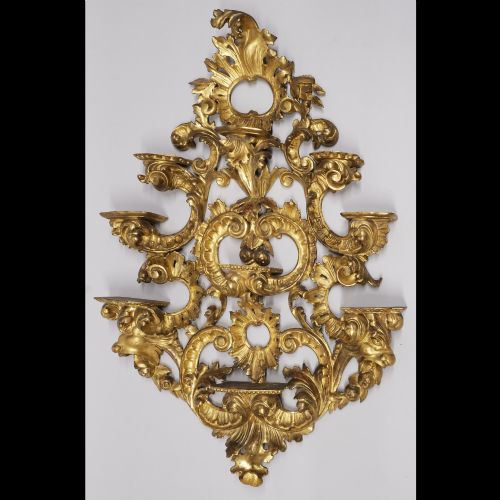
Victorian and Edwardian versions dominate the selection, often channelling earlier aesthetics such as Rococo, Gothic, and Neoclassical styles. Buyers encounter these architectural accents in materials from carved oak and walnut to giltwood and painted terracotta.
What varies in quality
The depth and crispness of carved detail separate superior timber work from mechanical or soft production. Fine pieces exhibit sharp undercut foliage and secure joints, whereas lesser items rely on heavy moulded composition or shallow surface scoring.
Gilding technique defines the visual success of giltwood and ormolu brackets. Hand-applied gold leaf with burnished highlights reflects light cleanly, while flat painted bronze paints lack the warm depth of genuine metal finishing.
Material integration marks the distinction between standard and ambitious pieces. The successful union of porcelain plaques, mirror glass, and cast metal frame components demonstrates careful design and sturdy mechanical fixing.
Revival Wall Bracket Retail Price Guide 2026
Typical asking prices for revival wall bracket among the pieces listed under this phrase on Sellingantiques today, from the lower quarter to the upper quarter. They describe what is for sale here now, not the wider market.
Listings feature items spanning the nineteenth and early twentieth centuries, including Victorian, Edwardian, and 1920s examples.
Luigi Frullini·Villeroy and Boch·Minton·Meissen
The Revival Wall Bracket Glossary
- Giltwood
- Timber coated with gold leaf or metallic powder over a prepared gesso ground. This technique creates a luminous surface common in ornate nineteenth-century display furniture.
- Ormolu
- Gilded bronze or brass mounts fixed to furniture, ceramics, or lighting fixtures. The process involves applying a mercury amalgam or electroplating gold to a base metal.
- Corbel
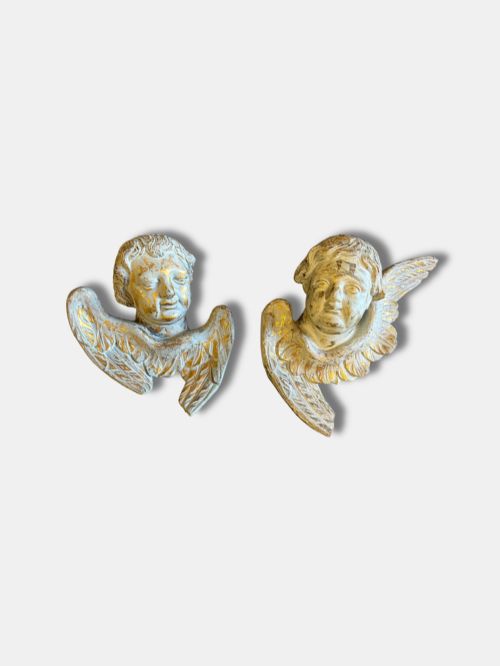
- A structural or decorative bracket projecting from a wall to support a weight above. In revival pieces, these take sculptural forms such as cherubs, sirens, or foliage.
- Gesso
- A plaster mix applied to wood surfaces as a smooth base for gilding and paint. It is carved or moulded before the application of metal leaf.
- Rococo Revival
- A nineteenth-century design style mimicking the asymmetrical curves, C-scrolls, and naturalistic motifs of the eighteenth-century French movement.
Revival Wall Bracket: Frequently Asked Questions
How do I hang a heavy wall bracket safely?
Wall brackets require direct fixing into masonry or timber studs behind plaster to support their projecting weight safely. Heavy giltwood and carved timber pieces demand appropriate screw fixings matched to the wall type.
Ensuring the bracket sits level prevents objects placed upon the shelf from slipping. Professional installation is advisable for large bronze or ceramic combinations.
What styles are common in these wall brackets?
Victorian and Edwardian makers drew heavily on historical periods, producing pieces in Rococo, Gothic, Neoclassical, and French Louis revival styles. These designs reflect a nineteenth-century taste for eclectic historical interiors.
Distinguishing between styles involves looking at the ornament, such as pointed arches for Gothic pieces or swirling scrolls for Rococo examples.
How do I clean giltwood and ormolu pieces?
Giltwood surfaces require gentle dusting with a soft, dry brush to prevent damage to fragile gold leaf layers. Moisture and chemical cleaners strip the delicate gilding from wooden and plaster grounds.
Ormolu mounts tolerate careful cleaning with a dry microfiber cloth. Abrasive polishes should be avoided on all historic metal and gilt finishes.
Can these brackets hold heavy decorative items?
The weight capacity depends entirely on the construction and the strength of the wall fixing. Smaller porcelain and gilt metal brackets suit light display items such as small plates or figurines.
Substantial timber and bronze consoles handle heavier loads if properly anchored. Checking the backplate and mounting points reveals whether a piece is built for display or utility.