




Revival Oak Stool
A revival oak stool brings solid timber, historic joinery and robust architectural character straight into a modern interior.
Revival Oak Stool
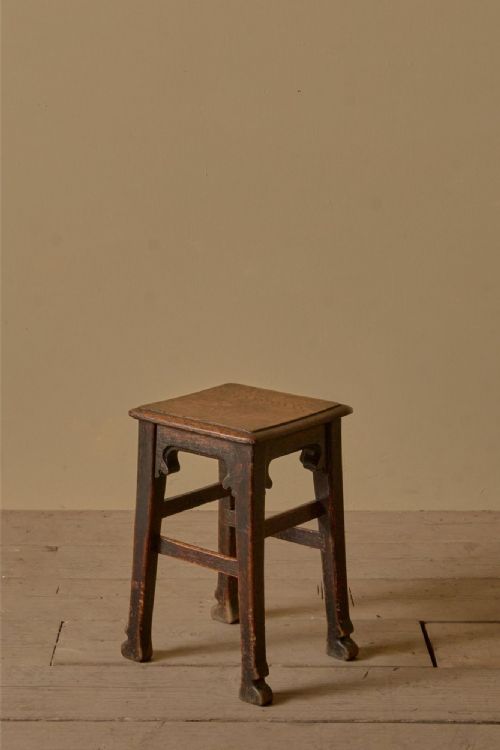
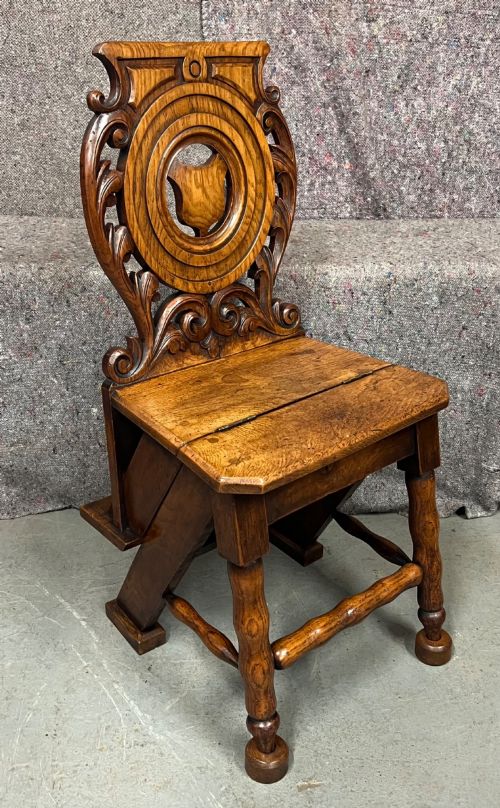
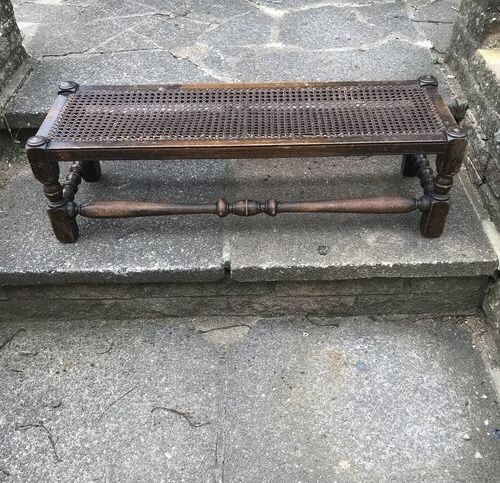
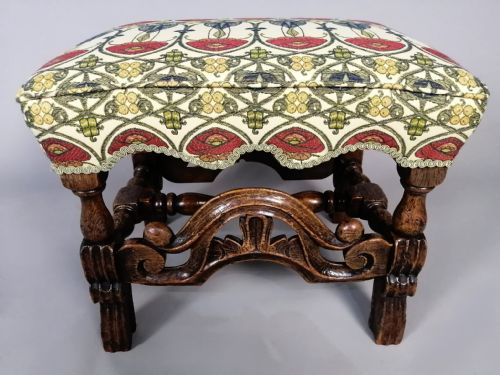
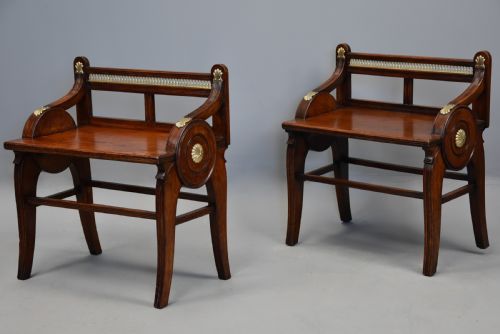
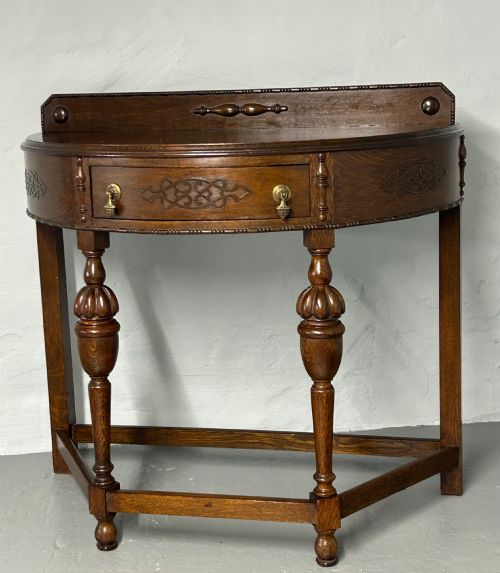
A revival oak stool represents a deliberate nod to earlier centuries, drawing heavily on Elizabethan, Jacobean and Gothic forms translated through nineteenth- and early twentieth-century craftsmanship. When searching this phrase, a buyer encounters pieces ranging from sturdy joint stools and low footstools to elaborate window seats and metamorphic library steps.
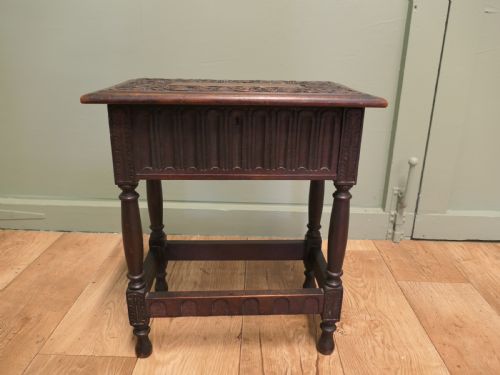
The most common examples on this page date from the nineteenth and early twentieth centuries, capturing the Victorian and Edwardian appetite for historical revivals. These include carved joint stools, boarded trestle forms, and occasional seating utilising traditional pegged construction.
Makers and designers of these periods looked backward to sixteenth- and seventeenth-century domestic interiors for inspiration. Consequently, the resulting furniture bridges the gap between utilitarian ancient forms and comfortable nineteenth-century living.
How they were made
Solid oak forms the structural core of these pieces, often selected for its durability and prominent grain pattern. Joinery relies on traditional pegged mortise and tenon joints, creating rigid frames designed to withstand heavy daily use without modern metal fasteners.
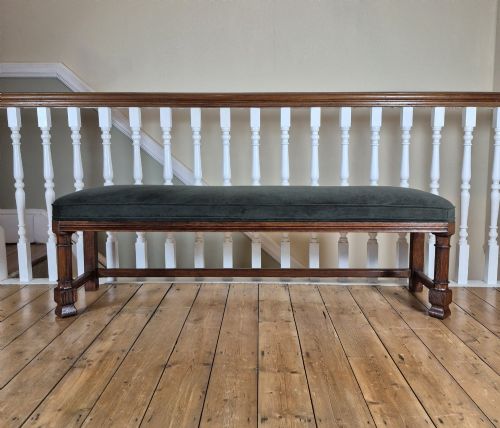
Secondary materials appear primarily for upholstery and decorative contrast. Leather, velvet, cane, and woven fabric pad the seats of benches and footstools, while turned brass and iron hardware occasionally accent library steps and metamorphic forms.
Carving and turning give these pieces their distinct historical silhouette. Craftsmen utilised gouges and chisels to execute strapwork, linenfold, and Celtic motifs by hand, complementing bobbin-turned or baluster legs.
Revival Oak Stool Retail Price Guide 2026
Typical asking prices for revival oak stool among the pieces listed under this phrase on Sellingantiques today, from the lower quarter to the upper quarter. They describe what is for sale here now, not the wider market.
Miniature apprentice pieces and doll-sized joint stools prove that historic cabinetmakers enjoyed practicing their complex joinery on a tiny scale.
What varies in quality
The depth and crispness of the hand-carved ornamentation separate exceptional examples from routine workshop production. Sharp, deeply undercut strapwork and figural carving indicate a maker working with genuine artistic ambition rather than a hurried output.
Structural integrity and timber selection dictate the upper tier of the range. Heavy, dense heartwood with quartersawn medullary rays exhibits superior stability and visual richness compared to plain-sawn utility timber.
Fidelity to historical precedent marks the most successful revival pieces. Those designed by notable firms or following specific architectural movements, such as the Gothic manner of A.W.N. Pugin, display a rigorous understanding of historic proportions.
James Shoolbred & Co·Richard Hicks Bridgens
The Revival Oak Stool Glossary
- Joint stool
- A sturdy wooden stool constructed with mortise and tenon joints pegged together rather than glued. These pieces served multiple domestic purposes in early households.
- Gothic Revival
- An architectural and decorative style drawing on medieval forms, featuring pointed arches, tracery and quatrefoils. It found renewed popularity during the nineteenth century.
- Bobbin turning
- A method of woodturning that creates a series of rounded, spool-like shapes along the length of a furniture leg or stretcher. It became particularly popular during the seventeenth century and its later revivals.
- Metamorphic furniture
- Pieces designed to transform from one form of furniture into another, such as an armchair that folds down into a set of library steps. This ingenious engineering was especially favored in nineteenth-century libraries.
- Box stool
- A low seat featuring a hinged lid that lifts to reveal a concealed compartment underneath. They provided hidden storage in compact historic rooms.
- Strapwork
- A decorative motif carved in low relief, resembling interlaced strips of leather or parchment rolled at the ends. It is a defining feature of Elizabethan and Jacobean design.
Revival Oak Stool: Frequently Asked Questions
What is a joint stool?
A joint stool is a sturdy wooden seat built with joined framing timbers rather than turned legs alone. Carpenters constructed them using precise pegged mortise and tenon joints.
They earned their name because the carpenter joined the frame pieces together securely. Historically, people used them for seating at the table or as portable platforms around the home.
How do I spot a revival piece?
Revival pieces combine historical styles like Gothic or Jacobean ornamentation with nineteenth- or twentieth-century construction methods. Look closely at the timber preparation, tool marks and internal framing.
While they mimic older centuries, the machine-sawn timber dimensions and secondary woods usually betray their true Victorian or Edwardian origins.
Where should I use an oak footstool?
An oak footstool works well beside low armchairs, firesides or deep sofas in a traditional or eclectic living room. Their solid timber frames provide stable support and visual grounding.
Many examples also double as small occasional tables for holding books or decorative objects when not in use for seating.
How do I care for antique oak?
Care for antique oak by keeping it away from direct heat sources and sudden humidity changes to prevent the timber from splitting. Dust regularly with a dry cloth and apply natural beeswax sparingly.
Avoid modern liquid polishes containing silicone, which build up on the surface and dull the historic patina over time.