






Revival Oak Coffer
A revival oak coffer brings substantial timber presence into a hallway, combining traditional storage with seating in forms from the Victorian era onwards.
Revival Oak Coffer
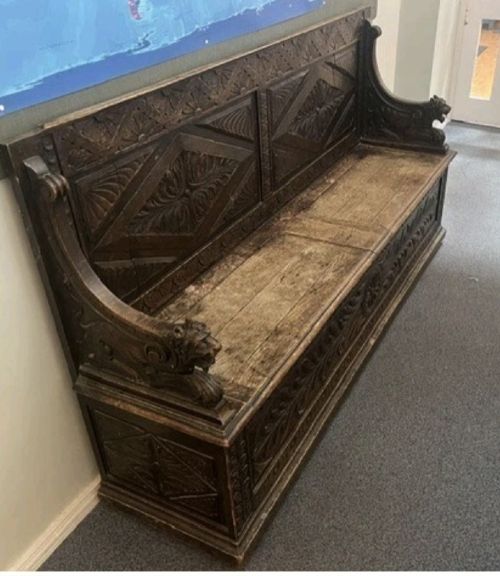
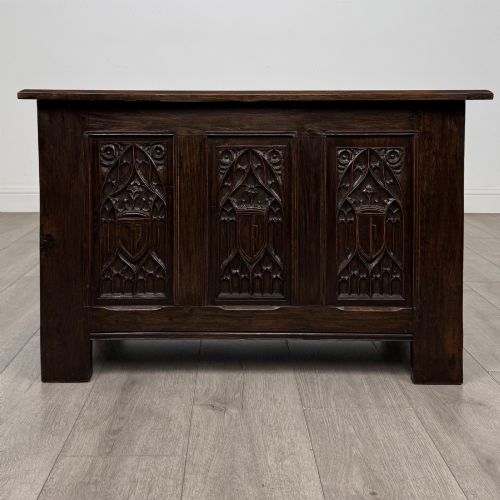
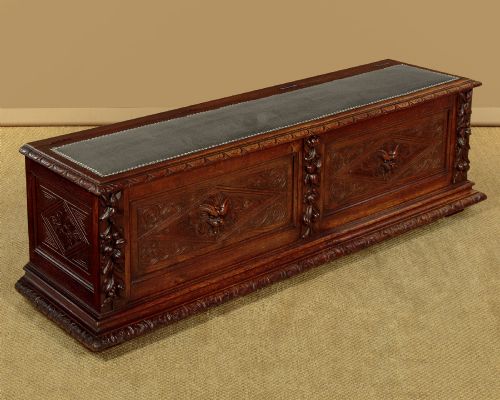
A revival oak coffer is essentially a sturdy storage chest or box, frequently adapted into a hall bench, settle or monks bench with a lift-up seat and hinged back.
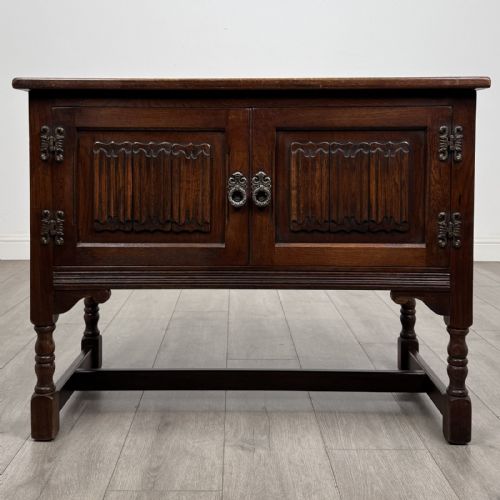
The pieces seen here span periods from the eighteenth century to the mid twentieth century, drawing heavily on earlier Jacobean, Elizabethan, Gothic and Renaissance revival styles.
Buyers most commonly encounter Victorian and early twentieth-century interpretations, featuring heavy timber construction and carved decoration suited for entrance halls and reception rooms.
What varies in quality
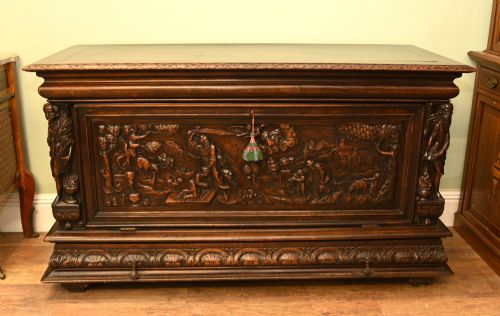
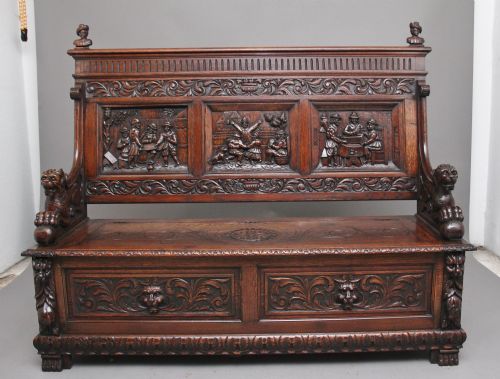
Quality rests in the depth and crispness of the timber carving, the selection of figured oak grain, and the architectural proportion of the overall form.
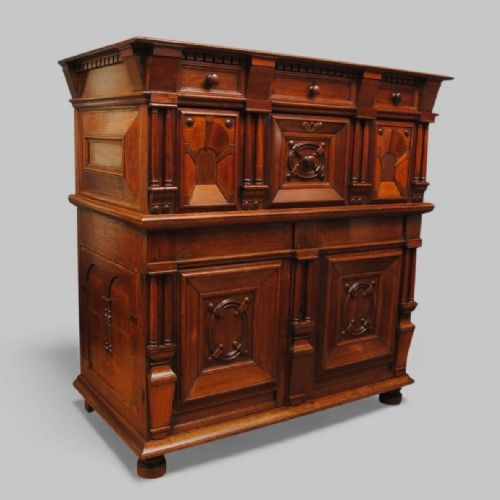
Pieces range from simpler utilitarian blanket boxes to heavily carved baronial settles and monumental hall benches with sophisticated structural joinery.
Revival Oak Coffer Retail Price Guide 2026
Typical asking prices for revival oak coffer among the pieces listed under this phrase on Sellingantiques today, from the lower quarter to the upper quarter. They describe what is for sale here now, not the wider market.
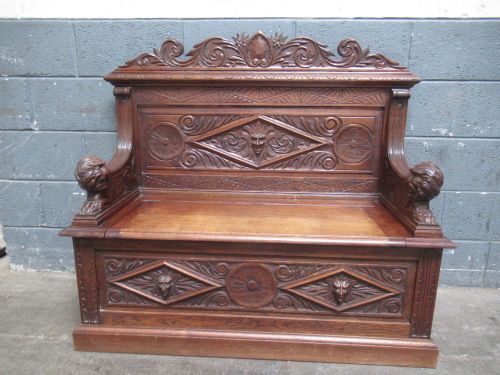
Several pieces keep watch over the hallway with carved Green Man foliage masks peering out from the timber.
Jack Grimble
The Revival Oak Coffer Glossary
- Coffer
- A large wooden chest traditionally used for storing valuables or linen. Many examples feature hinged lids and elaborate front carvings.
- Monks Bench
- A convertible piece of furniture functioning as a table with a fold-over top or as a high-backed hall seat with a box base.
- Settle
- A wooden bench with high backs, solid armrests and an enclosed seat compartment serving as storage.
- Linenfold
- A style of wood carving that imitates folded linen cloth, frequently seen on panelled sixteenth-century and revival cupboards and chests.
- Green Man
- A sculptural architectural motif representing a human face surrounded by or sprouting from leaves and foliage.
Revival Oak Coffer: Frequently Asked Questions
What is a revival oak coffer?
A revival oak coffer is a storage chest or hybrid bench produced during the nineteenth and twentieth centuries in imitation of earlier historic styles. These pieces utilise traditional woodworking methods to replicate medieval and Renaissance forms.
They serve as practical furniture for modern hallways, functioning simultaneously as seating and enclosed storage for household items.
How do I use a monks bench?
A monks bench operates as a dual-purpose item of furniture featuring a hinged back that swivels or folds down to create a table surface. The base conceals a deep compartment accessed via a lift-up seat.
In a hallway or reception room, it provides a convenient surface for placing items upon entry while offering hidden storage space.
How are different periods told apart?
Distinguishing between periods involves examining the character of the oak timber, the tool marks left by makers, and the specific nuances of the revival style applied. Victorian and later revival pieces often display machine-assisted elements alongside hand carving.
Earlier nineteenth-century examples tend to exhibit heavier proportions and darker patina, whereas pieces from the nineteen-twenties reflect cleaner Arts and Crafts influences.
Where should I place a hall settle?
A hall settle looks best positioned against a substantial wall in a generous entryway, corridor or reception hall where its architectural presence can be appreciated. The high back creates a welcoming enclosure and protects against draughts.
Ensure adequate clearance around the piece so that lift-up lids and fold-over table tops operate without obstruction.