

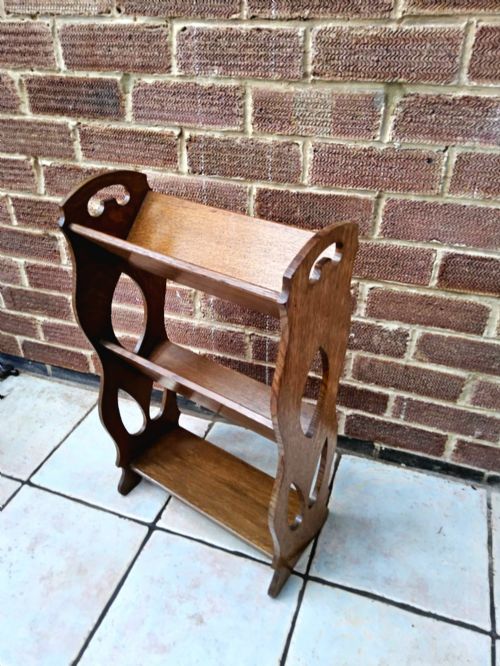
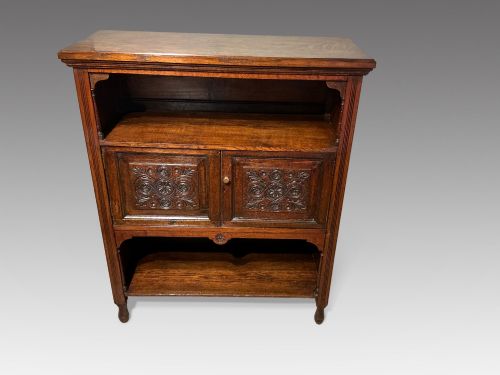
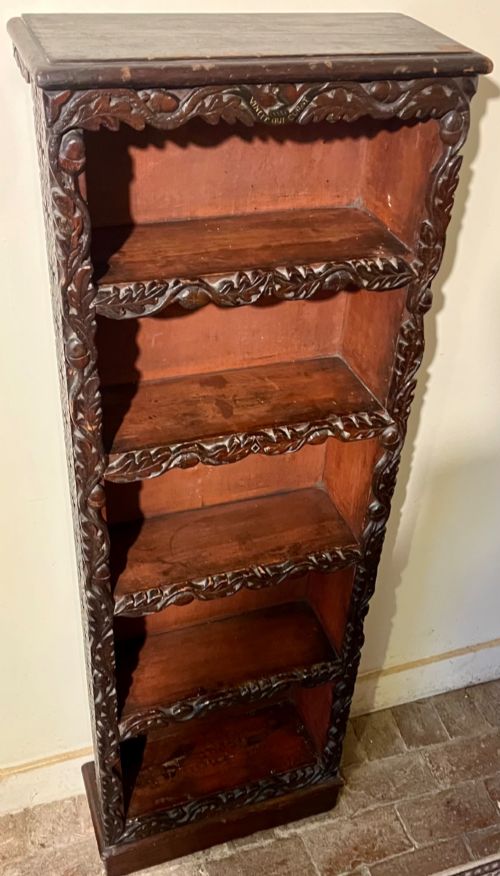
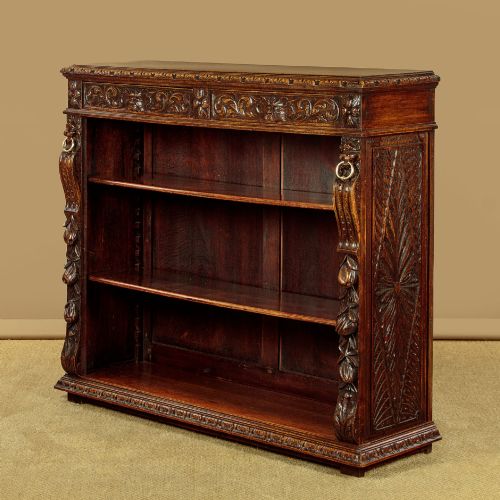


Revival Oak Bookshelf
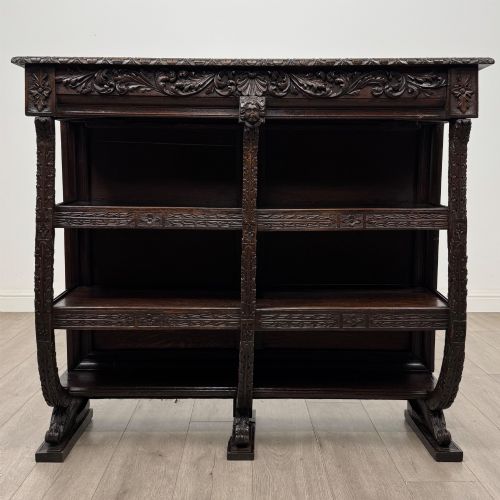
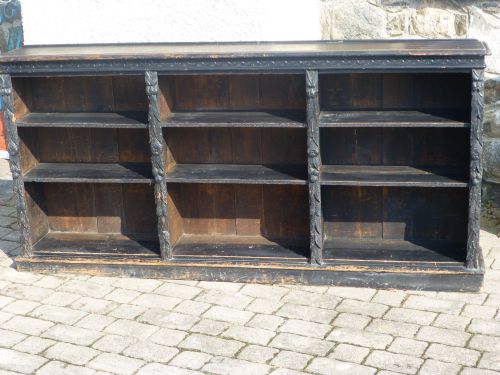
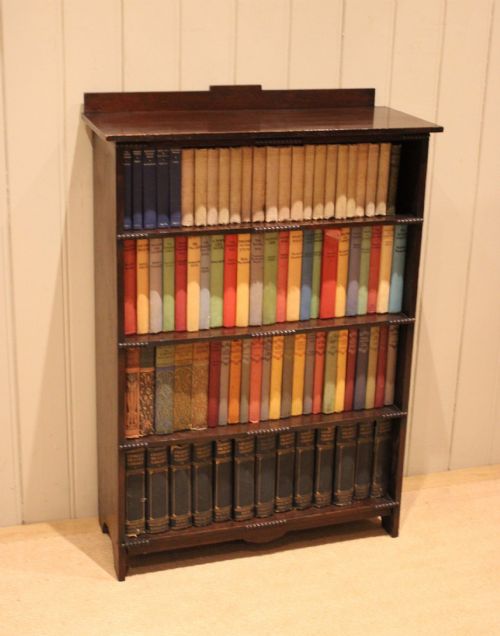
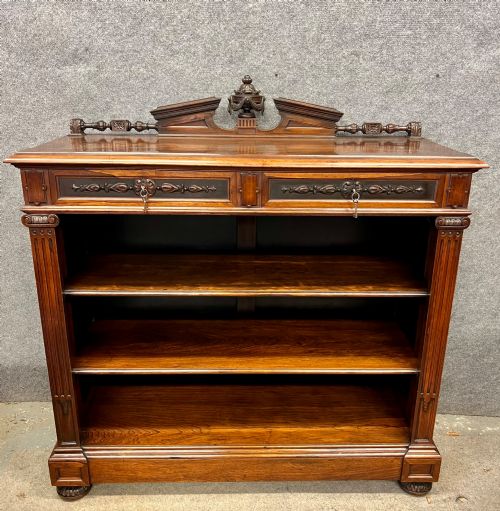
A revival oak bookshelf brings historical weight to a room, offering sturdy open timber storage rooted in centuries past.
Revival Oak Bookshelf
When you search for a revival oak bookshelf, you encounter sturdy timber furniture shaped by historical design movements. These pieces range from compact wall shelves to tall standing library bookcases.
The selections on this page predominantly date from the nineteenth century and the early twentieth century. Victorian and Edwardian makers drew heavily on earlier periods, producing Jacobean, Tudor, and Gothic Revival forms.
Open formats dominate the listings, frequently featuring adjustable shelves and dwarf proportions. Carved details such as green man motifs and beaded edges appear frequently across these examples.
How they were made
Solid oak serves as the primary material for these constructions, occasionally complemented by ebonised finishes, walnut, and beech. Brass hardware and metal fixings provide structural support and functional detailing.
Cabinetmakers utilised traditional joinery alongside applied decorative carvings to achieve the rich historical aesthetic. Surfaces often received dark stains or polishing to accentuate the natural grain of the timber.
Revival Oak Bookshelf Retail Price Guide 2026
Typical asking prices for revival oak bookshelf among the pieces listed under this phrase on Sellingantiques today, from the lower quarter to the upper quarter. They describe what is for sale here now, not the wider market.
Keep an eye out for hidden foliage where a carved green man peers out from the oak timbers to watch over your collection.
What varies in quality
The depth and execution of the carved ornamentation define the visual distinction between standard items and superior examples. Elaborate green man motifs and crisp architectural mouldings indicate skilled craftsmanship.
Timber selection and structural proportion also separate ordinary items from finer ones. Solid oak construction with adjustable shelving and integrated beaded edges demonstrates deliberate and lasting construction choices.
The Revival Oak Bookshelf Glossary
- Green Man
- A sculptural architectural motif depicting a face encompassed by or sprouting leaves and vines. This carved detail frequently decorates nineteenth-century revival furniture.
- Dwarf Bookcase
- A low-standing bookcase designed to sit beneath window height or within smaller domestic spaces. These pieces often feature open shelving for easy access.
- Gothic Revival
- An architectural and decorative style drawing inspiration from medieval design. It is characterised by pointed arches, heavy carvings, and ecclesiastical motifs.
- Beaded Edge
- A narrow, rounded decorative moulding applied along the border of shelves or panels. This detail adds subtle textural definition to the woodwork.
Revival Oak Bookshelf: Frequently Asked Questions
What periods do these bookcases date from?
The listings span the nineteenth century through the early twentieth century, encompassing Victorian, Edwardian, and interwar periods.
Maker interpretations during these decades drew inspiration from earlier Renaissance, Tudor, and Gothic eras.
How were these bookcases used historically?
These pieces functioned as practical storage for growing personal libraries in domestic studies, libraries, and parlours.
Open shelving allowed for quick access to frequently read volumes, while dwarf versions maximised wall space beneath windows.
Are the shelves adjustable?
Many of the open library bookcases feature adjustable shelving systems to accommodate books of varying heights.
This flexibility distinguishes practical library furniture from fixed architectural shelving units.
What distinguishes Gothic Revival oak pieces?
Gothic Revival items incorporate medieval architectural elements such as pointed arches, tracery, and heavy carved woodwork.
These pieces often utilise dark solid oak to create a solemn, historic presence.