

Revival Oak Armchairs
Revival oak armchairs bring solid historic character to a room, drawing on centuries of design through later craftsmanship.
Revival Oak Armchairs
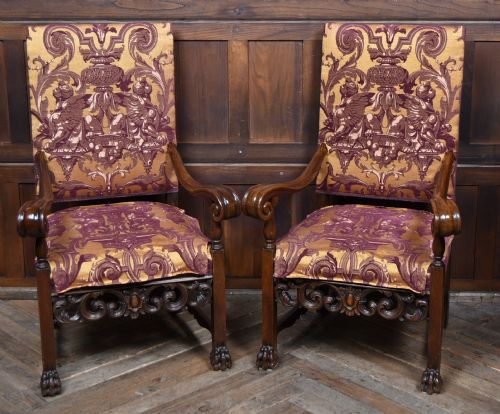
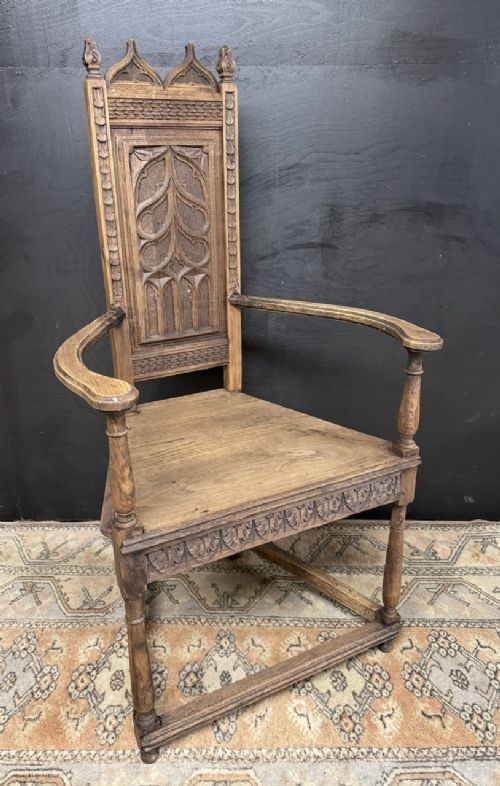
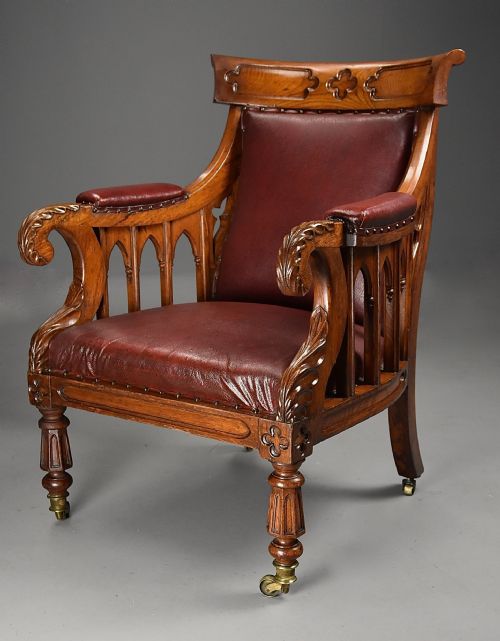
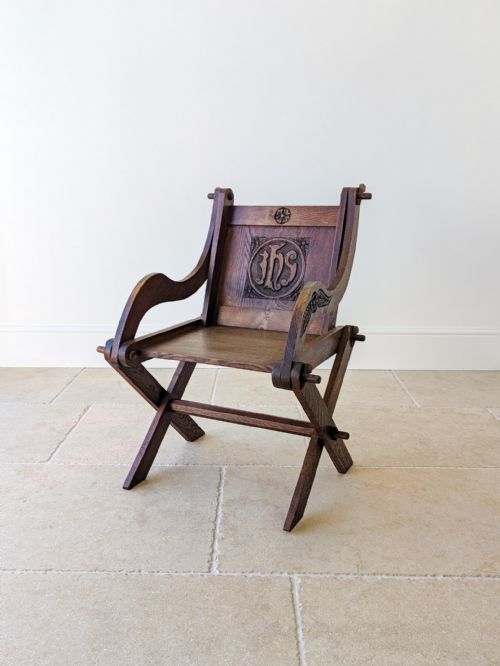
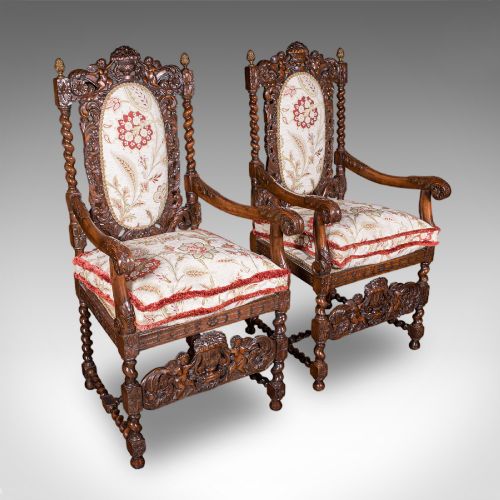
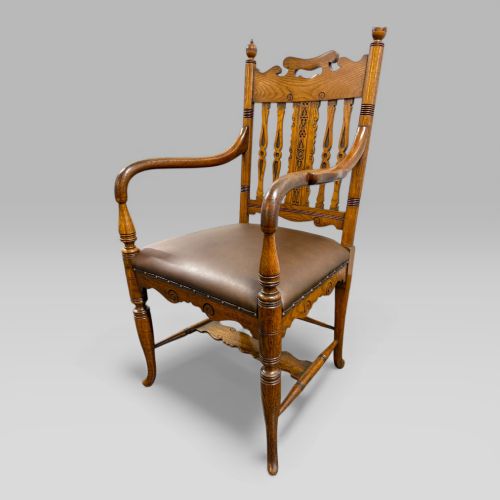
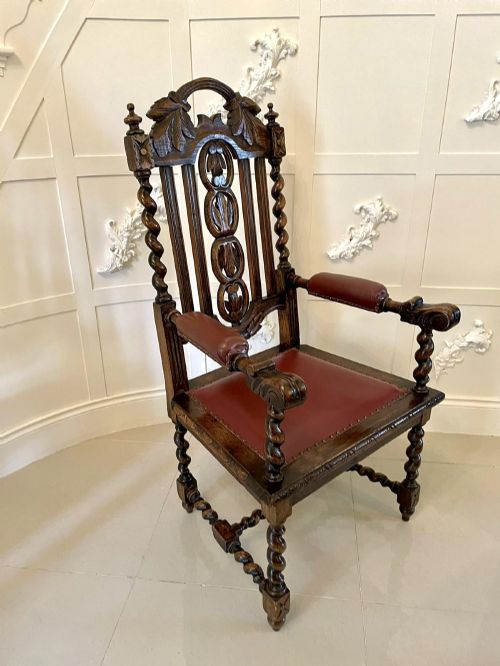
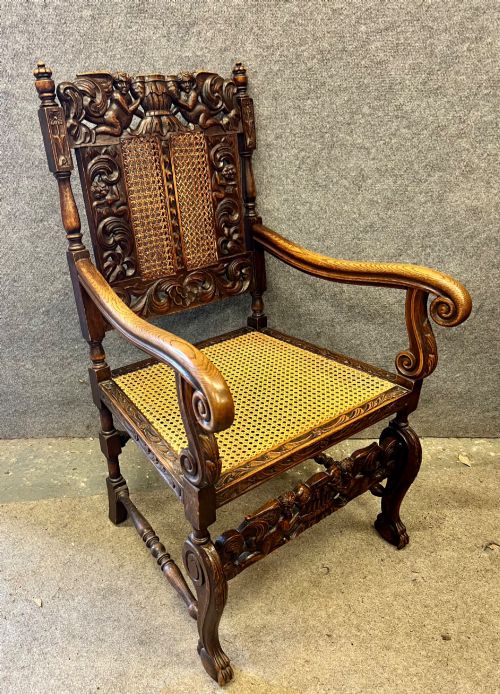
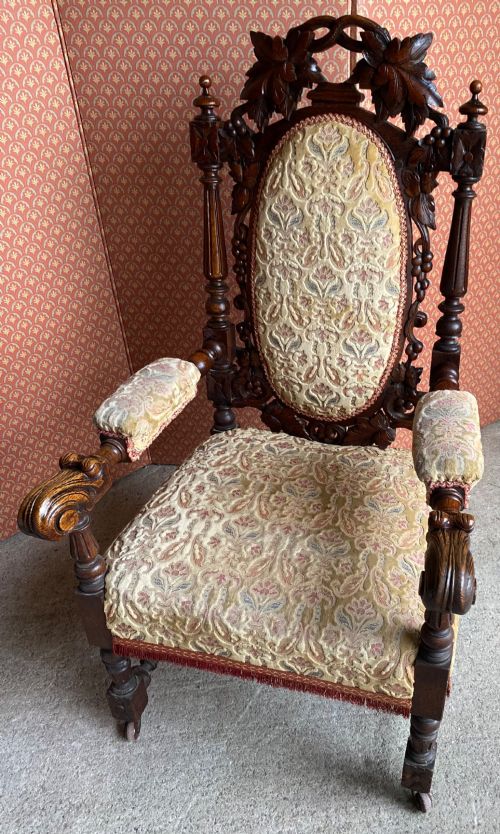
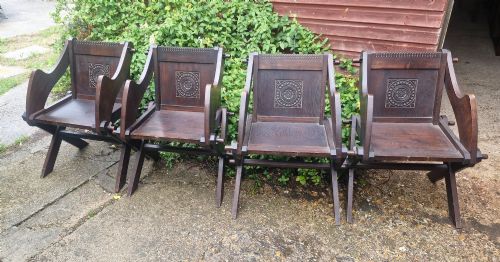
Revival oak armchairs encompass heavy timber seating produced during the nineteenth and early twentieth centuries, drawing inspiration from earlier historic eras like Gothic, Jacobean, and Carolean styles. Buyers encounter various interpretations, from imposing baronial throne chairs and library seats to simpler elbow chairs and Glastonbury designs.
The pieces on this page span the Victorian, Edwardian, and later periods up to the 1930s, reflecting a sustained Victorian and post-Victorian enthusiasm for historic domestic and ecclesiastical furniture forms. Many examples adopt specific regional or stylistic revivals, such as French Renaissance Revival or seventeenth-century English turning.
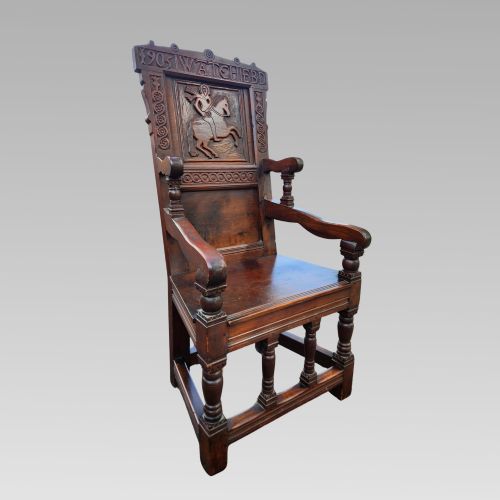
Makers adapted older vernacular forms, including turners chairs and wainscot chairs, for contemporary nineteenth and twentieth-century interiors, resulting in robust seating made predominantly from solid oak. Buyers frequently find matching pairs or sets alongside individual library, desk, and hall armchairs.
What varies in quality
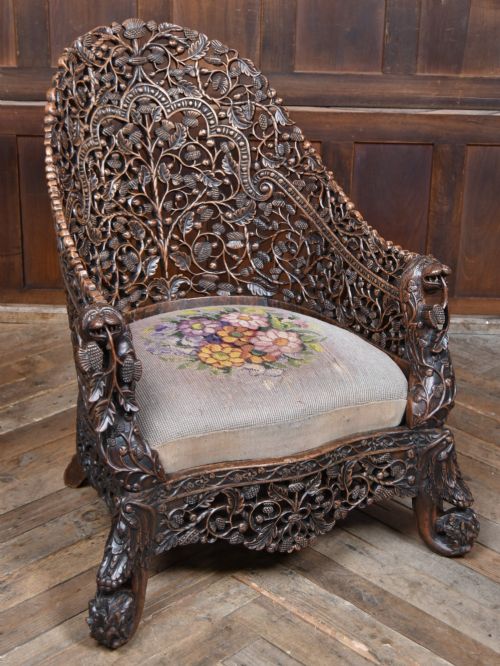
The standard of a revival oak armchair rests on the depth and crispness of the timber carving, the selection of figured oak, and the architectural coherence of the overall design. Pieces attributed to notable designers or specific firms display superior proportion and hand-carved detail compared to mass-produced workshop variants.
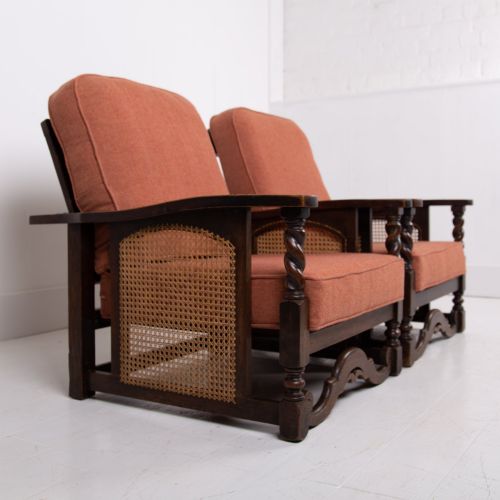
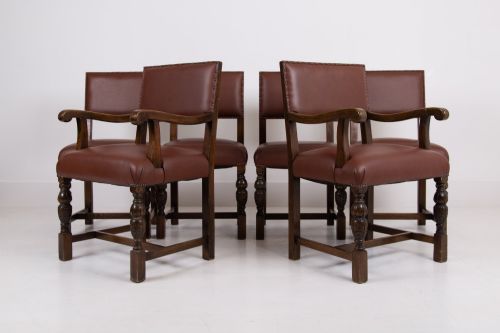
Structural integrity depends on the quality of the original timber framing and the preservation of secondary materials like leather, cane, or turned spindles. Higher quality examples maintain substantial proportions and balanced weight, particularly in large library or baronial armchair forms.
Revival Oak Armchairs Retail Price Guide 2026
Typical asking prices for revival oak armchairs among the pieces listed under this phrase on Sellingantiques today, from the lower quarter to the upper quarter. They describe what is for sale here now, not the wider market.
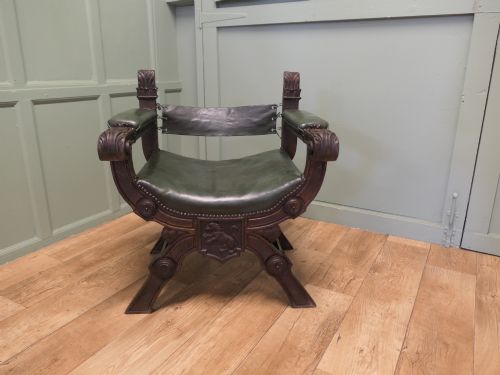
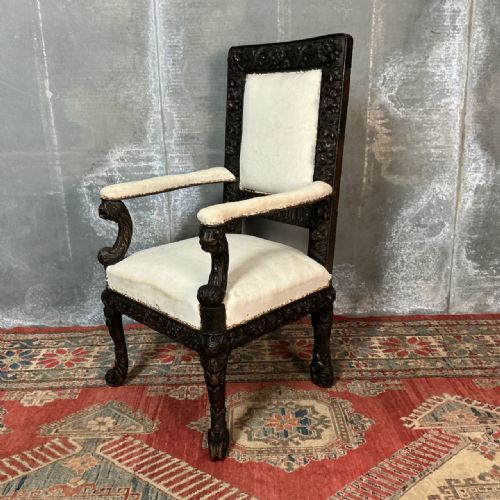
One nineteenth-century model borrows classical motifs to present a lion monopodia armchair designed after Thomas Hope.
Gillows·Bruce James Talbert·Thomas Hope
The Revival Oak Armchairs Glossary
- Wainscot chair
- A heavy wooden armchair with a panelled back, solid wooden seat, and turned legs, popular in the sixteenth and seventeenth centuries and revived in the nineteenth century.
- Glastonbury chair
- A distinctive nineteenth-century revival chair design based on an ancient relic, featuring an X-framed base and a sloping panelled back.
- Turner's chair
- A type of chair constructed entirely from turned wooden spindles and rails, also known as a round chair or spa-chair.
- Monopodia
- A decorative furniture support featuring a carved animal leg and foot, frequently seen in nineteenth-century revival seating after classical models.
- Caquetoire
- A sixteenth-century style of conversation chair with a high, narrow back and trapezoidal seat, often revived during the nineteenth century.
Revival Oak Armchairs: Frequently Asked Questions
What periods do these revival armchairs date from?
The pieces listed span the nineteenth century, the Victorian and Edwardian eras, and early twentieth-century decades up to the 1930s.
Craftsmen during these periods reinterpreted earlier historic styles, producing solid oak seating that mirrors seventeenth-century and medieval forms.
Are these chairs suitable for daily desk use?
Several examples on this page are specifically designated as desk chairs, including solid oak swivel models from the Victorian era.
Buyers should check the seat height and arm clearance to ensure compatibility with modern desk dimensions.
What is a Turner's chair?
A Turner's chair is built entirely from turned wooden spindles assembled in a triangular or round footprint.
Nineteenth-century makers revived this early Saxon and medieval form using solid oak timber and traditional joinery techniques.