



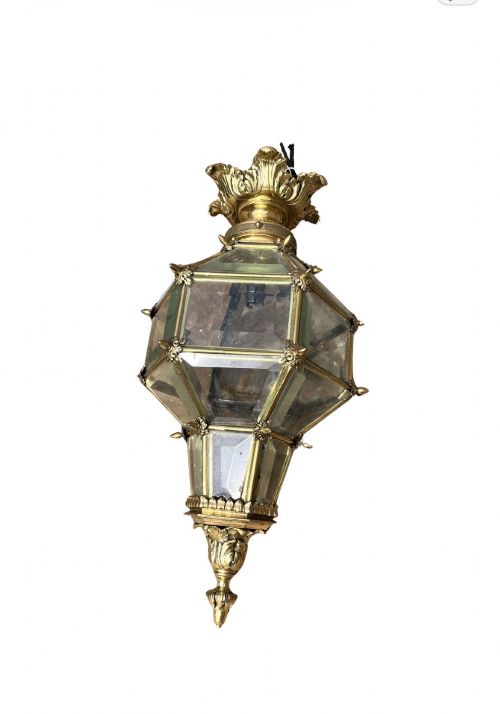
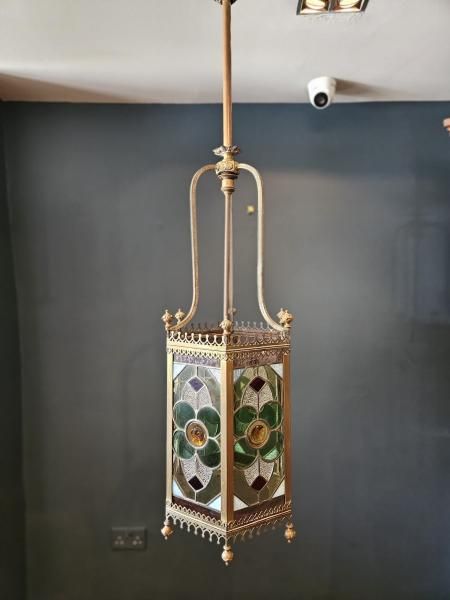
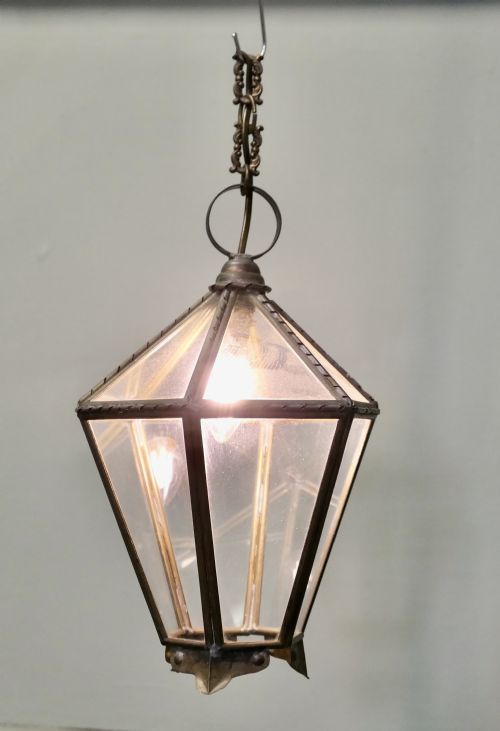


Revival Hanging Light
A revival hanging light brings dramatic illumination to a hallway or high ceiling through historic forms executed in brass, bronze, and iron.
Revival Hanging Light
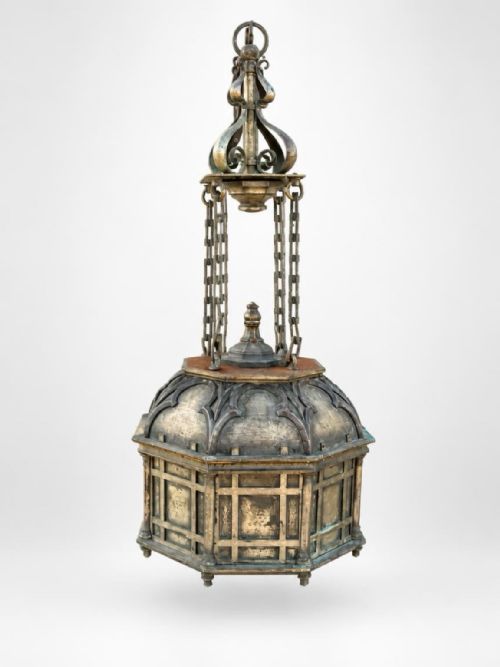
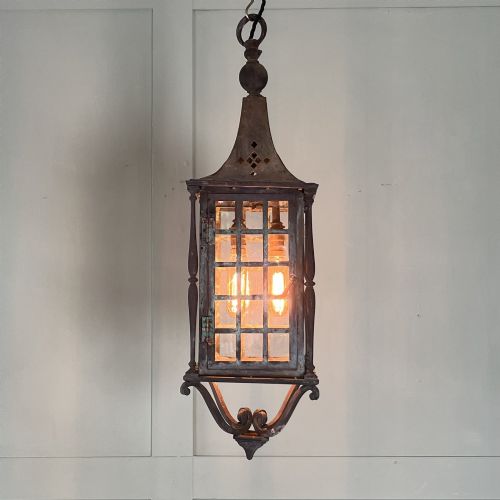
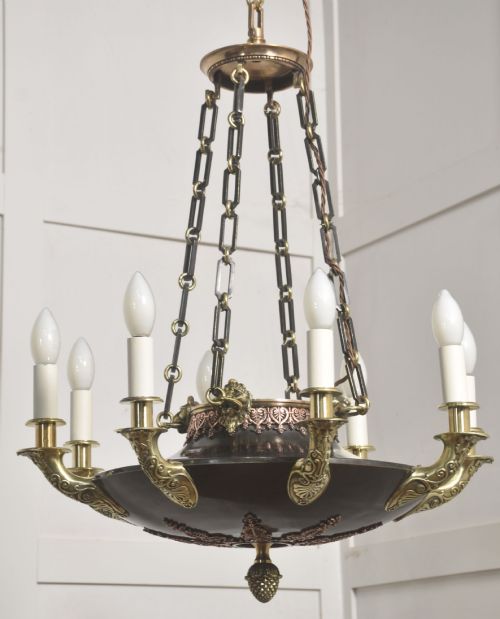
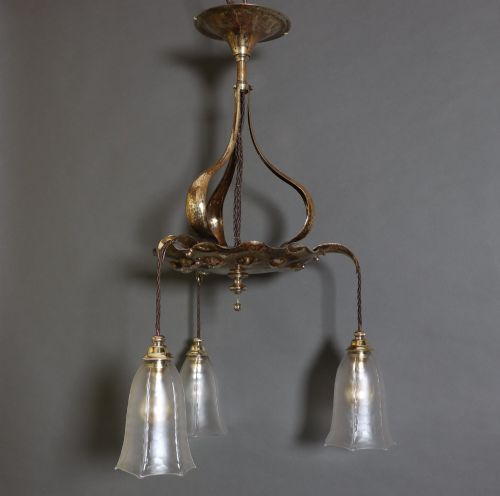
A revival hanging light encompasses lanterns, pendants, and multi-branch chandeliers drawn from historic architectural styles. When searching for a revival hanging light, collectors encounter pieces spanning the nineteenth and early twentieth centuries, heavily influenced by Gothic, Arts and Crafts, and Empire design vocabulary.
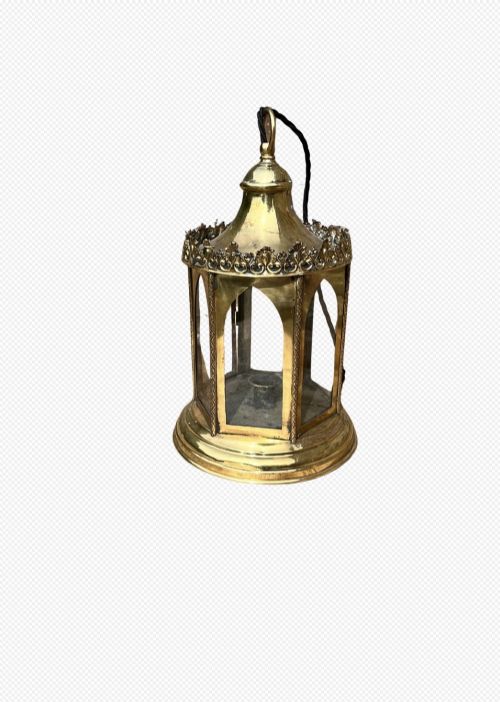
The most common forms on this page are brass and glass hall lanterns, alongside substantial chandeliers fashioned in bronze and gilt brass. These fixtures originate from English and continental workshops, often designed originally for churches, large halls, or exterior porches.
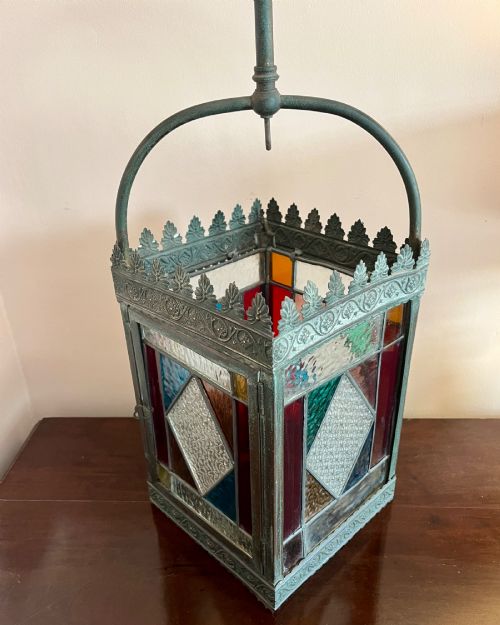
Makers drew directly on medieval, Victorian, and classical motifs, producing fixtures that ranged from simple domestic hall lights to elaborate ecclesiastical coronas. The survival of original leaded glass, coloured panes, and opening doors distinguishes these period items from modern reproductions.
Materials and Construction
Construction relies heavily on cast and sheet brass, bronze, and wrought iron, frequently combined with leaded or coloured glass panels. Metalwork components are assembled through soldering, riveting, or traditional blacksmithing techniques, supporting heavier glass elements within structural frames.
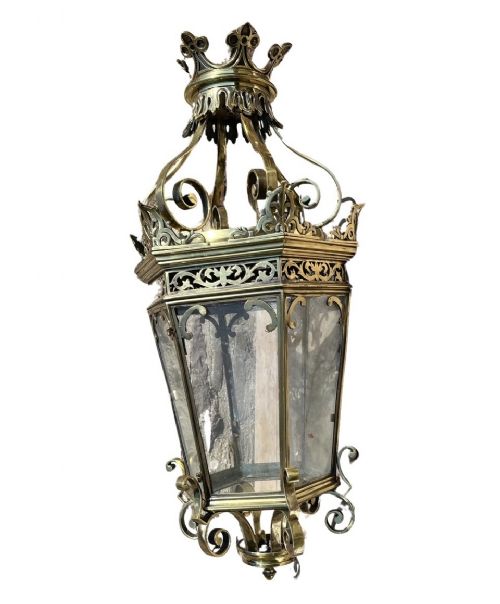
Surface treatments include gilding, patination, and polished finishes, with some pieces retaining verdigris or darkened metal surfaces acquired over decades of exposure. Lanterns often incorporate hinged access doors and decorative crowns, utilising structural lead to secure individual glass segments.
Revival Hanging Light Retail Price Guide 2026
Typical asking prices for revival hanging light among the pieces listed under this phrase on Sellingantiques today, from the lower quarter to the upper quarter. They describe what is for sale here now, not the wider market.
Listings feature materials spanning brass, wrought iron, bronze, lead, gilt brass, copper, and glass.
Assessing Quality and Execution
Quality reveals itself in the weight of the cast metal, the precision of the joints, and the artistic ambition of the decorative hardware. Superior examples display crisp chasing on bronze or brass, substantial cast iron framing, and thick bevelled or stained glass rather than thin machine-cut panes.
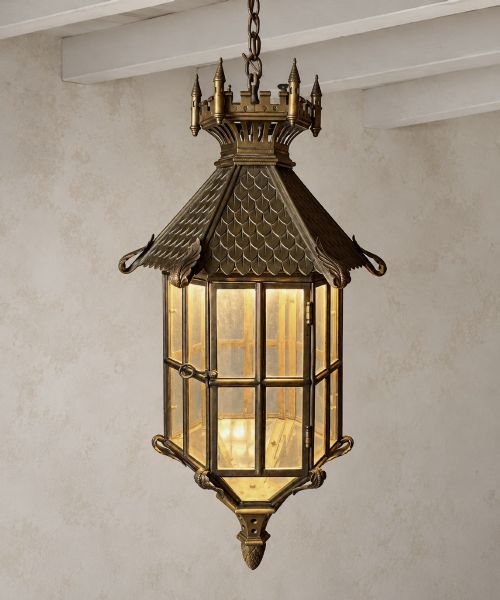
The integrity of the design carries significant weight, distinguishing mass-produced commercial lighting from bespoke architectural pieces. Maker attention shows in specialised details such as castellated crowns, integrated shamrock motifs, or complex multi-branch configurations that balance structural heft with proportion.
The Revival Hanging Light Glossary
- Gothic Revival
- An architectural and decorative style that draws inspiration from medieval design. It frequently incorporates pointed arches, tracery, and heavy metal framing.
- Hall Lantern
- A fully enclosed hanging light designed for corridors, vestibules, or entrance halls. These fixtures often feature glass panels held within a brass or iron frame.
- Corona
- A circular hanging light fixture suspended by chains, historically derived from medieval church lighting. They typically support multiple candle or bulb branches.
- Lead Glass
- Glass panes held together by lead cames, forming geometric or pictorial patterns. This technique is common in ecclesiastical and domestic lanterns.
- Gilt Brass
- Brass that has been treated with a thin layer of gold or gold-colored finish. This adds a bright reflective quality to chandeliers and wall fixtures.
Revival Hanging Light: Frequently Asked Questions
Where should I hang a revival lantern?
These fixtures suit high-ceilinged entrance halls, stairwells, or landings where their vertical drop and historic presence can be fully appreciated.
Because many examples were originally designed for churches or grand porches, they require adequate clearance and robust ceiling support.
Are these lights wired for electricity?
Many period fixtures have been electrified at some point in their history to accommodate modern living standards.
Buyers should inspect the internal wiring arrangement upon arrival, as older conversions often require updates by a qualified electrician.
How do I identify a Gothic Revival piece?
Gothic Revival items typically display architectural elements such as pointed arches, castellated crowns, and tracery patterns.
They often utilise heavy bronze, brass, or blackened iron, echoing the aesthetic of medieval ecclesiastical metalwork.
What maintenance do brass and bronze lanterns need?
Metal frames require minimal intervention, usually benefiting only from gentle dusting to preserve their historic patination.
Harsh chemical polishes should be avoided to protect the aged surfaces and applied finishes developed over generations.