

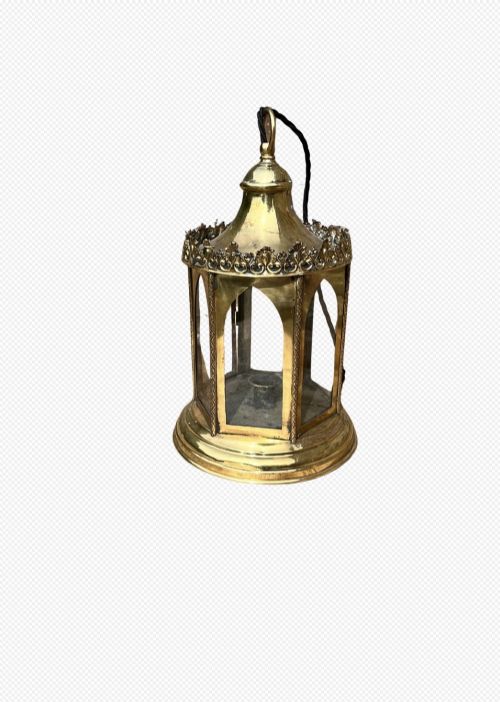
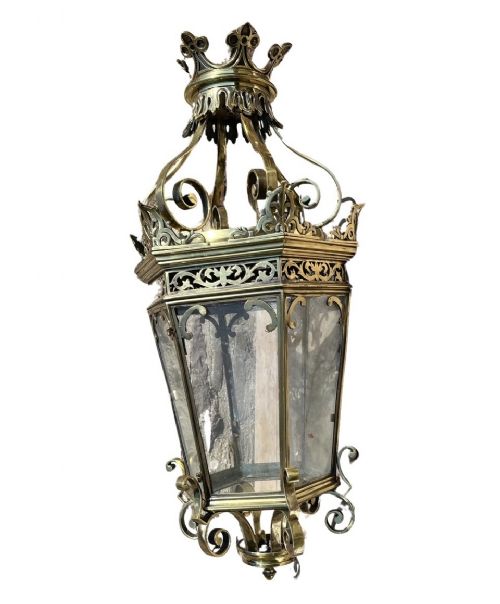
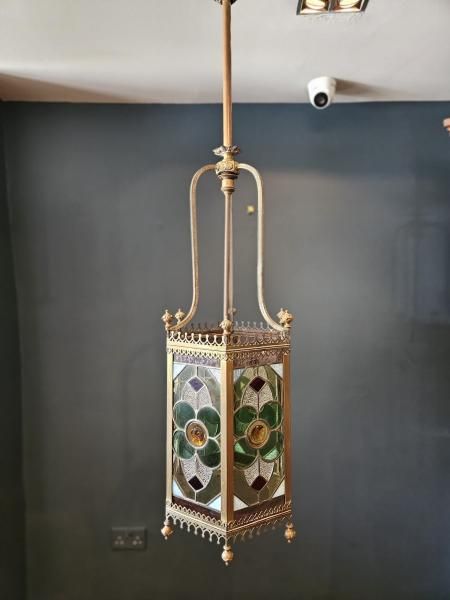

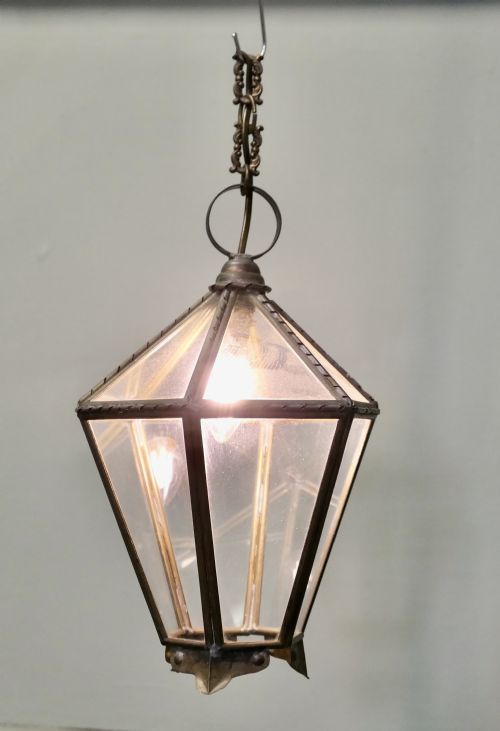


Revival Hall Lantern
A revival hall lantern brings serious architectural presence to an entranceway, combining heavy metal framing with leaded or coloured glass panes.
Revival Hall Lantern
A revival hall lantern is an overhead lighting fixture designed specifically to illuminate entrance halls, stairwells, and porches. When searching for a revival hall lantern, you encounter ceiling pendants and hanging fixtures rooted in Victorian, Edwardian, and early twentieth-century design movements.
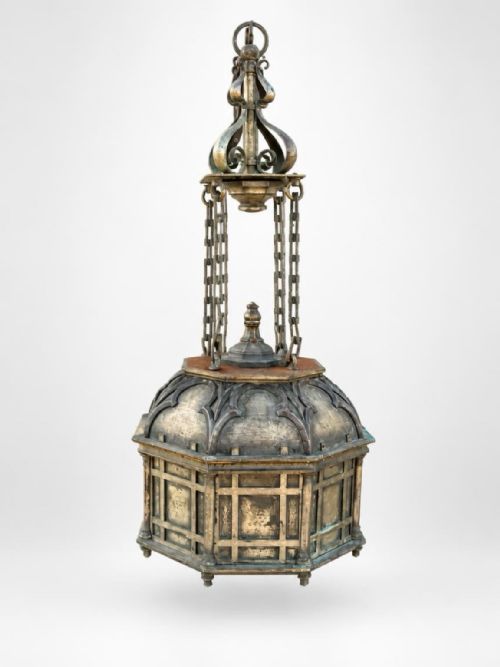
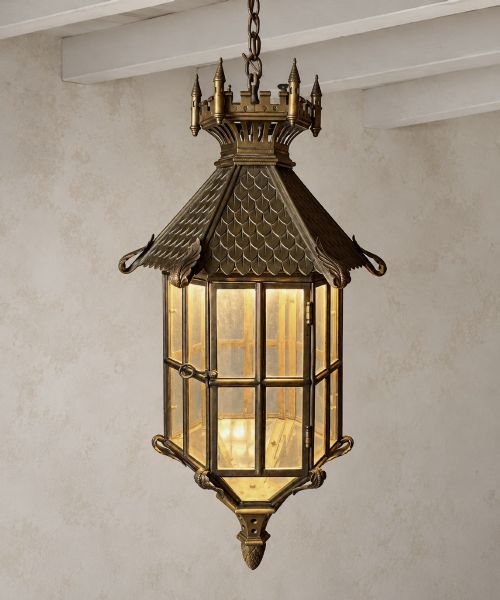
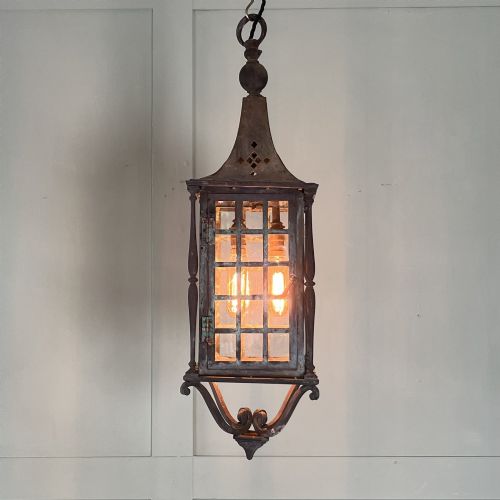
The pieces appearing on this page span the Victorian era, the Arts and Crafts movement, and Gothic Revival styles. You will find forms ranging from grand hexagonal brass frames to blacksmith-made cast iron bodies and castellated bronze crowns.
Most examples originate from British and continental workshops, reflecting historical architectural motifs such as tracery, pointed arches, and medieval ironwork. They serve both as practical illumination and as a strong decorative statement in period interiors.
How they were made
The construction of these lanterns relies on heavy metalwork combined with glazed panels. Workshops utilised cast bronze, brass, wrought iron, and copper to form the structural skeletons, often joining sections with rivets or visible soldering.
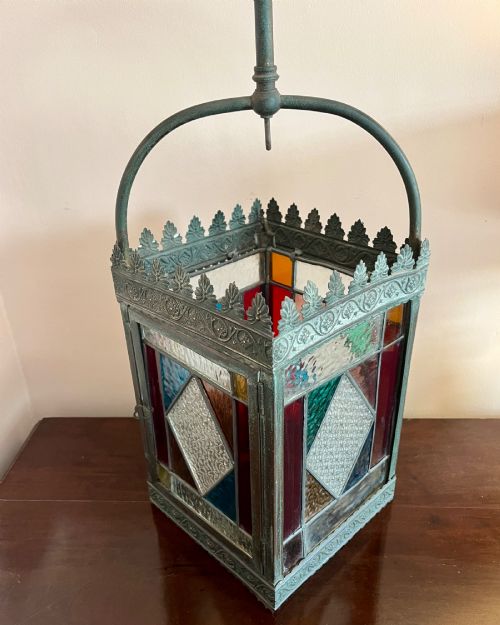
Glass panels were individually cut and fitted, frequently incorporating leaded cames, dimpled textures, or coloured glass to diffuse candlelight or early electric illumination. Details such as shamrocks, hinged access doors, and gilded metalwork demonstrate the hand of the maker.
Revival Hall Lantern Retail Price Guide 2026
Typical asking prices for revival hall lantern among the pieces listed under this phrase on Sellingantiques today, from the lower quarter to the upper quarter. They describe what is for sale here now, not the wider market.
Listings feature materials spanning brass, bronze, copper, wrought iron, and leaded glass across Victorian and twentieth-century periods.
What varies in quality
Quality in these lanterns rests upon the weight of the metal gauge and the integrity of the structural joints. Substantial cast bronze or thick brass frames maintain their rigidity over generations, whereas lighter sheet metal constructions tend to flex.
The artistry of the glazing further separates standard production from finer examples. Hand-cut leaded panels and textured or coloured glass require significantly greater skill than plain machine-pressed panes.
The Revival Hall Lantern Glossary
- Gothic Revival
- An architectural and decorative style drawing on medieval ecclesiastical forms, featuring pointed arches, tracery, and castellated crowns. This aesthetic heavily influences many hall lanterns.
- Leaded Glass
- Glass panes held together within a network of flexible lead cames, allowing for geometric or pictorial designs. It creates a rich textural effect when the internal light source is lit.
- Arts and Crafts
- A design movement valuing honest construction, visible hand-working, and simple functional forms. Lanterns from this tradition typically showcase straightforward brass and copper framing.
- Pendant Light
- A light fixture suspended from the ceiling by a chain, rod, or cord rather than mounted flush. Hall lanterns utilise this hanging format to sit centrally within double-height entrance spaces.
Revival Hall Lantern: Frequently Asked Questions
Where should I hang a hall lantern?
These lanterns suit entrance halls, vestibules, and high-ceilinged stairwells where their drop can be fully appreciated. They create a dramatic focal point immediately upon entering a home.
Ensure you hang the fixture at a height that clears household traffic while remaining visually anchored to the room's proportions.
Can these lanterns be wired for modern electricity?
Most antique lanterns adapt readily to modern electrical standards, and many have already been converted from candles or early gas fittings. Electricians can easily fit appropriate lamp holders inside the frame.
Retaining the original internal space allows the wiring to remain discreetly tucked away without altering the exterior character of the bronze or brass housing.
How do I clean a leaded glass lantern?
Dust the metal framework regularly with a dry microfibre cloth to prevent grime accumulation on brass, bronze, or iron surfaces. Avoid abrasive metal polishes that can strip patination.
Clean the glass panes gently using a mild glass cleaner applied to a cloth rather than sprayed directly, protecting the lead cames and solder joints from excess moisture.
How do I identify a Gothic Revival lantern?
Look for architectural details borrowed from medieval buildings, such as pointed arched framing, quatrefoil cut-outs, and castellated crowns topping the fixture. These elements separate ecclesiastical-inspired designs from simpler domestic lighting.
Materials like heavy cast bronze and leaded coloured glass further reinforce the medieval aesthetic typical of the nineteenth-century Gothic revival.