



Revival Dresser Base
Revival dresser base pieces are sturdy timber storage units modelled on earlier centuries, offering deep drawers and cupboards suited to traditional dining rooms.
Revival Dresser Base
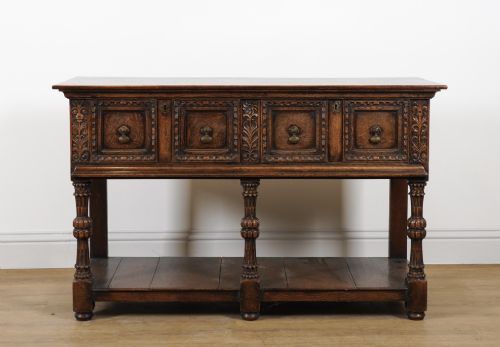
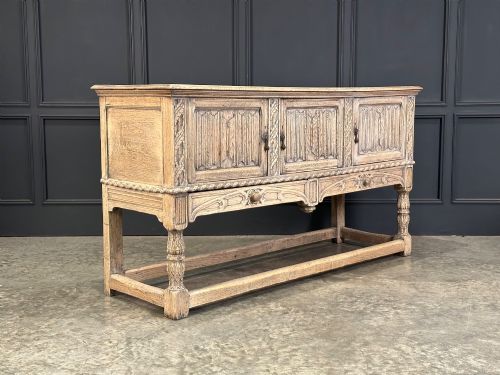
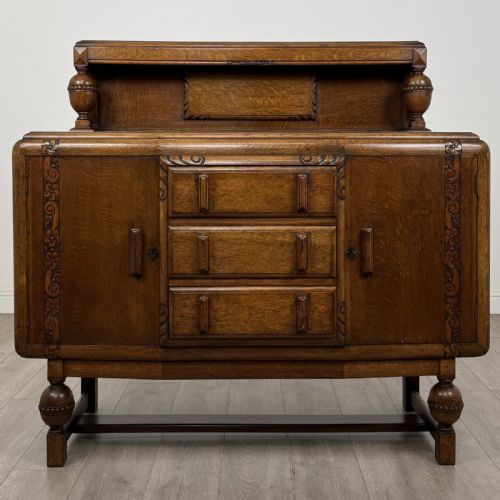
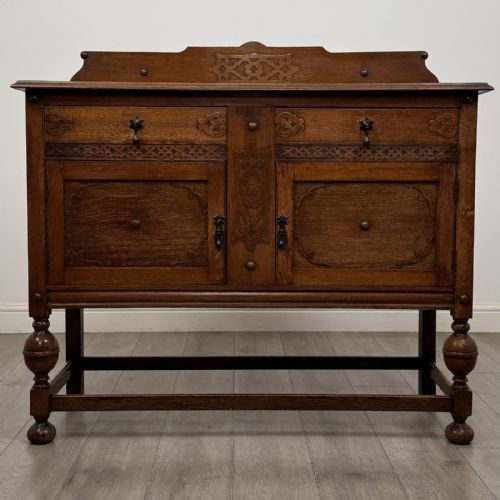
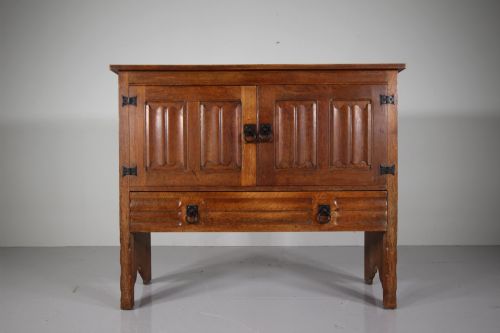
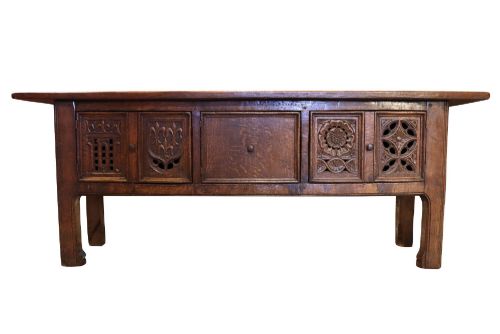
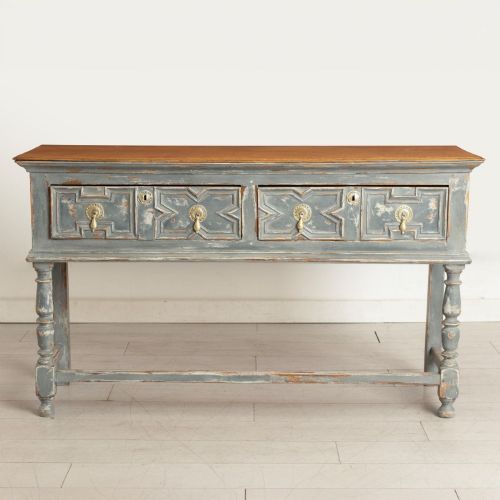
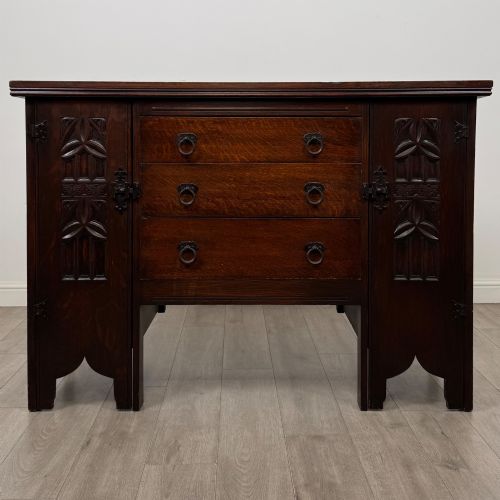
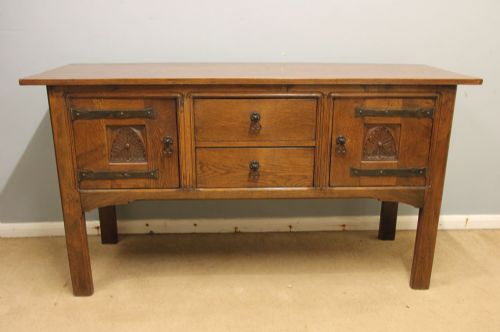
A revival dresser base takes inspiration from historical periods such as the Jacobean, Gothic, and Georgian eras, executed in solid timber. These low storage units typically feature combinations of drawers and cupboards, often standing on sturdy legs joined by stretchers.
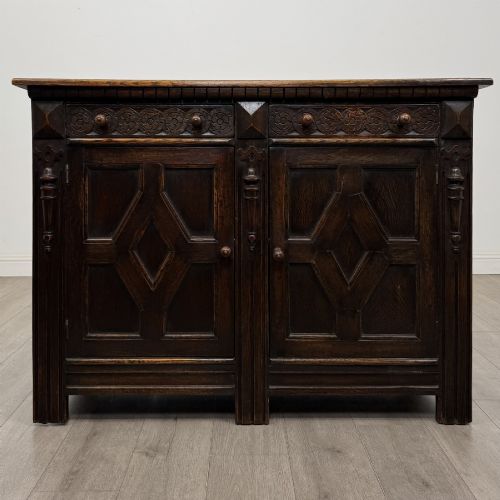
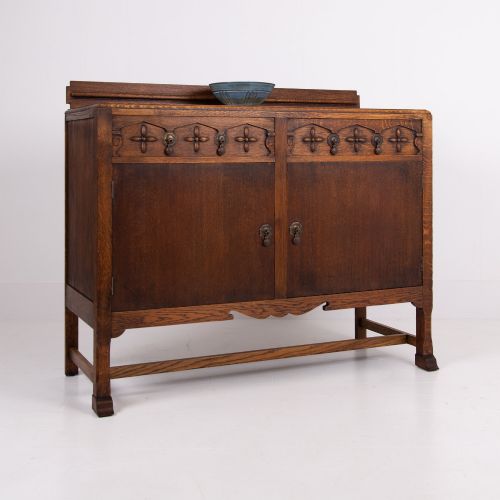
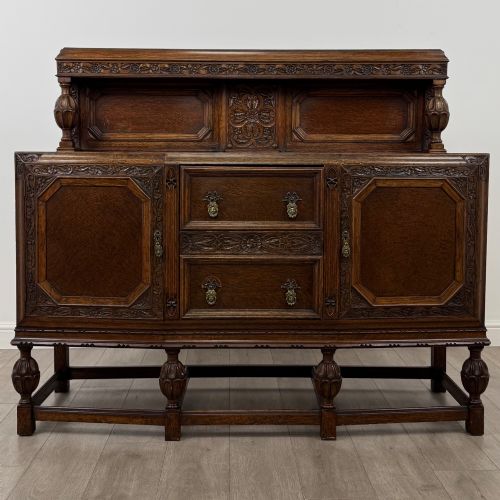
The versions most commonly met on this page date from the late nineteenth century through to the 1930s. They interpret earlier vernacular furniture styles with heavy carving, panelled doors, and period hardware.
Object forms listed under this description frequently overlap with sideboards, pot boards, and court cupboards. Buyers select them for functional storage capacity combined with historical styling.
What varies in quality
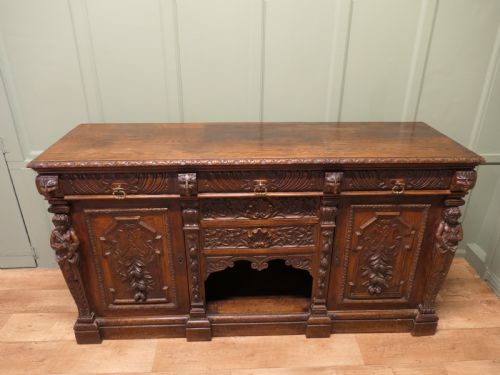
Depth and crispness of the carving distinguish finer examples from simpler commercial production. Skilled hands produce undercut details and expressive faces, whereas lower-grade pieces exhibit shallow, repetitive stamping.
Material selection dictates the structural integrity of the piece, with dense solid oak commanding higher regard than composite construction or thin veneers. Well-seasoned timber resists warping and maintains the smooth operation of drawers over decades.
Revival Dresser Base Retail Price Guide 2026
Typical asking prices for revival dresser base among the pieces listed under this phrase on Sellingantiques today, from the lower quarter to the upper quarter. They describe what is for sale here now, not the wider market.
Listings feature revival dresser bases spanning the Victorian, Edwardian, and 1930s periods, constructed predominantly in solid oak with occasional mahogany.
The Revival Dresser Base Glossary
- Dresser base
- A low sideboard unit with drawers and cupboards beneath a flat top, historically used for serving food and storing tableware. They lack the upper plate rack of a traditional kitchen dresser.
- Pot board
- An open lower shelf fitted between the legs of a dresser base, originally intended for storing pots and pans. This structural addition provides extra stability to the frame.
- Barley-twist
- A column or leg carved in a spiral shape resembling twisted barley sugar. This decorative turning style appears frequently on seventeenth-century revival furniture from the Victorian and Edwardian periods.
- Green man
- A sculptural architectural ornament depicting a human face disgorging foliage or vines. It symbolises rebirth and appears commonly on carved oak panels of the Gothic and Renaissance revival styles.
- Linenfold
- A style of wood panelling carved to resemble folded folds of fabric or linen. Cabinet makers utilised this technique on cupboard doors during the Tudor and later revival periods.
Revival Dresser Base: Frequently Asked Questions
Where should I place a dresser base?
These low storage units suit dining rooms, hallways, or living spaces where a solid timber surface and enclosed storage are required. Their proportions allow them to sit comfortably against long walls without dominating the room height.
Ensure adequate clearance for opening drawers and cabinet doors, and keep them away from direct heat sources to protect the polished wood finish.
How do I distinguish Jacobean revival from Gothic revival?
Jacobean revival pieces feature geometric mouldings, strapwork, and turned supports like barley-twists, reflecting seventeenth-century domestic joinery. They emphasise symmetry and rectilinear panel arrangements.
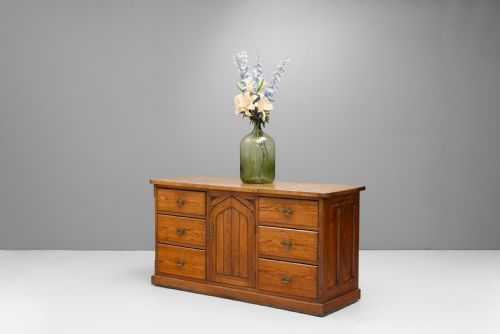
By contrast, Gothic revival furniture incorporates pointed arches, trefoils, heavy tracery, and sculptural elements such as green man masks. This style draws inspiration from medieval ecclesiastical architecture.
What is the difference between a sideboard and a dresser base?
A dresser base historically refers to a freestanding timber unit with low storage, possessing structural roots in kitchen and dining utility. The term sideboard often implies a more formal dining room piece designed for serving.
In modern markets, makers and dealers frequently use these terms interchangeably for revival furniture of similar proportions and form.
How do I care for solid oak furniture?
Dust regularly with a soft, dry cloth to prevent dirt accumulation in carved crevices and panel recesses. Avoid silicone-based sprays, which can build up a cloudy residue on polished wood surfaces.
Feed the timber periodically with appropriate beeswax or furniture polish to nourish the grain and maintain a natural protective sheen.