







Revival Carved Coffer
Revival carved coffer options combine historic design motifs with practical storage, offering sturdy oak or walnut construction for everyday use.
Revival Carved Coffer
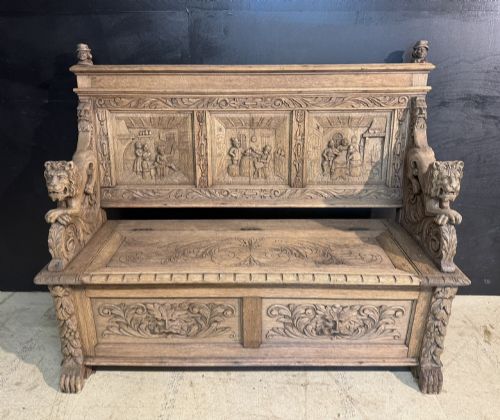
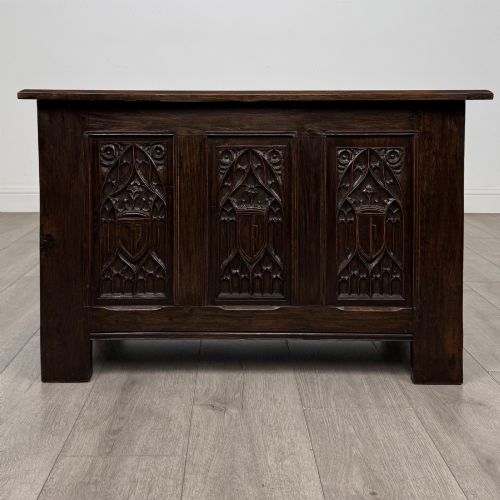
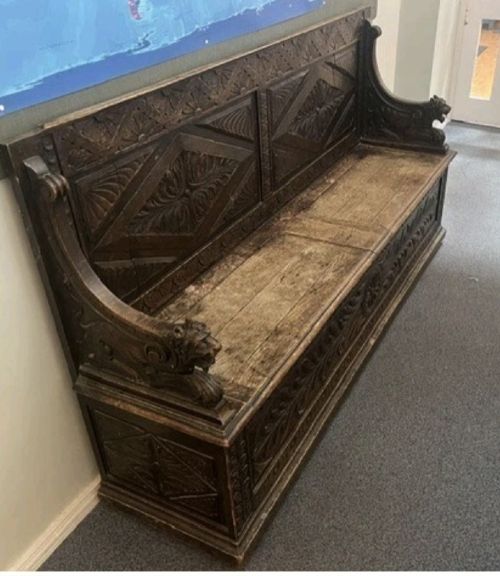
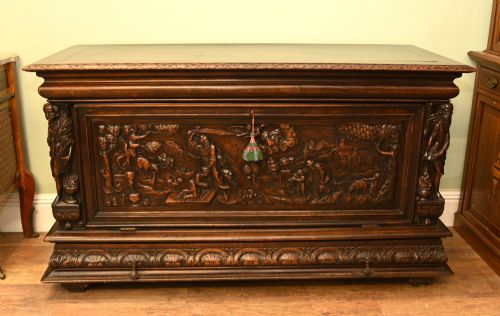
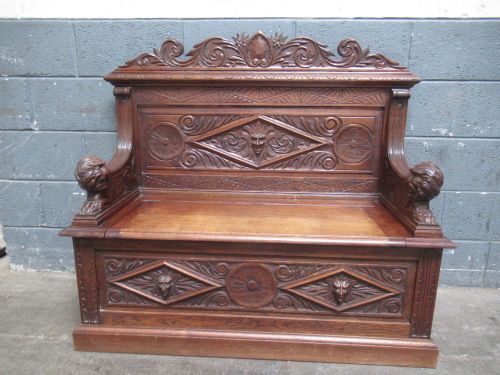
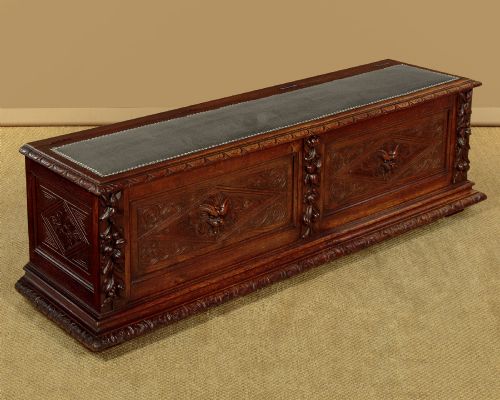
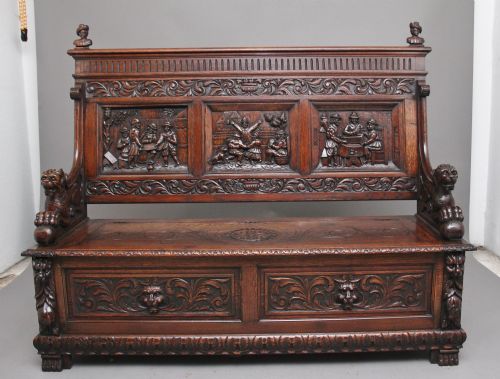
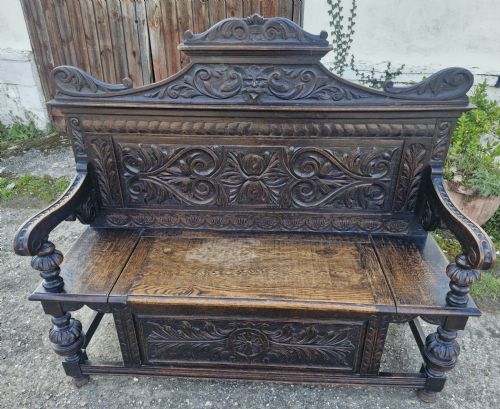
A revival carved coffer is a storage piece created during periods like the Victorian, Edwardian, and early twentieth century that imitates earlier historic styles such as Jacobean, Elizabethan, and Renaissance. You will frequently find these items listed as hall benches, monks benches, blanket boxes, or chests with lift-up lids and carved panels.
Makers of these pieces adapted older domestic forms into multi-functional furniture for Victorian and Edwardian reception halls. Many examples double as seats or settles with folding backs, combining the utility of a chest with the seating of a hall bench.
Materials and Construction
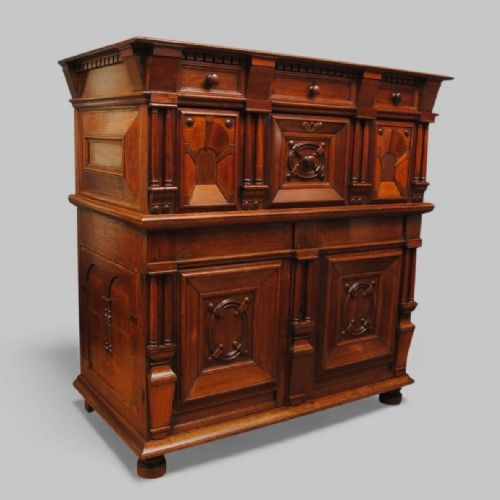
Oak is the dominant timber used across these pieces, frequently supplemented by walnut, fruitwood, and mahogany. Carpenters employed traditional panel construction and joinery to build sturdy lids, boxes, and bench backs.
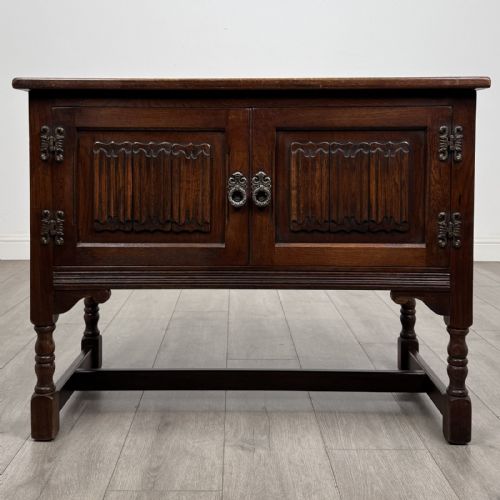
Carving serves as the primary decorative technique, utilising relief work to display linenfold patterns, green man motifs, and revival strapwork. Iron and brass hardware, including hinges and latches, secure the lift-up lids and folding seats.
Revival Carved Coffer Retail Price Guide 2026
Typical asking prices for revival carved coffer among the pieces listed under this phrase on Sellingantiques today, from the lower quarter to the upper quarter. They describe what is for sale here now, not the wider market.
Listings span periods from the seventeenth century through to the 1940s, with a heavy concentration of nineteenth-century Victorian and Edwardian revival pieces.
Judging Quality and Execution
The crispness and depth of the wood carving separate standard production pieces from finer workshop examples. Deeply undercut relief and detailed figural work, such as green man faces, indicate skilled hand craftsmanship rather than routine mechanical output.
The selection of timber grain and the integrity of the joinery determine the overall solidity of the piece. Well-executed revival items maintain sturdy proportions and authentic historic styling without excessive or clumsy ornamentation.
Jack Grimble Pollard
The Revival Carved Coffer Glossary
- Coffer
- A large wooden chest traditionally used for storing valuables, linens, or documents. In later revival forms, it often doubles as a hall seat with a lift-up lid.
- Monks bench
- A multifunctional piece of furniture featuring a hinged back that folds down over the arms to transform a hall seat into a table or desk.
- Linenfold
- A style of carved wooden panel relief popular in the Tudor period and revived later, designed to resemble folded folds of fabric.
- Green man
- A sculptural motif depicting a human face surrounded by or sprouting from foliage, commonly seen in Gothic and Renaissance revival woodcarving.
- Settle
- A wooden bench with high back, solid arms, and an enclosed base that often incorporates a storage chest beneath the seat.
Revival Carved Coffer: Frequently Asked Questions
What is a revival carved coffer?
A revival carved coffer is a storage chest or box produced during the nineteenth or twentieth century in the style of earlier eras like the Elizabethan or Jacobean periods. These items often feature heavy relief carving and sturdy wooden construction.
Many examples function simultaneously as hall benches, settles, or monks benches. They provide practical lidded storage while serving as decorative seating for entryways and reception halls.
How do I use a monks bench?
A monks bench operates as a convertible piece of furniture designed for multi-use living spaces. The hinged back can be pivoted or folded forward to rest across the arms, creating a flat table surface.
When the back is upright, the piece functions as a high-backed hall seat. Lifting the seat reveals a storage compartment underneath for blankets or household items.
What wood was used for these pieces?
Oak is the primary timber found in these listings, valued for its strength and traditional association with historic British furniture. Walnut, fruitwood, and mahogany also appear in specific regional or stylistic variations.
Carpenters sometimes combined secondary timbers within the internal box construction while using figured oak or walnut for the prominent carved exterior panels.
How do I tell the periods apart?
Differentiating periods relies on examining the specific revival style combined with the construction methods. Pieces referencing Elizabethan or Renaissance revival often display strapwork and figural carving, while Arts and Crafts examples show plainer surfaces.
Hardware types, joinery neatness, and timber ageing also offer clues to whether a piece dates from the mid-nineteenth century Victorian era or the 1920s.