



Revival Boulle Table
A revival boulle table brings nineteenth-century French elegance into a room through intricate brass and tortoiseshell marquetry.
Revival Boulle Table
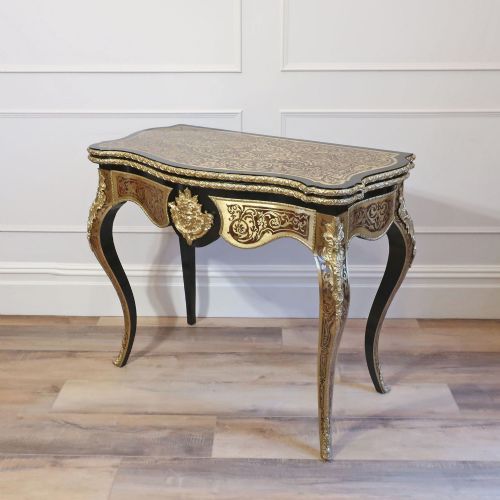
When you search for a revival boulle table, you are looking at nineteenth-century French style furniture decorated with inlaid brass and tortoiseshell. These pieces draw heavily on earlier court designs, specifically Louis XV and Louis XVI revivals, adapting seventeenth-century techniques for Victorian drawing rooms.
The versions you are most likely to encounter on this page include games tables, card tables, and centre tables. They typically combine ebonised or stained wood with luminous brass inlay, often paired with cast or chased ormolu mounts.
Dating across the nineteenth century, particularly around the 1870s and 1880s, these tables reflect a Victorian enthusiasm for ornate continental historicism. Makers such as Edwards & Roberts and Maison Millet produced high-end examples that emulate the lavish court aesthetics of France.
Materials and construction
Makers constructed these tables using ebonised wood or stained wood as a dark foundation, which heightened the visual contrast of the metallic inlay. Into this substrate, artisans fitted sheets of tortoiseshell alongside fine cut brass, executing complex floral and scroll motifs.
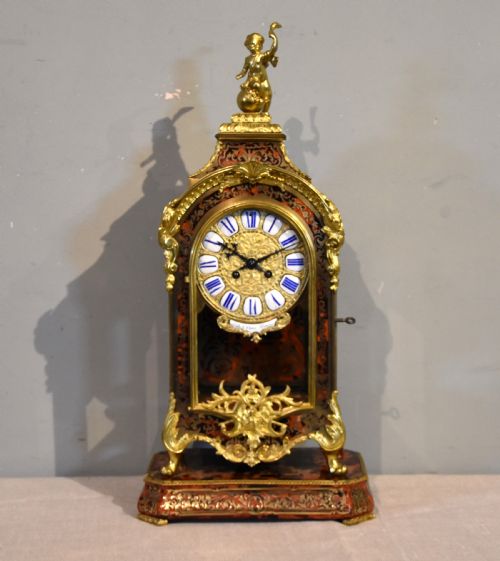
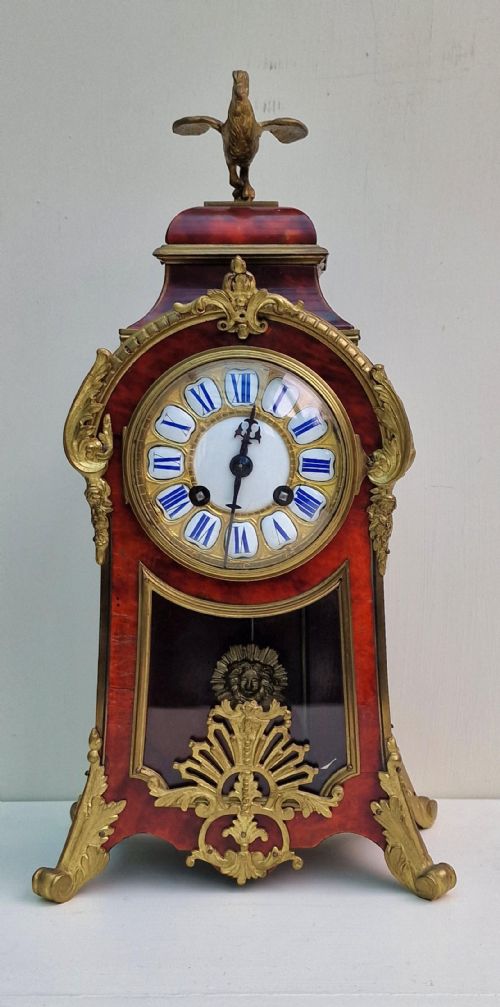
Gilt bronze and ormolu mounts were cast and applied to corners, legs, and borders to accentuate the structural lines of the French Rococo or Louis XVI revival styles. Enamel and glass elements occasionally feature in associated pieces like clocks, but the tables rely strictly on precision marquetry and metalwork.
Revival Boulle Table Retail Price Guide 2026
Typical asking prices for revival boulle table among the pieces listed under this phrase on Sellingantiques today, from the lower quarter to the upper quarter. They describe what is for sale here now, not the wider market.
Tortoiseshell inlay was so prized that makers occasionally resorted to clever painted faux finishes when real shell proved too scarce or costly.
Markers of distinction
Quality in these pieces rests primarily on the crispness of the brass cutting and the depth of the tortoiseshell beneath. Superior examples display tight, seamless joins in the marquetry where the metal and shell meet without excess filler.
The standard of the cast ormolu mounts also separates finer work from standard production, as well-chased bronze elements retain sharp relief and a rich finish. Furthermore, attribution to known makers or workshops elevates a piece through documented provenance.
Maison Millet·Edwards & Roberts·Payne London
The Revival Boulle Table Glossary
- Boulle
- A marquetry technique using tortoiseshell and brass, named after André-Charles Boulle, the cabinetmaker to Louis XIV. This decorative method defines the distinctive metallic and dark amber surface patterns seen on these tables.
- Ormolu
- Gilt bronze mounts applied to furniture and clocks for decorative emphasis. The technique involves coating cast bronze in a layer of gold amalgam.
- Marquetry
- The art of applying pieces of veneer to a structure to form decorative patterns. In these pieces, it involves interlocking brass and tortoiseshell.
- Ebonised wood
- Timber treated to resemble ebony, providing a dark and uniform background. This dark finish makes the polished brass and tortoiseshell inlay stand out visually.
Revival Boulle Table: Frequently Asked Questions
What is a revival boulle table?
A revival boulle table is a nineteenth-century piece of furniture decorated with tortoiseshell and brass marquetry in the French style. These tables reflect historical court aesthetics adapted for Victorian interiors.
They serve as decorative centrepieces or functional games and card tables. Their distinct ornamentation relies on traditional seventeenth-century inlay methods revived during the Victorian era.
How do I care for brass and tortoiseshell?
Caring for these surfaces requires stable room temperatures and protection from direct sunlight to prevent the materials from warping or fading. Gentle dusting with a soft cloth preserves the polished finish of the brass and shell.
Avoid using liquid polishes or harsh chemical cleaners that can seep into the fine joints of the marquetry. Maintaining consistent humidity in the room keeps the wood and inlay securely bonded.
How do I date a nineteenth-century piece?
Dating relies on examining construction methods, wood types, and stylistic indicators such as specific revival motifs popular during the Victorian period. Maker signatures or stamps, when present, provide a direct link to active workshop years.
Comparing the casting quality of the ormolu mounts and the wear patterns on the underside also helps establish the approximate decade of manufacture. Most listed examples cluster around the 1870s and 1880s.
Were these tables used for dining?
These tables were primarily designed for display, parlour games, or card playing rather than heavy dining use. Their delicate brass and tortoiseshell surfaces are unsuited to heavy family meals.
Instead, they functioned as social furniture in drawing rooms where guests gathered for cards or admired the craftsmanship. Many feature fold-over tops specifically configured for games.