

Retro Yellow Gold
When you search for retro yellow gold, you uncover a distinct world of mid-century jewellery and accessories defined by warm metal tones and bold forms.
Retro Yellow Gold
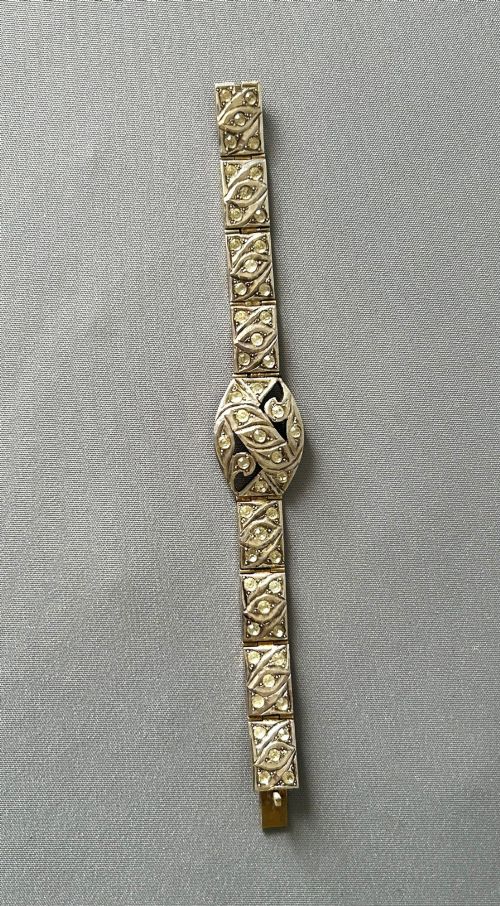
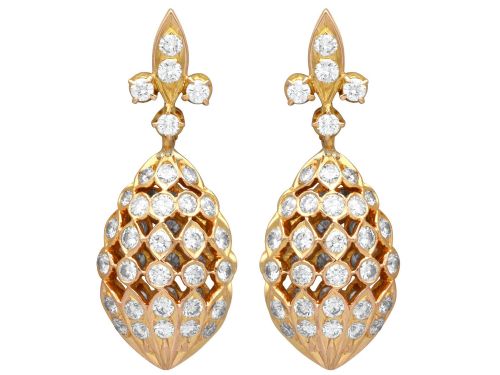
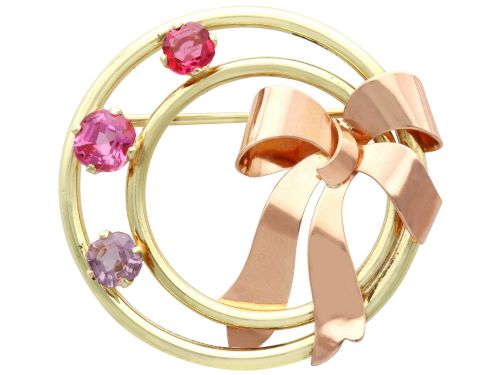
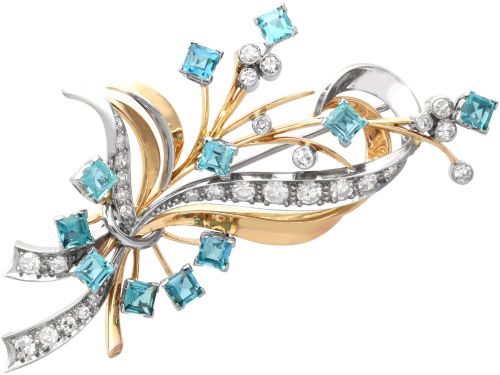
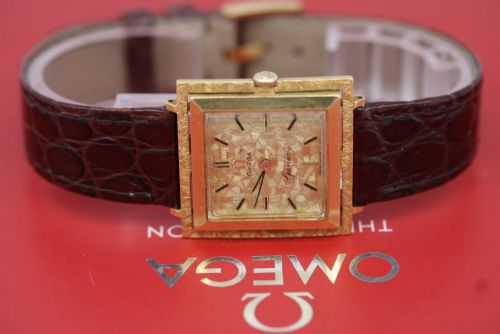
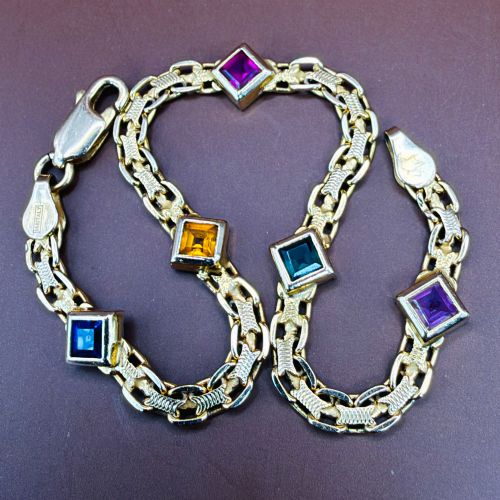
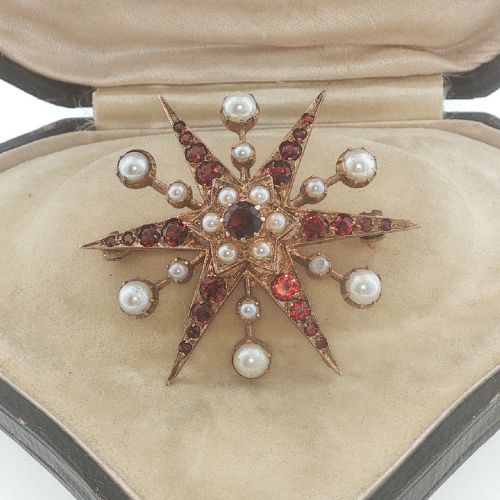
When searching for retro yellow gold, buyers encounter items spanning from the Edwardian era through the 1970s, with a strong concentration of pieces originating from the 1940s, 1950s, and 1960s. The selection encompasses rings, earrings, bracelets, brooches, charms, pendants, and wristwatches shaped by Mid-Century, Art Deco, and Modernist design movements.
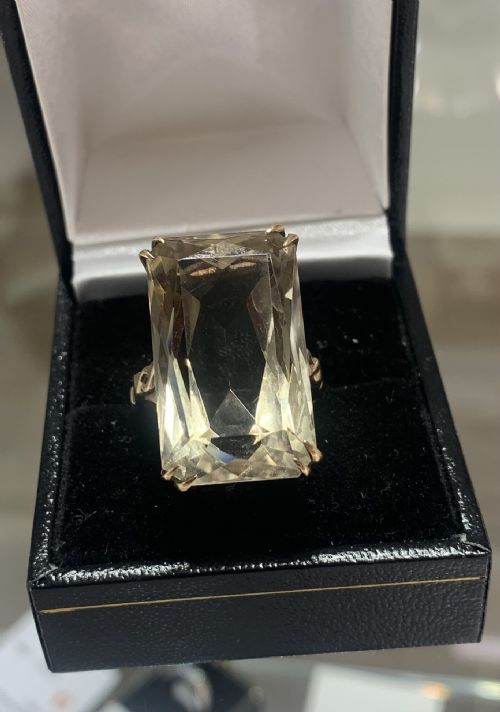
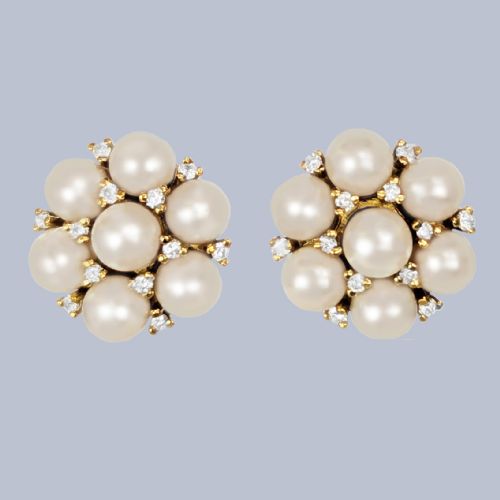
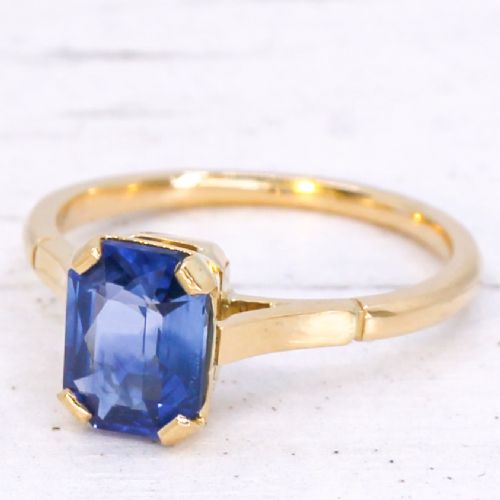
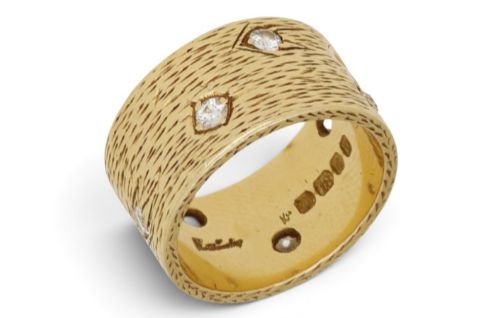
The most common formats on this page include statement cocktail rings, gemstone cluster earrings, charm pendants, and textured bands. These items often feature prominent central stones such as diamonds, sapphires, aquamarines, and amethysts set within rich alloy structures.
How they were made
The construction of these items relies predominantly on varying purities of gold, specifically 9ct, 14ct, and 18ct yellow gold, occasionally paired with contrasting metals like palladium or rose gold. Goldsmiths employed casting, manual winding mechanisms for timepieces, and detailed engraving techniques to build robust foundations for gemstones.
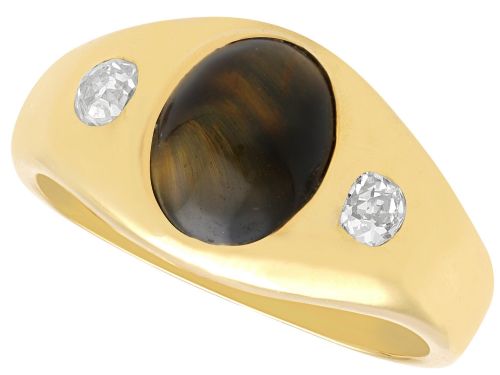
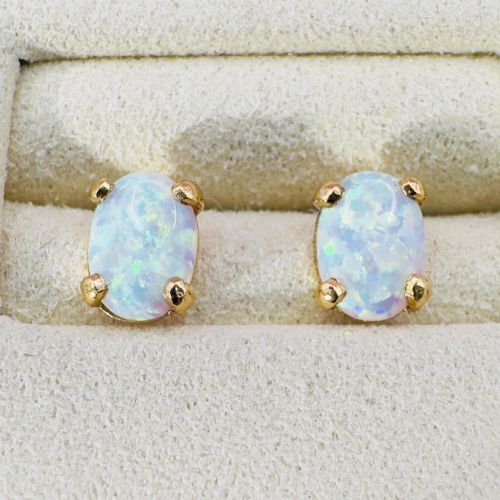
Gemstones including rubies, opals, spinel, and tiger's eye are secured through traditional claw settings, bypass twists, and flush mountings. Skilled artisans also incorporated specialised finishes, such as textured surfaces and openwork lattice patterns, to give the metal depth and visual movement.
Retro Yellow Gold Retail Price Guide 2026
Typical asking prices for retro yellow gold among the pieces listed under this phrase on Sellingantiques today, from the lower quarter to the upper quarter. They describe what is for sale here now, not the wider market.
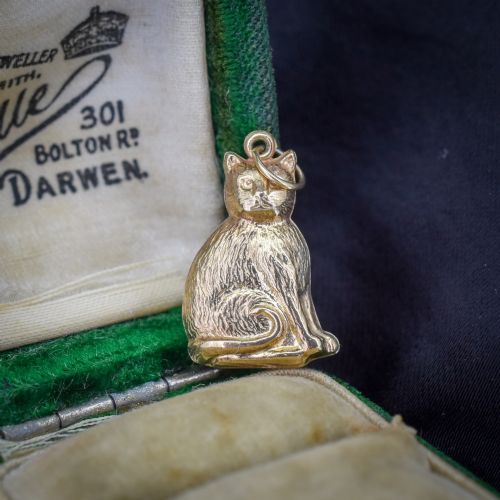
Among the creatures captured in gold are a feline charm, a corgi dog pendant, and a sculptural cat ready to leap.
What varies in quality
The distinction between tiers rests upon the precision of the goldsmith's hand and the structural integrity of the mounting. Superior examples display substantial metal weight, crisp engraving, and secure gemstone seating that withstands daily wear without movement.
Material selection further defines the hierarchy, particularly the clarity and saturation of coloured gemstones paired with the gold. Pieces produced by established design houses command attention through inventive geometry and balanced proportions that elevate standard forms.
Tiffany and Co·Omega·Kutchinsky
The Retro Yellow Gold Glossary
- Solitaire
- A ring or pendant featuring a single prominent gemstone set alone. This setting directs all visual weight to the focal stone.
- Cabochon
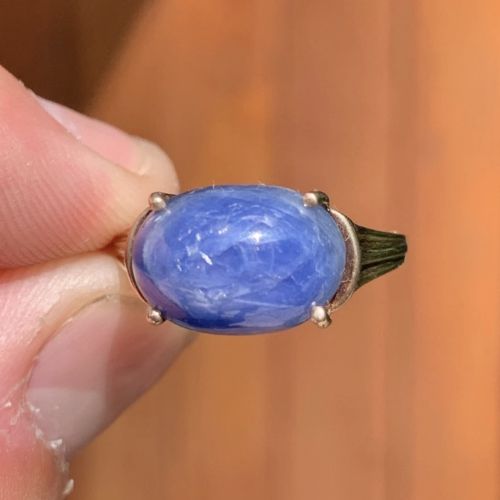
- A gemstone cut with a smooth, rounded, convex upper surface rather than faceted planes. This style highlights the natural optical properties of opaque or chatoyant stones like opals and tiger's eye.
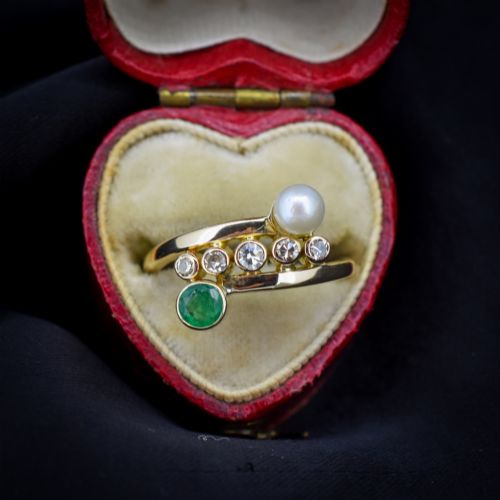
- Bypass ring
- A design where the two ends of the shank cross over each other like a ribbon around the finger. This style creates a dynamic, wrapping silhouette common in mid-century jewellery.
- Manual wind
- A mechanical watch movement that requires the wearer to turn the crown by hand to tension the mainspring. This mechanism represents traditional horological craftsmanship found in vintage timepieces.
- Cluster
- An arrangement of multiple smaller gemstones gathered closely around a central stone or geometric focal point. This setting maximises surface brilliance and colour impact.
Retro Yellow Gold: Frequently Asked Questions
What periods do these gold pieces come from?
The inventory spans multiple decades, encompassing items from the Edwardian period, the 1920s Art Deco era, and the 1940s.
Later mid-century decades are also heavily represented, including pieces dated through the 1950s, 1960s, and 1970s Modernist movements.
How do I care for vintage yellow gold jewellery?
Regular maintenance involves gentle cleaning with warm water, mild soap, and a soft cloth to remove everyday oils and debris.
Avoid harsh chemical dips, especially on softer organic gems or treated stones set within the gold mountings.
What is the difference between 9ct and 18ct gold?
Purity defines the distinction, with 18ct gold containing a higher proportion of pure gold alloyed with other metals for colour and strength.
Lower purities like 9ct offer increased durability against physical impacts due to the higher alloy content within the metal.
How were vintage watches from this era powered?
Timepieces from this selection typically rely on manual wind mechanical movements that require regular hand-tensioning of the mainspring.
These traditional internal mechanisms reflect mid-century watchmaking standards before quartz technology became widespread.