



Retro Shelf Clock
A retro shelf clock brings geometric presence and mechanical character to a room, spanning the distinct decades of the early twentieth century.
Retro Shelf Clock
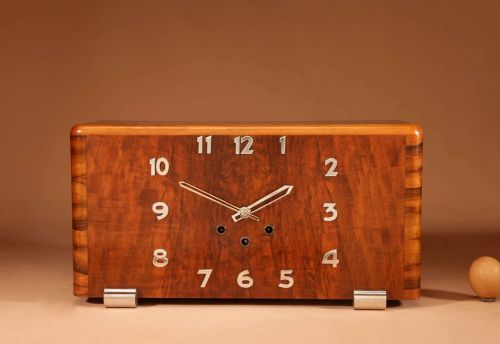
A retro shelf clock is primarily represented on this page by Art Deco mantel clocks and military timepieces dating from the nineteen-twenties, nineteen-thirties, and nineteen-forties. These pieces take the form of desk clocks, mantel clocks, and mess clocks designed to sit steadily on flat surfaces.
The dominant aesthetic draws heavily from the Art Deco style, featuring geometric silhouettes and two-tone wooden constructions. Alongside these domestic items, functional military pieces like the RAF officers mess clock appear from the war period.
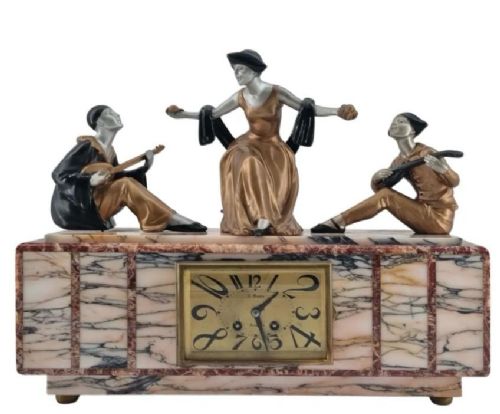
Makers and origins span English and French workshops, utilising materials that reflect the industrial and decorative tastes of the era. Buyers encounter everything from walnut veneers to heavy marble housings designed to anchor a room.
How they were made
Construction relies on a combination of cabinetmaking and metalworking, utilising walnut, burr walnut veneer, and solid marble as primary structural bodies. Artisans shaped these dense materials into stepped geometric forms and figural compositions.
Metal elements such as chrome, brass, and spelter provide contrasting bezels, numerals, and decorative accents like the Pierrot and Columbine figures. Glass protects the dial faces, while specialised internal movements drive Westminster chimes and standard timekeeping.
Retro Shelf Clock Retail Price Guide 2026
Typical asking prices for retro shelf clock among the pieces listed under this phrase on Sellingantiques today, from the lower quarter to the upper quarter. They describe what is for sale here now, not the wider market.
Listings feature clocks from the 1920s, 1930s, and 1940s, utilising materials including glass, chrome, metal, marble, brass, spelter, and walnut.
What varies in quality
Quality rests in the ambition of the materials and the refinement of the cabinetwork, moving from simple wooden cases to complex multi-material assemblies. Pieces incorporating burr walnut veneer, contrasting marble types, and chrome detailing demonstrate greater manufacturing investment.
The distinction also lies in the naming of the maker on the dial or movement, with established firms like Smiths and Elliott of London carrying distinct manufacturing provenance compared to anonymous workshop output.
Sega·Smiths England·Elliott of London·Newport
The Retro Shelf Clock Glossary
- Art Deco
- A design style characterised by streamlined geometric shapes, sleek materials, and modern motifs that dominated the interwar period. It remains the defining aesthetic for many clocks from this era.
- Spelter
- A zinc alloy frequently used as a substitute for bronze in decorative figures and mountings. It accepted patination well and allowed intricate casting for clock ornaments.
- Westminster Chime
- A melodic quarter-hour chime pattern historically associated with clock towers and adapted for domestic mantel clocks. It requires a specialised movement train within the clock.
- Walnut Veneer
- A thin layer of valuable walnut wood applied over a secondary timber base to create decorative grain patterns. This technique allowed makers to achieve striking visual effects on flat clock surfaces.
Retro Shelf Clock: Frequently Asked Questions
Where should I place a mantel clock?
These clocks suit flat surfaces like mantelpieces, sideboards, and large desks where their weight and geometric forms have adequate space. Ensure the surface is stable and level to keep the mechanical movement running accurately.
Keep them away from direct sunlight and damp environments to protect the wooden veneers, marble housings, and delicate metal finishes over time.
How do I wind an antique clock?
Use the appropriate key to wind the springs gently until you feel firm resistance, taking care not to overwind the mechanism. Each movement is calibrated specifically for its timekeeping and chiming trains.
Consult the specific requirements of the movement type, as mechanical clocks from the interwar period require regular, careful attention to maintain proper rhythm.
What is a Westminster chiming clock?
A Westminster chiming clock plays the familiar four-note melody on the quarters and strikes the full hour on the gongs. This feature demands a more complex gear train inside the case.
Such models are typically larger to accommodate the extra hammers, gongs, and springs required to produce the layered acoustic effect.
How do I date an Art Deco clock?
Dating relies on stylistic markers such as stepped geometric veneers, chrome bezels, and specific material combinations popular between the wars. Inscriptions on the dial or movement often provide a precise point of origin.
English and French pieces from this time utilise distinct cabinetmaking techniques and brass or chrome hardware that help narrow down the decade of production.