

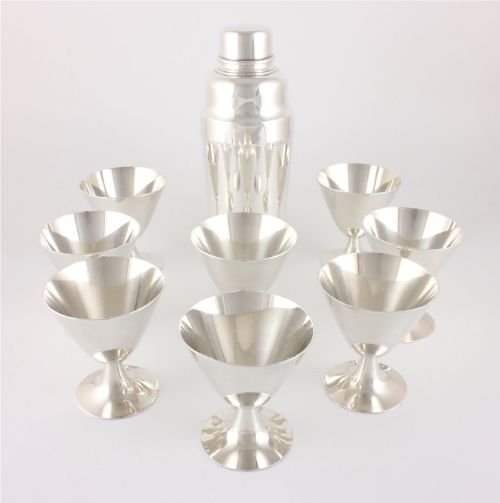


Retro Martini Shaker
A retro martini shaker brings striking Art Deco and Mid-Century Modern design straight to your home bar.
Retro Martini Shaker
A retro martini shaker is a piece of functional barware designed to mix drinks while serving as a decorative table object. When you search for a retro martini shaker, you are looking at cocktail shakers and mixers spanning several decades from the early to mid-twentieth century.
The versions you are most likely to meet on this page originate from English, Swiss, and German makers working in distinct twentieth-century idioms. These pieces frequently take the form of standard cocktail shakers or specialised mixers holding specific fluid capacities like one and a quarter pints.
Most examples belong firmly to the Art Deco style, characterised by clean geometric lines, alongside later Mid-Century Modern iterations. They arrive from periods including the 1920s, 1930s, 1940s, and 1960s, reflecting the changing tastes of cocktail culture over forty years.
Materials and construction methods
These vessels are constructed primarily from base metal or electroplated nickel silver, forming a robust core that receives an outer layer of silver plate. This combination provides both the structural rigidity needed for vigorous shaking and the bright reflective finish expected of quality barware.
Retro Martini Shaker Retail Price Guide 2026
Typical asking prices for retro martini shaker among the pieces listed under this phrase on Sellingantiques today, from the lower quarter to the upper quarter. They describe what is for sale here now, not the wider market.
Geographic origins represented on this page include England, Switzerland, and Germany, capturing diverse European manufacturing traditions.
Distinguishing quality across examples
Quality in these pieces is dictated by the pedigree of the maker and the preservation of the silver plated surface across decades of use. Marked examples from recognised manufacturing houses display crisper stamping and more substantial weight in the hand than unmarked generic alternatives.
The presence of specialised internal mechanisms, such as built-in lemon squeezers or rolling recipe charts, elevates the sophistication of a piece. Better quality shakers maintain tight seals and precise fitting components that speak to superior original engineering.
J. B. Chatterley & Sons·William Suckling·Gaskell & Chambers·Lutz & Weiss
The Retro Martini Shaker Glossary
- Silver Plate
- A base metal object coated with a thin layer of pure silver through an electrochemical process. This technique gives the appearance of solid silver at a more accessible weight and cost.
- Electroplated Nickel Silver
- An alloy of copper, nickel, and zinc coated with silver, often abbreviated as E.P.N.S. It serves as a durable foundation commonly utilised in twentieth-century tableware.
- Art Deco
- A design style spanning the 1920s and 1930s marked by sleek geometric shapes, streamlined forms, and modern industrial aesthetics. It remains the predominant style found among vintage cocktail shakers.
- Mid-Century Modern
- An architectural, interior, and product design trend that reached its height in the 1950s and 1960s. Pieces from this era emphasise clean lines and functional simplicity.
- Barware
- Specialised equipment and utensils used for mixing and serving alcoholic beverages. This category encompasses cocktail shakers, mixers, and associated tabletop accessories.
Retro Martini Shaker: Frequently Asked Questions
Are these vintage shakers still usable today?
Most silver plated cocktail shakers from the 1920s through the 1960s remain fully functional for mixing drinks. Check that the metal cap and internal components fit securely before preparing beverages.
Hand washing is essential for preserving the historic plating and any integrated mechanical parts like built-in squeezers. Avoid putting antique barware into an automatic dishwasher.
How can I tell a 1920s shaker from a 1940s one?
Shakers from the 1920s and 1930s frequently display ornate Art Deco geometric motifs and rolling recipe bands. Pieces from the 1940s and 1960s often shift toward simpler silhouettes and cleaner surfaces.
Maker marks and registration numbers stamped onto the base provide reliable clues for dating the object more precisely. Comparing the manufacturing style to known periods helps narrow down the decade of production.
What is electroplated nickel silver?
Electroplated nickel silver is a strong copper-based alloy containing nickel and zinc, finished with a microscopic layer of pure silver. It provides the visual appeal of solid silver alongside improved resistance to bending.
This material became the standard for quality twentieth-century hospitality ware because it offered durability and elegance combined. The abbreviation E.P.N.S. is typically stamped near the base of these items.