



Retro Lapel Pin
These vintage retro lapel pin examples are mid-century dress clips and brooches in gold and silver, chosen to fasten a lapel with distinct period character.
Retro Lapel Pin
A retro lapel pin search leads directly to mid-century brooches spanning the 1930s through to the 1960s. These pieces encompass figurative animal motifs like frogs and poodles alongside abstract spray and heart bar arrangements.
The dominant forms on this page include sterling silver and yellow gold structures. Buyers frequently encounter designs incorporating gemstones such as aquamarine, turquoise, garnet, and sapphire within mid-century and Art Deco frameworks.
How they were made
Maker construction relies heavily on 18ct yellow gold, sterling silver, and palladium settings to mount diamonds, marcasite, and amethysts. Metals are worked into intricate spray patterns and figurative shapes using period techniques of the 1940s and 1950s.
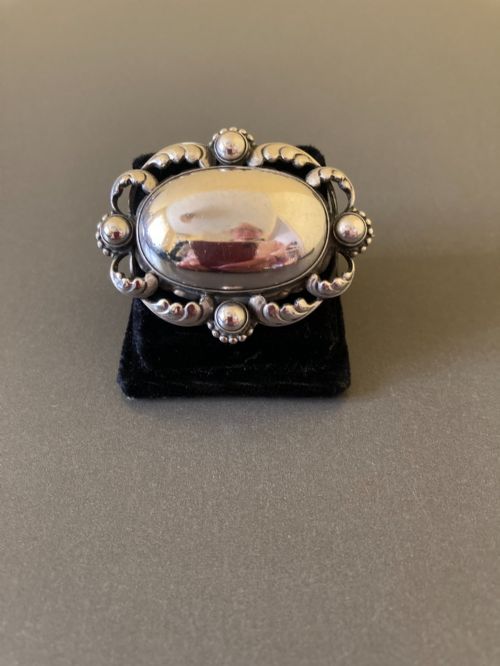
Enamel work and pavé stone settings appear across Scandinavian modern and Mexican modernist pieces. Silver is often patinated or oxidised to contrast with bright gemstones and marcasite detailing.
Retro Lapel Pin Retail Price Guide 2026
Typical asking prices for retro lapel pin among the pieces listed under this phrase on Sellingantiques today, from the lower quarter to the upper quarter. They describe what is for sale here now, not the wider market.
A silver frog complete with marcasite spots sits patiently alongside sparkling turquoise and sapphire brooches.
What varies in quality
Quality differences lie in the weight of the precious metal and the selection of gemstones, distinguishing standard silver work from substantial 18ct gold pieces set with large aquamarines or diamonds. The precision of the setting work and the integration of specific stylistic movements dictate the standing of each piece.
Makers such as Beto and Jakob Bengel demonstrate distinct design execution that elevates certain items above anonymous production. The complexity of figurative animal forms and modernist geometry separates standard mass-market brooches from finer artisan examples.
Beto·Jakob Bengel
The Retro Lapel Pin Glossary
- Marcasite
- Small faceted polished pyrites set into silver to provide a dark metallic sparkle. This technique is frequently seen on mid-century animal and spray brooches.
- Art Deco
- A design style from the 1920s and 1940s characterised by geometric lines and stylised motifs. Pieces from this era often feature symmetrical arrangements of large aquamarines and gold.
- Mid-Century Modern
- An architectural and design movement spanning the 1930s to the 1960s. It brings clean lines and abstract forms to silver and enamel brooch designs.
- Spray brooch
- A cluster design resembling floral sprays or leaf arrangements. These pieces typically sweep outward from a central stone or ribbon motif.
Retro Lapel Pin: Frequently Asked Questions
What periods do these lapel pins come from?
The selections span from the 1930s Art Deco period through 1940s retro designs to mid-century pieces from the 1950s and 1960s.
Each decade brings distinct materials and aesthetic choices, ranging from early modernist geometric work to figurative animal brooches.
What materials were used to make them?
Makers utilised 18ct yellow gold, sterling silver, white gold, and palladium alongside gemstones like aquamarine, turquoise, garnet, and sapphire.
Additional elements such as marcasite, enamel, and amethyst frequently appear to enhance the visual texture of the pieces.
How do I wear a vintage brooch as a lapel pin?
These brooches secure directly onto jacket lapels, collars, or heavy knitwear using traditional pin and safety catch mechanisms. Their substantial stone weights and gold frames suit sturdier fabrics that can support the weight of the metal.
Placing them on a lapel draws the eye upward and replicates the mid-century habit of wearing statement dress clips.
How can I tell the difference between Art Deco and mid-century styles?
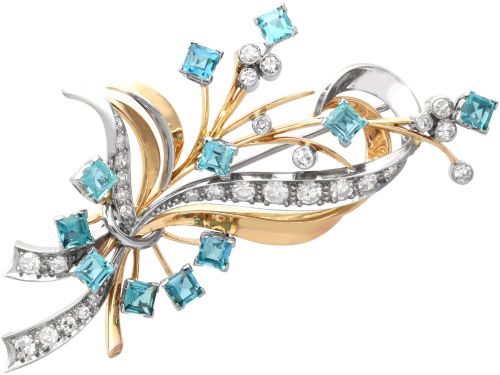
Art Deco pieces from the 1930s and 1940s tend to display strict geometric symmetry and large step-cut aquamarines set in heavy gold. Mid-century and Scandinavian modern examples lean toward organic curves, stylised animal figures, and abstract enamel work.
Studying the transition from rigid lines to playful motifs helps date individual items accurately.