



Retro Chandelier Light
These retro chandelier light pieces bring genuine early twentieth century character to a room through distinctive brass, chrome, and textured glass forms.
Retro Chandelier Light
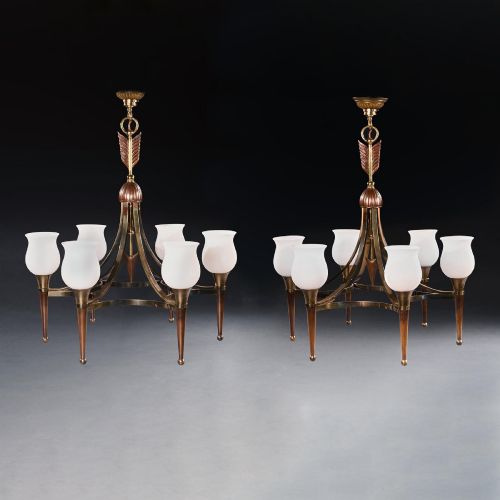
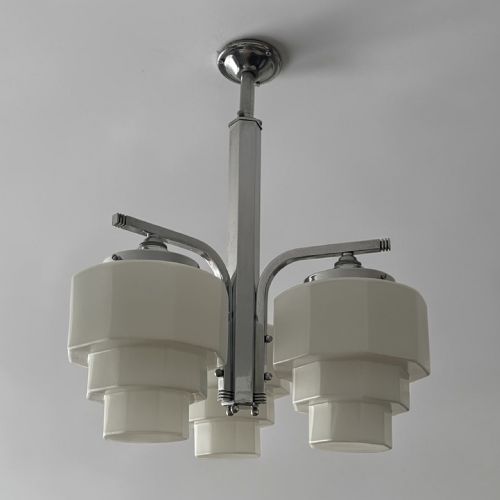
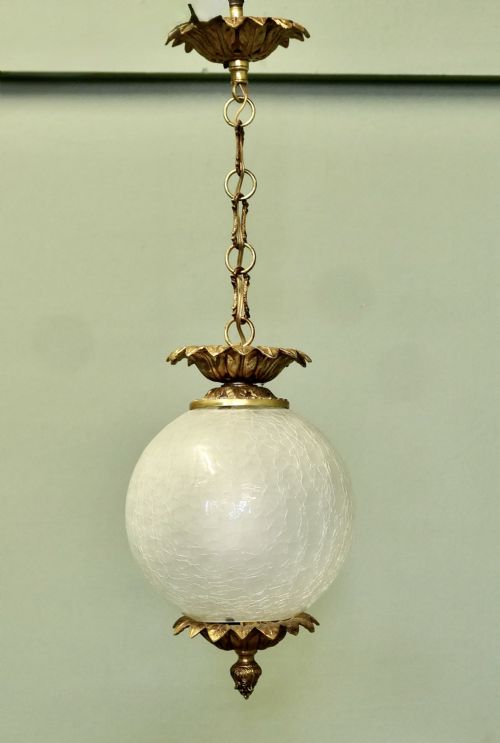
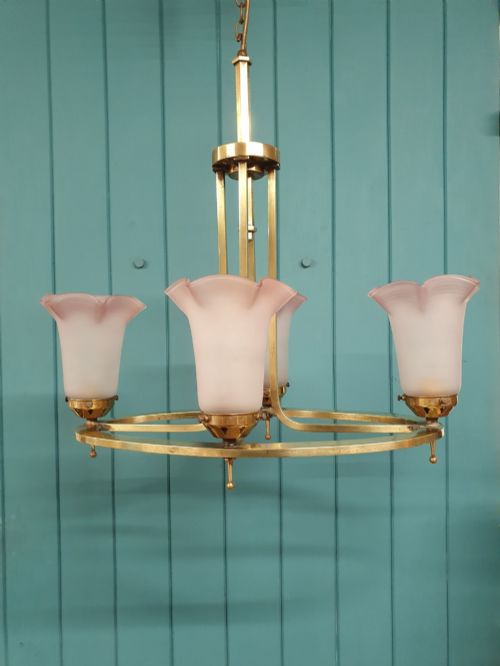
A retro chandelier light covers hanging ceiling fixtures originating mainly from the 1920s and 1930s, alongside Edwardian and nineteenth century examples. The version most commonly met on this page is the Art Deco brass and glass chandelier, often featuring geometric shades or moulded glass bowls.
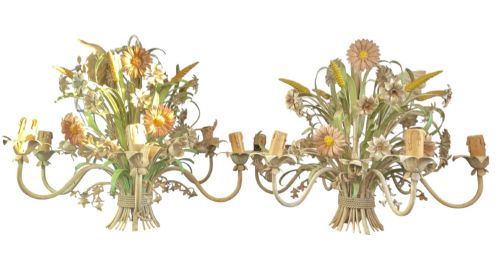
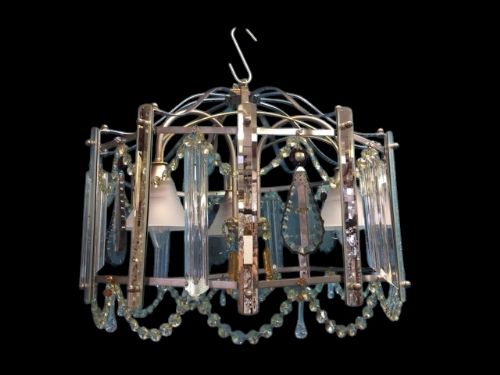
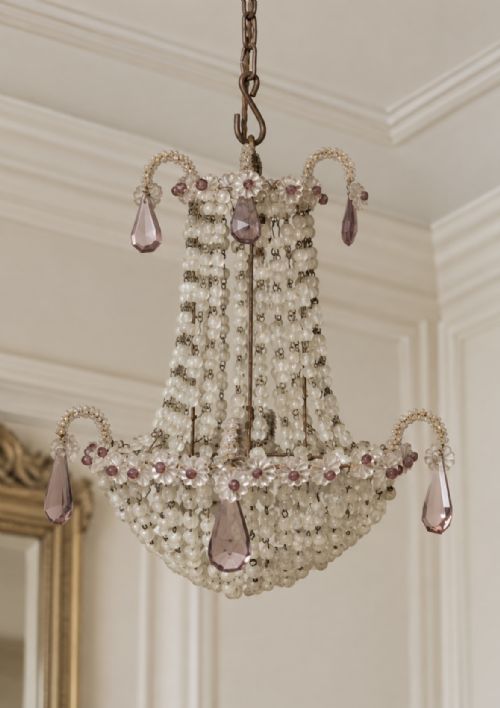
The selection ranges from compact drop lights and single pendant lights to larger multi-armed chandeliers. Forms span French and Italian designs, including alabaster hanging dish lights and prismatic glass drops.
Makers and regional styles introduce significant variety into the category, with French pressed glass and Italian glass elements appearing alongside British Edwardian and nineteenth century brass work.
How they were made
Construction relies heavily on structural metals such as brass, chrome, gilt metal, and wrought iron to form the frames and suspension arms. These metals provide the necessary strength to support heavy glass bowls and multiple light branches.
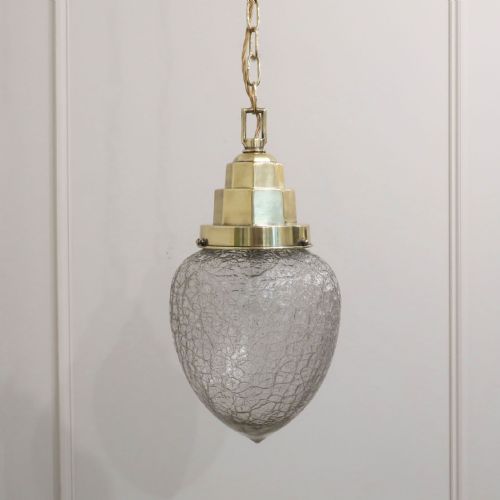
Glassmaking techniques define the decorative appeal of these fixtures, utilising frosted glass, crackle glass, pink crimped glass, and moulded amber beads. Jean Gauthier and other French makers employed specialised pressing methods to create textured surfaces that diffused light evenly.
Retro Chandelier Light Retail Price Guide 2026
Typical asking prices for retro chandelier light among the pieces listed under this phrase on Sellingantiques today, from the lower quarter to the upper quarter. They describe what is for sale here now, not the wider market.
Listings feature four distinct metal types: brass, chrome, gilt metal, and wrought iron.
What varies in quality
Quality separates fixtures by the crispness of the metal casting and the artistic depth of the glass elements. Heavier brass frames and hand-finished glass components indicate superior workshop production compared to standard commercial outputs.
The integrity of the original surface finishes, whether patinated brass, polished chrome, or gilded metal, dictates the visual coherence of the piece. Intact moulded glass shades without replacement parts retain the intended aesthetic harmony.
Jean Gauthier
The Retro Chandelier Light Glossary
- Art Deco
- A design style spanning the 1920s and 1930s characterised by geometric symmetry and stylised motifs. It dominates the glass and metal forms found in these ceiling fixtures.
- Prism
- A cut glass pendant designed to refract light into spectral colours. These appear frequently on early twentieth century crystal and glass drop chandeliers.
- Alabaster
- A fine-grained mineral stone carved into thin bowls for suspension lighting. It provides a soft, warm glow when illuminated from within.
- Crackle glass
- Glass deliberately fractured during cooling and reheated to fuse the surface while retaining an internal web of fine lines. This technique creates a textured appearance on pendant shades.
- Gilt metal
- Base metal treated with a thin layer of gold paint or leaf to simulate solid gold. It adds warmth to French and Edwardian hanging lights.
Retro Chandelier Light: Frequently Asked Questions
What periods do these chandeliers come from?
The selection spans from the nineteenth century through the Edwardian era into the 1920s and 1930s. Art Deco examples from the interwar period form the largest group.
Earlier pieces feature nineteenth century brass and pink crimped glass, while mid-century French and Italian workshops represent later design shifts.
How do I hang a heavy glass bowl light?
Hanging these fixtures requires securing the weight directly to a ceiling joist using appropriate metal hooks or brackets. The suspension chains or rods must bear the total load of the brass frame and glass.
Professional electrical installation is recommended to ensure the wiring safely supports the voltage and weight of antique components.
Are replacement glass shades available if one breaks?
Finding exact period matches for broken glass shades proves challenging due to the specific moulding techniques used by makers like Jean Gauthier. Collectors often source vintage replacements through specialist dealers rather than modern manufacturers.
Checking the fitter size and gallery dimensions ensures any replacement shade sits securely in the brass frame.
How do I clean antique brass and glass?
Cleaning requires removing dust with a soft, dry cloth to protect aged metal patinas and delicate glass surfaces. Harsh chemical polishes should be avoided on vintage brass and gilt finishes.
Glass shades can be washed gently in warm soapy water once detached from the metal frame, provided they contain no fragile applied decoration.