




Retro Canvas Painting
A retro canvas painting brings mid-century colour and texture to a room, offering genuine period character through mid-century modern, impressionist and abstract brushwork.
Retro Canvas Painting
A retro canvas painting spans works produced primarily across the middle decades of the twentieth century, reaching back to earlier decades and forward into the nineteen-sixties. Buyers find oil paintings, wall art and fine art paintings originating from French, English, Italian and Spanish studios.
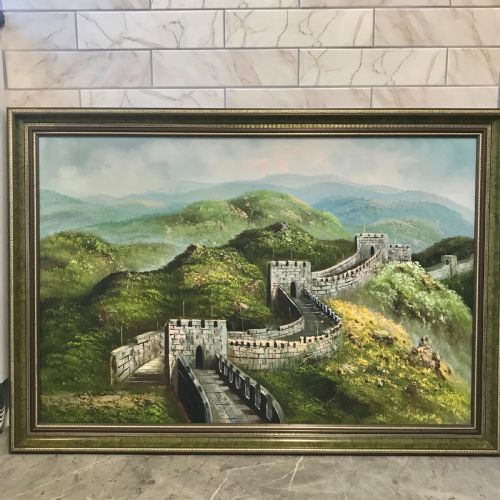
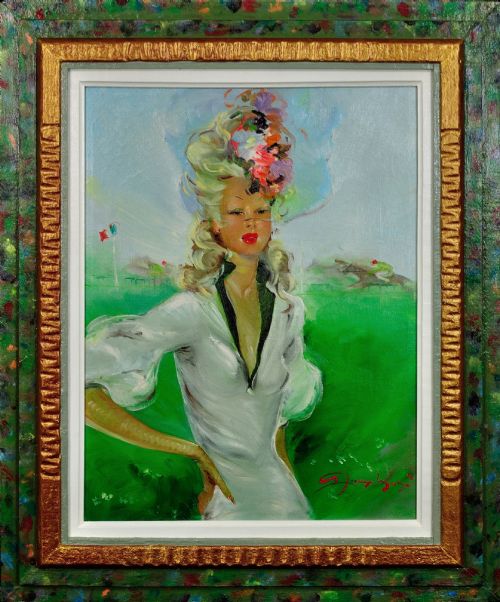
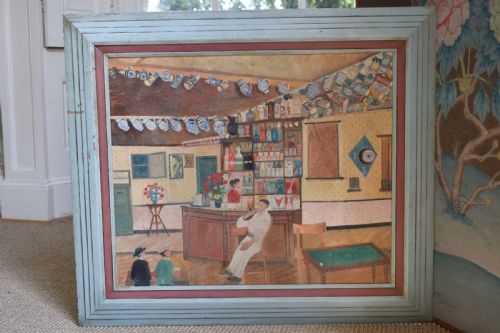
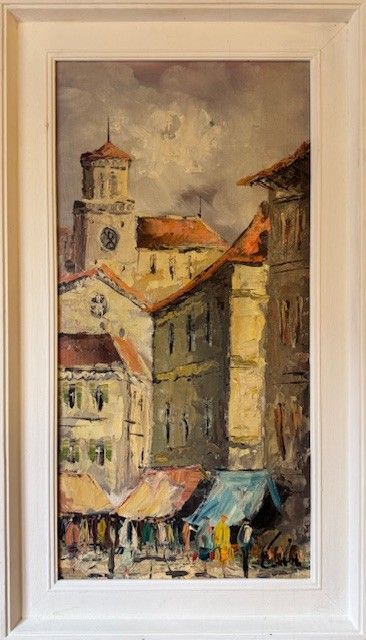
The subjects on this page range from bar interiors, Parisian street scenes and market squares to abstract cityscapes, still lifes and portraits. Works appear from named artists and unknown hands alike, reflecting the diverse output of mid-century painting.
Mid-century modernism, impressionism and naive art dominate the visual language of these pieces. Canvases capture everything from bustling city rivers to quiet domestic still lifes of flowers and fruit.
Materials and construction
Painters of this era applied oil paint, acrylic and tempera directly onto stretched canvas, wooden boards or panels. Many works incorporate heavy impasto techniques, building thick textures that catch the light across abstract cityscapes and expressive portraits.
Canvases often sit within original wood frames or gilt surrounds that complement the period palette. The support materials range from standard artist canvas to sturdy board, maintaining structural stability across the decades.
Retro Canvas Painting Retail Price Guide 2026
Typical asking prices for retro canvas painting among the pieces listed under this phrase on Sellingantiques today, from the lower quarter to the upper quarter. They describe what is for sale here now, not the wider market.
Circus lion and tiger trainers occasionally share wall space with polite floral still lifes and Parisian market squares.
Judging quality in mid-century art
Quality rests upon the confidence of the brushwork and the internal coherence of the composition, whether the scene depicts a structured architectural view or a loose abstract landscape. Stronger pieces demonstrate deliberate control of pigment and tonal balance rather than hesitant application.
The relationship between the painted surface and its housing matters significantly, as original wood frames or period stretchers that suit the canvas enhance the integrity of the piece. Handling of light, colour saturation and surface texture distinguishes compelling artistic statements from routine decorative output.
Jean-Gabriel Domergue·Joseph Biel·Caroline Burnett·Tony Giles·Ron Folland·Stuart Armfield·Rowland Fade·Yetta Kane·John Osborn·Sonia Delaunay·Eugen Rosenfeld·Valerie Mackenzie·William Ernst Burwell
The Retro Canvas Painting Glossary
- Canvas
- A heavy woven fabric stretched across a wooden frame to serve as a sturdy surface for oil and acrylic painting.
- Impasto
- A technique where paint is laid onto a canvas in very thick layers, standing out visibly from the surface to create tactile texture.
- Mid-Century Modern
- A stylistic movement spanning the middle decades of the twentieth century, characterised by clean forms, abstract tendencies and modern subject matter.
- Tempera
- A permanent, fast-drying painting medium consisting of coloured pigments mixed with a water-soluble binder.
- Still Life
- A painting genre focused on inanimate subject matter, typically commonplace objects such as flowers, fruit, glassware or table settings.
Retro Canvas Painting: Frequently Asked Questions
What periods do these paintings date from?
The works listed here primarily date from the middle decades of the twentieth century, with particular concentration in the nineteen-fifties and nineteen-sixties alongside examples from the nineteen-twenties and nineteen-thirties.
This timeframe captures the evolution of mid-century modernism, impressionism and abstract painting across various European artistic circles.
How should I hang a framed canvas?
Ensure your wall fixings match the weight of the wooden frame and canvas support, using sturdy hooks secured directly into wall studs or appropriate masonry plugs.
Position the painting at eye level in a space protected from direct, harsh sunlight and excessive moisture fluctuations to preserve the oil paint and canvas.
How do I identify an impressionist city scene?
Impressionist city scenes rely on loose, visible brushstrokes and vibrant colour relationships to capture the fleeting atmosphere of Parisian streets, river banks or market squares rather than precise architectural drafting.
Artists frequently use textured impasto to render light reflecting off damp pavement or bustling crowds.