




Retail Store Counter
These retail store counter pieces are utilitarian shop furniture built to display and sell goods, offering robust commercial character for modern spaces.
Retail Store Counter
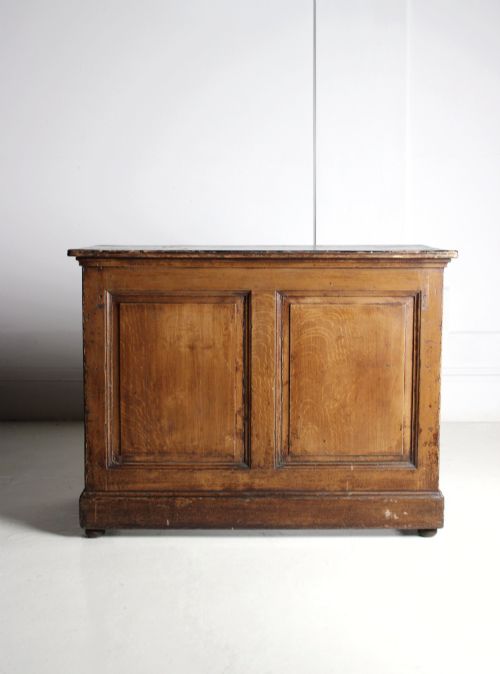
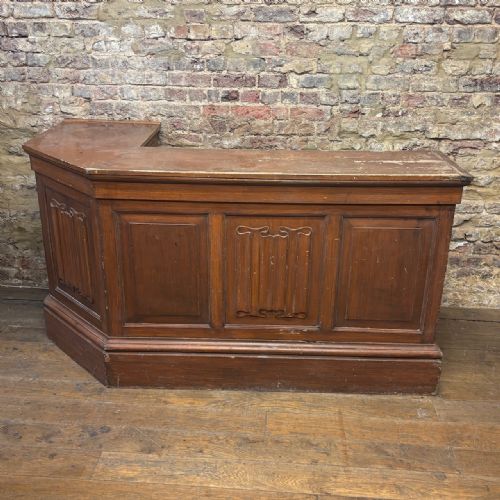
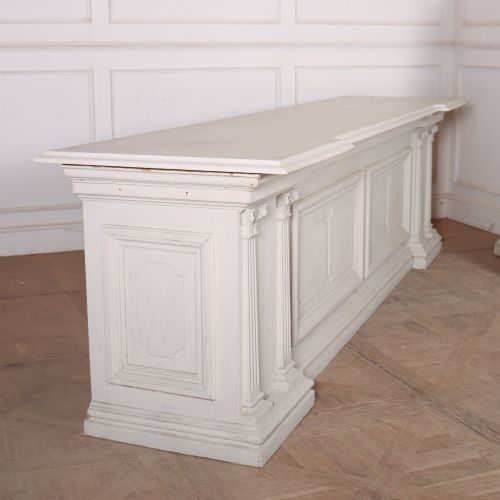
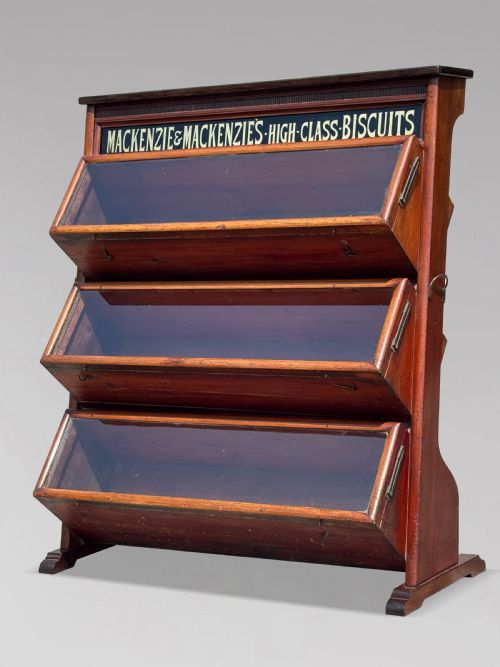
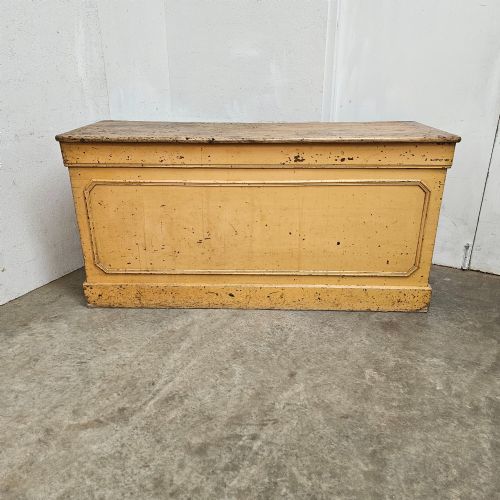
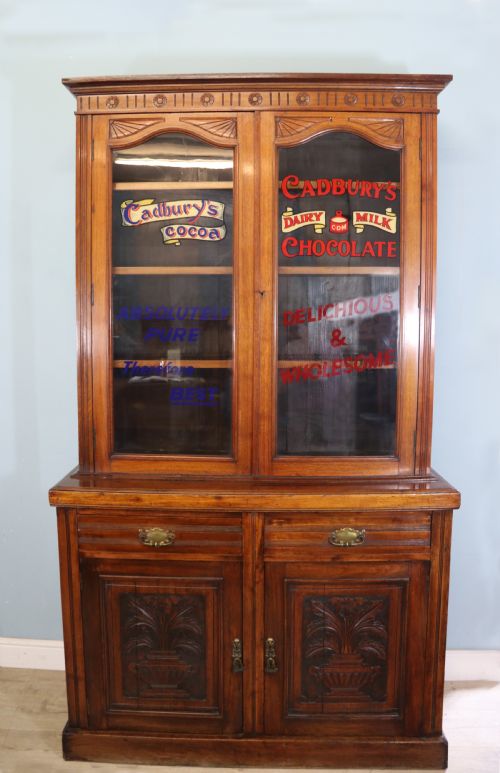
A retail store counter provides sturdy wooden and glass construction designed for daily mercantile use in shops and businesses. You will encounter various forms here, ranging from large timber shop fittings to glazed display cabinets and specialised haberdashery units.
The pieces on this page span the Victorian and Edwardian eras through to the 1930s, reflecting both British commercial joinery and international workshop output. Formats include oak and mahogany drapers counters alongside painted pine structures and brass-framed display cases.
Makers and brands occasionally stamp their commercial furniture, yielding pieces associated with firms such as Saml. Elliott and Sons or Quincy Showcase Works. Such marked examples provide clear historical provenance alongside standard utilitarian shop counters.
Materials and construction
Makers utilised dense hardwoods such as oak and mahogany for primary structural frames, ensuring the durability required for heavy retail environments. Pine and other softer timbers frequently served for internal framing or backing boards, sometimes finished with paint or faux graining.
Glass panels and brass or bronze framing distinguished glazed display counters from solid timber storage units, allowing customers to view goods while keeping them secure. Adjustable feet and specialised hardware facilitated placement on uneven commercial shop floors.
Retail Store Counter Retail Price Guide 2026
Typical asking prices for retail store counter among the pieces listed under this phrase on Sellingantiques today, from the lower quarter to the upper quarter. They describe what is for sale here now, not the wider market.
Listings feature items spanning the Victorian period, the Edwardian era, and the 1930s, constructed from oak, mahogany, pine, and brass.
Assessing quality in commercial counters
Superior retail store counter pieces demonstrate precise joinery in their timber frames and retain original hardware such as brass handles and sliding doors. Finer examples integrate bevelled glass and robust framing that withstands decades of practical employment.
The distinction between standard utility fittings and exceptional pieces lies in the choice of materials, such as solid mahogany versus painted pine, and the preservation of original factory surfaces or painted finishes. Maker attributions and specialised advertising branding elevate certain display counters above plain workshop output.
Saml. Elliott and Sons·Quincy Showcase Works
The Retail Store Counter Glossary
- Shop counter
- A heavy commercial table or cabinet behind which a merchant served customers and displayed goods. These fixtures formed the centrepiece of Victorian and Edwardian retail interiors.
- Display cabinet
- A glazed enclosure designed to protect merchandise while offering maximum visibility to shoppers. They often incorporate timber frames and shelving.
- Haberdashery cabinet
- A specialised multi-drawer storage unit historically used in drapery and sewing shops for small items. They feature shallow drawers, sometimes with glass fronts.
- Shop fitting
- A permanent or semi-permanent architectural fixture built specifically for interior retail use. This category includes counters, shelving arrays, and dedicated display stands.
- Display bust
- A sculptural form utilised in shop windows and counters to showcase millinery or garments. These figures date from periods including the Art Deco era.
Retail Store Counter: Frequently Asked Questions
What is a retail store counter?
A retail store counter is a piece of heavy-duty commercial furniture designed for merchants to serve customers and display goods. These items originated in nineteenth and twentieth-century shops.
Today, they serve as functional kitchen islands, reception desks, or statement storage furniture in residential and commercial interiors.
How do I date a shop counter?
Dating relies on timber selection, construction methods, and stylistic cues from periods like the Victorian era or the 1930s. Oak and mahogany generally predominate in earlier pieces, while brass framing characterises later decades.
Manufacturer stamps, metal plaques, and original painted finishes also provide concrete evidence of a piece's production era.
Can I use an antique counter at home?
These counters adapt well to modern domestic settings due to their generous proportions and durable wooden surfaces. They function effectively as kitchen islands, sideboards, or retail display units.
Their robust construction ensures they handle daily use while adding distinct historical character to a room.
What timber was used for counters?
Builders selected hardwoods such as oak, mahogany, and walnut for their strength and appearance in customer-facing areas. Pine served as a secondary timber for internal framing or painted finishes.
Metal elements like brass and bronze appeared alongside glass in specialised display counters from the early twentieth century.