
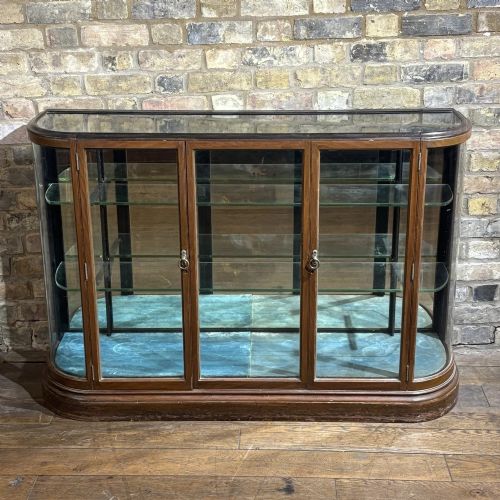


Retail Shop Counter
A retail shop counter serves as both a practical workspace and a display stage, bringing period character and functional storage into modern interiors.
Materials and Construction Techniques
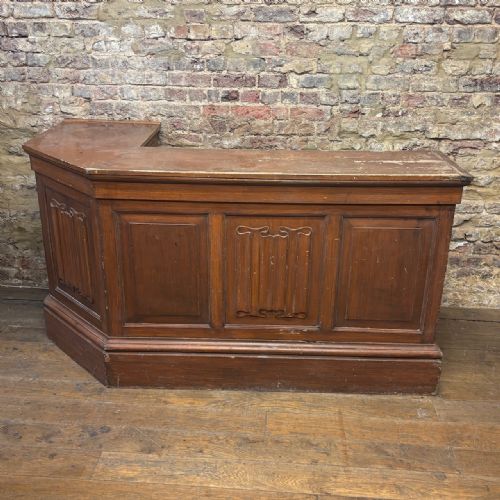
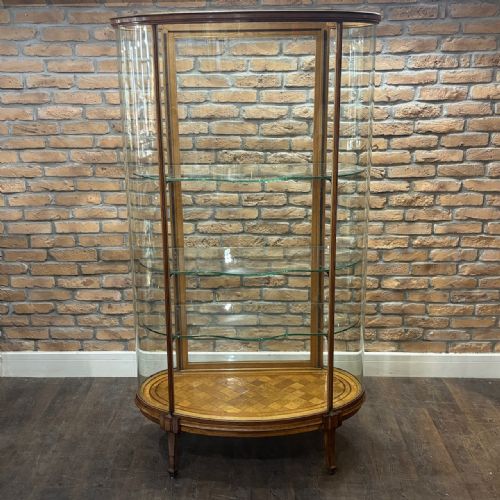
Construction relies heavily on durable hardwoods such as mahogany and oak, often paired with extensive glass panels to maximise visibility for merchandise. Brass hardware, cast iron frames, and chrome detailing appear across various pieces to reinforce structural corners and support display tiers.
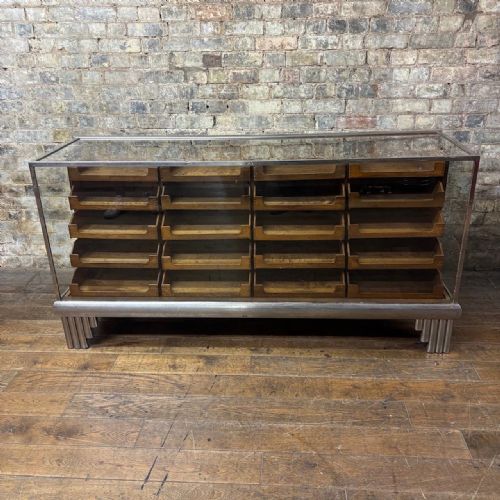
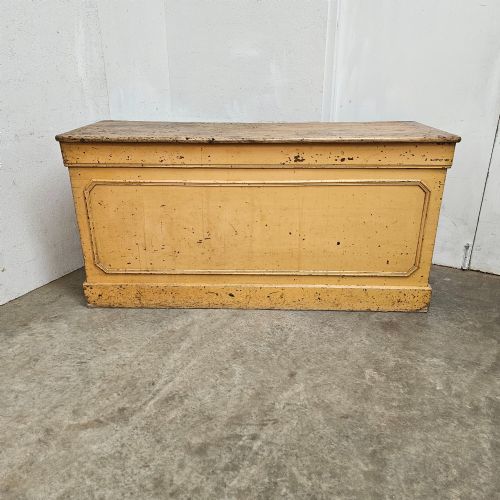
Many items incorporate specialised joinery suited to heavy daily commercial use, including panelled timber bodies, mirrored interiors, and multi-drawer pine arrangements. Surface treatments range from polished natural wood grains to original painted finishes and ebonized coatings.
Evaluating Quality and Craftsmanship
Quality in a retail shop counter rests on the integrity of the original glazing, the precision of the timber joinery, and the retention of maker details such as brass plaques or maker-stamped drawers. Superior examples display refined proportions, whether in a bow end mahogany cabinet or a multi-drawer apothecary unit.
The distinction between standard commercial output and finer pieces involves the subtlety of decorative elements, such as Adam style mahogany framing or specialised hardware fittings by established makers. Preserved original paint finishes and intact mirrored interiors further elevate the standing of a piece.
Listings feature oak, mahogany, pine, and brass across nineteenth-century and early twentieth-century periods.
F. Sage & Co·Dudley & Co·G H Gledhill Halifax·John Stow Ltd of Bradford
The Retail Shop Counter Glossary
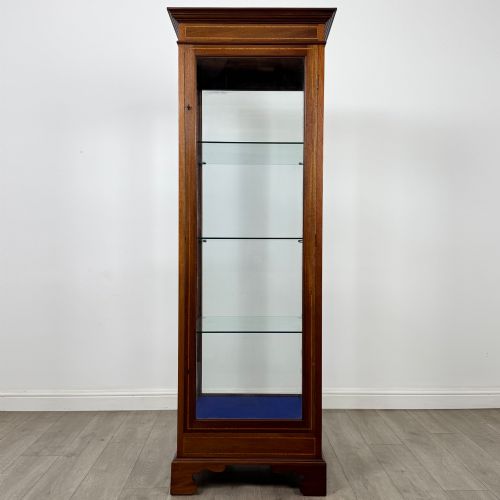
- Countertop display cabinet
- A smaller glazed case designed to sit upon a main retail shop counter for goods requiring closer inspection.
- Haberdashery counter
- A long commercial fixture traditionally fitted with numerous shallow drawers to organise small sewing and clothing items.
- Ebonized
- Wood finished with a dark stain or pigment to imitate the appearance of ebony, popular in late nineteenth and early twentieth-century furniture.
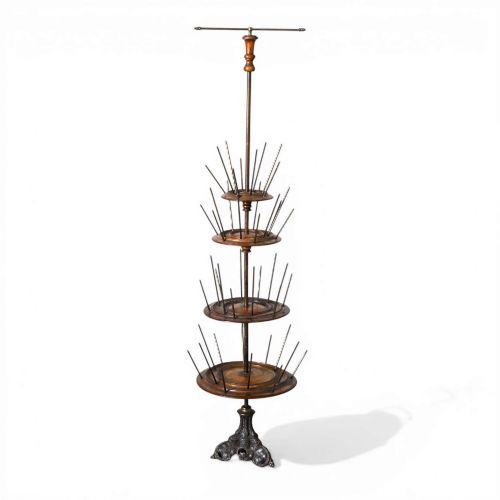
- Display tree
- A tiered freestanding stand utilised in retail environments for presenting small items such as cotton reels or accessories.
Retail Shop Counter: Frequently Asked Questions
What is a retail shop counter?
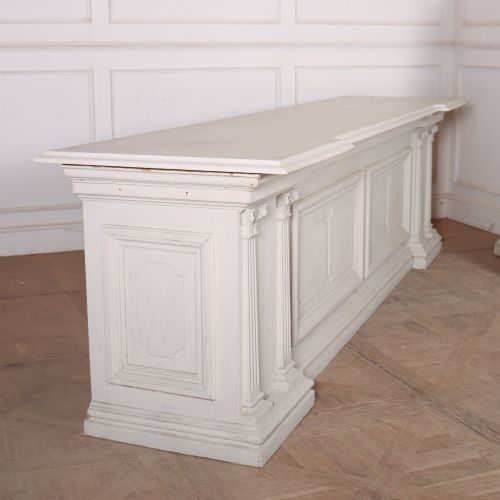
A retail shop counter is a historic commercial fixture built to display merchandise and handle transactions in a shop. These pieces range from large oak floor cabinets to glass countertop units.
Originally designed for trade use, they bring robust timber construction and glazed display space into modern domestic and commercial interiors.
How were retail shop counters used?
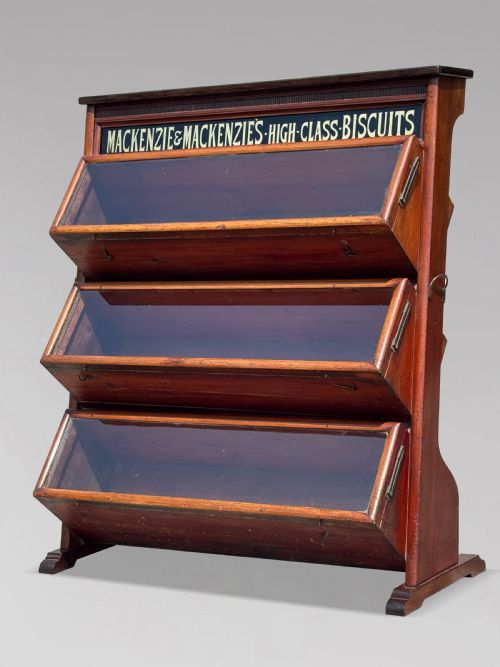
Merchants utilised these fixtures to showcase delicate goods, confectionery, tobacco, and haberdashery while keeping items secure behind glass. Cash registers and till units often sat directly upon the upper surfaces.
Internal shelving and mirrored backs helped reflect light and present products clearly to customers standing on the opposite side.
Where can I place a retail shop counter?
These counters adapt well to kitchen spaces, living areas, or retail boutiques as islands, room dividers, or display consoles. Glazed countertop versions function effectively on top of sideboards or tables.
Their substantial timber frames and glass panels make them focal points that provide both surface space and internal storage.
How do I date a shop counter?
Dating relies on observing construction methods, timber choices, hardware styles, and any accompanying maker plaques or advertising branding. Victorian and Edwardian examples often feature heavy mahogany or oak with traditional joinery.
Later pieces from the 1920s and 1930s introduce chrome framing, aluminium elements, and distinct art deco design motifs.