

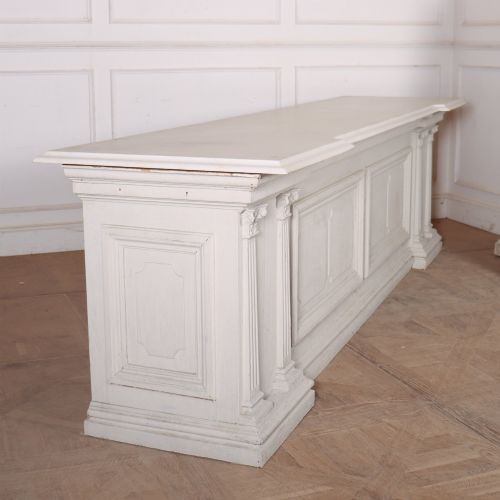


Retail Display Table
A retail display table offers the shopkeeper a practical stage for merchandise, bringing historical character and glazed visibility to commercial interiors.
Retail Display Table
A retail display table serves commercial and domestic spaces alike, functioning as a surface or cabinet designed to showcase small goods. When exploring a retail display table, buyers encounter forms ranging from low countertop shelves and tall cabinets to dedicated bijouterie tables with glass tops.
The pieces on this page span the late nineteenth century through to the 1930s, encompassing Edwardian, Neoclassical, and French provincial styles. Origins stretch from English and French workshops to Italian makers and American firms.
Common iterations include glazed mahogany cabinets, brass and cast iron draper stands, and painted wooden counters. These items reflect the functional needs of historic shopkeepers who required secure yet visible ways to present wares to customers.
Construction and materials
Cabinetmakers and metalworkers utilised a combination of structural timber, glass, and cast elements to build these shop fittings. Mahogany, oak, yew wood, and general hardwood provide the rigid framework for tables and counters.
Retail Display Table Retail Price Guide 2026
Typical asking prices for retail display table among the pieces listed under this phrase on Sellingantiques today, from the lower quarter to the upper quarter. They describe what is for sale here now, not the wider market.
Several vintage bijouterie tables carry later sign-written details for Breitling watches, hinting at past lives in bustling commercial horology shops.
Assessing quality and character
Quality in these commercial pieces rests on the integrity of the timber framing, the clarity of the glass panels, and the robustness of metal fittings. Examples constructed from dense hardwoods like mahogany or oak generally command greater durability.
Subtleties in stylistic execution, such as refined French Louis XV or Queen Anne styling, distinguish standard utilitarian counters from more decorative showroom furnishings. Later sign-written additions and patination accumulated through active commercial use add individual character to each piece.
Quincy Showcase Works Illinois
The Retail Display Table Glossary
- Draper stand
- A vertical display fixture utilised in textile and clothing shops for hanging or draping fabrics. These often incorporate brass and cast iron construction.
- Shop counter
- A substantial retail furnishing designed for serving customers and transacting business, frequently incorporating display shelving or glazed compartments.
- Gesso
- A plaster-based material applied to wood surfaces as a smooth base for painting or gilding. It appears on decorative frames and mouldings.
- Veneer
- A thin layer of superior wood applied over a base of cheaper timber to provide a decorative surface. Yew wood and mahogany are frequently treated this way.
Retail Display Table: Frequently Asked Questions
What were retail display tables used for?
Historic shopkeepers utilised these fixtures to present merchandise securely while allowing prospective buyers an unobstructed view of the goods.
They populated drapery shops, jewellers, and general merchants where small valuables or folded textiles required organised presentation.
How do I style a retail display table at home?
Glass-topped bijouterie tables work effectively in living spaces for exhibiting collections of small objects, books, or natural specimens beneath the surface.
Larger counters and cabinets function well as sideboards or focal storage units in dining rooms and hallways.
How do I date a display table?
Dating relies upon identifying stylistic markers such as Edwardian proportions, Neoclassical details, or 1930s commercial streamlining.
Materials, construction methods, and hardware also provide clear indicators of whether a piece originates from the nineteenth century or the early decades of the twentieth.
Are shop counters suitable for modern kitchens?
Sturdy timber counters and shop tables provide generous surface area and practical proportions suited to modern domestic utility.
Their commercial heritage introduces robust construction and historic patination that contrasts effectively with contemporary interiors.