



Restoration Mantel Clock
A restoration mantel clock brings the precise engineering of the seventeenth through nineteenth centuries into domestic rooms through polished metal and stone.
Restoration Mantel Clock
A restoration mantel clock is a timepiece designed for domestic interiors, predominantly taking the form of French portico clocks, figural pieces, and English bracket clocks. These items span periods from the seventeenth century through to the twentieth century, capturing distinct design movements including French Restoration, Charles X, and Louis Philippe.
Buyers examining this selection will most frequently encounter nineteenth-century French examples constructed from ormolu, gilt bronze, and marble. Alongside these, earlier English lantern and table clocks provide architectural timber cases housing brass dials and movements.
The assortment combines architectural symmetry with sculptural figuration, ranging from geometric portico designs to elaborate mythological and allegorical subjects. Each piece reflects the interior domestic priorities of its period, functioning simultaneously as a precision instrument and a decorative centrepiece.
Materials and Construction Techniques
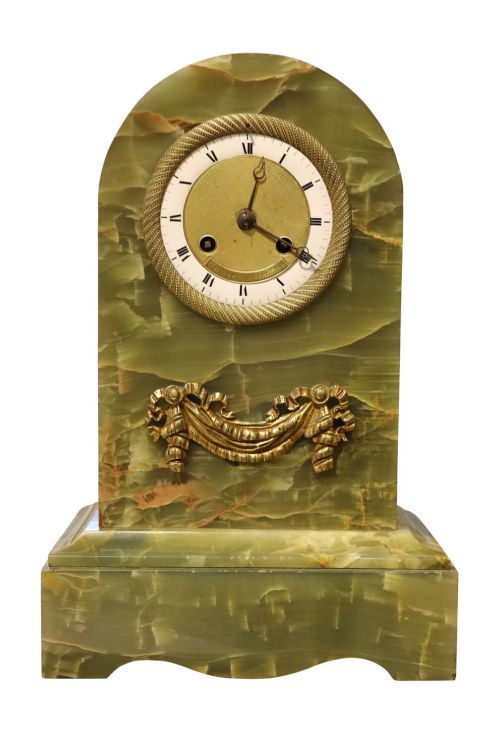
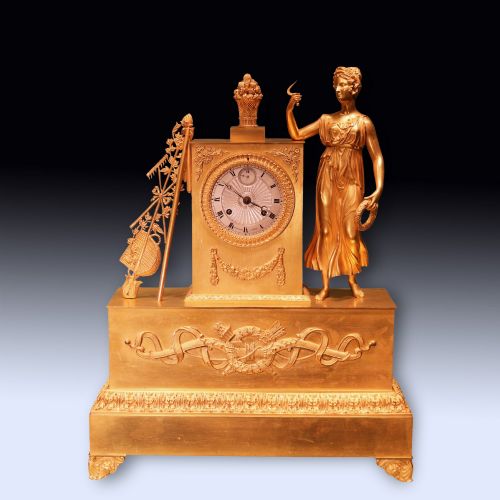
Makers constructed these timepieces using heavy base metals such as bronze and brass, frequently applying mercury gilding to produce ormolu surfaces. Cases combined these metallic elements with natural materials including green onyx, white marble, rouge marble, and ebony or rosewood veneers.
Workshops integrated enamel dials, glass panels, and cut crystal to protect the movement while revealing the interior mechanics. Fine inlay work utilising lemon wood complemented the darker timbers of the table and portico clock cases.
Restoration Mantel Clock Retail Price Guide 2026
Typical asking prices for restoration mantel clock among the pieces listed under this phrase on Sellingantiques today, from the lower quarter to the upper quarter. They describe what is for sale here now, not the wider market.
The selection includes both English bracket clocks with brass basket tops and French portico clocks driven by figural bronze designs.
Distinctions in Quality and Execution
Quality rests in the crispness of the bronze chasing and the depth of the ormolu gilding. Superior examples display sharply defined relief work on figural elements and architectural mounts, whereas lesser pieces show softened casting details.
The integration of the movement within the case reveals the maker's hand, with finer executions maintaining precise alignment between the dial, bezel, and surrounding stone or timber housing.
Thomas Langley·Charles à Orléans·Canaillor of Paris·Jonathon Lowndes·William Speakman·Ravrio·Baltazart·Gillion
The Restoration Mantel Clock Glossary
- Ormolu
- Gilded bronze produced by applying a mercury and gold amalgam to a bronze base and heating it. This technique creates a durable, luminous surface characteristic of fine nineteenth-century French clocks.
- Portico clock
- A mantel clock featuring a symmetrical architectural case supported by four or more columns. These structures often frame a suspended pendulum swinging within the central opening.
- Basket top table clock
- An English clock style featuring a flattened, flared wooden handle atop a rectangular ebony or timber case. These seventeenth-century pieces typically house brass dial plates.
- Lantern clock
- An early brass chamber clock designed to hang on a wall or stand on small feet. Originating in the seventeenth century, they display open bell arrangements above framed brass movements.
- Gilt bronze
- Metal cast in bronze and subsequently covered with a thin layer of gold. The process enhances the decorative presence of figural and architectural clock cases.
Restoration Mantel Clock: Frequently Asked Questions
What is a portico clock?
A portico clock is an architectural timepiece structured around a central dial flanked by columns. The design draws inspiration from classical building facades.
These clocks frequently incorporate pendulum movements suspended directly within the open architectural frame.
How do English and French clocks differ?
English examples from the seventeenth century often favour timber cases in ebony with brass basket tops and lantern structures. French pieces lean towards ormolu, marble, and figural bronze sculptures.
Each national tradition reflects the domestic interior fashions of its respective period.
What materials are common in these clocks?
Makers utilised ormolu, gilt bronze, brass, patinated bronze, and steel alongside decorative stones like white marble, rouge marble, and green onyx. Timber cases featured ebony, rosewood, and mahogany.
These varied materials provided structural stability and decorative contrast for the movements.
How do I identify the period?
Period identification relies on stylistic cues such as Charles X symmetry, French Empire motifs, or seventeenth-century English joinery methods. Materials like ormolu and specific marble types further anchor pieces to specific decades.
Comparing dial construction and case architecture against documented examples clarifies the date of manufacture.