

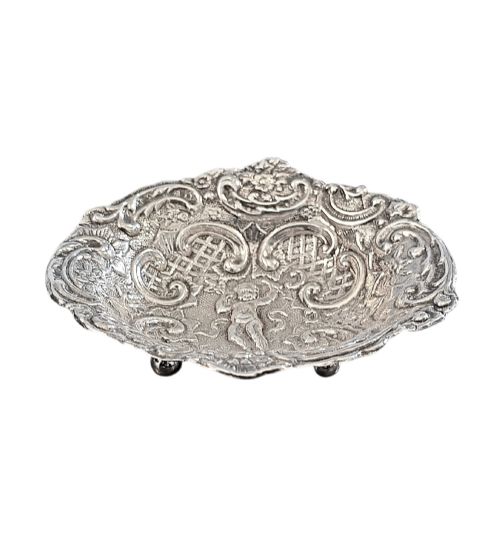

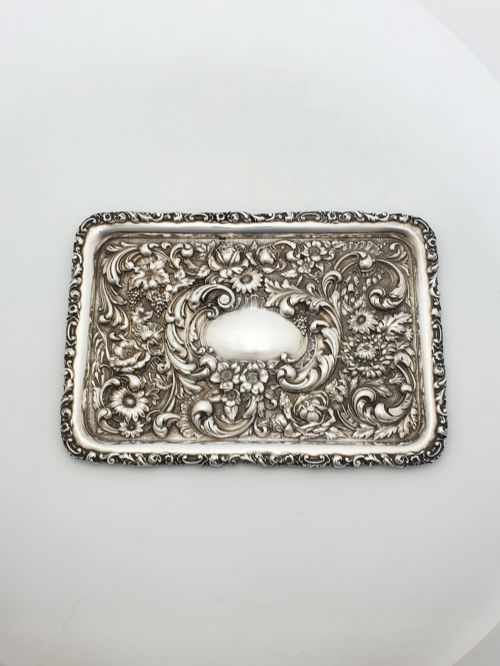
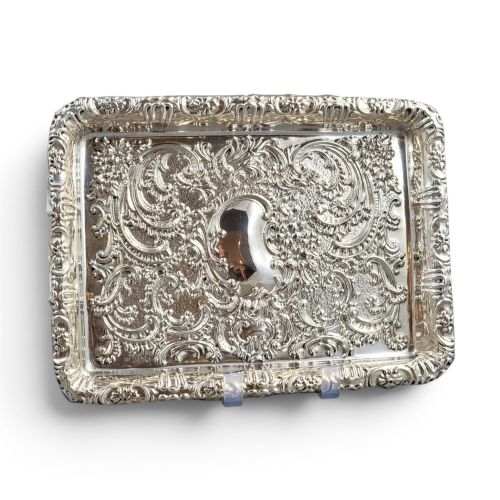
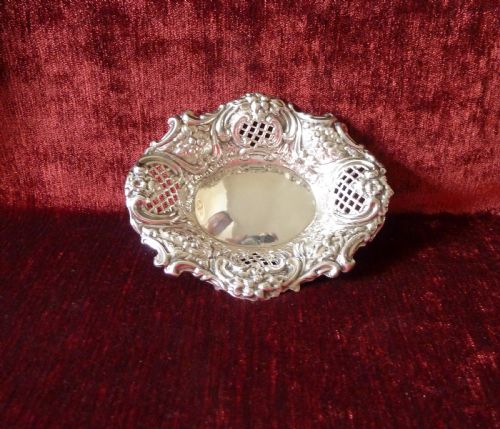
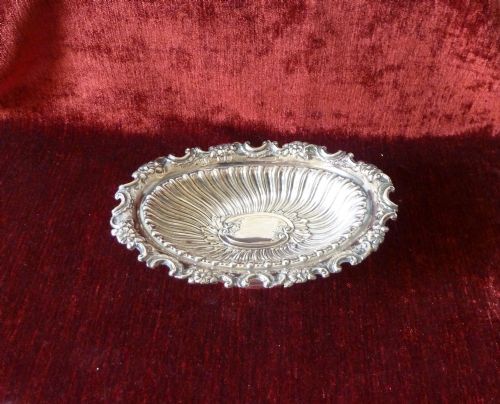


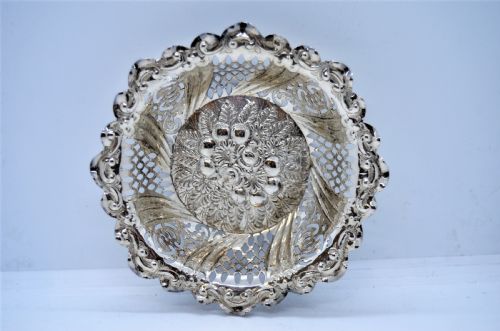


Repousse Silver Pin Dish
These repousse silver pin dish pieces are decorative table items offering intricate metalwork relief, providing a touch of historic craftsmanship for any dressing table.
Repousse Silver Pin Dish
The most common forms on this page include small trinket dishes and heart-shaped bowls designed for dressing tables. Makers utilised sterling silver alongside velvet and satin linings to present these decorative tableware items.
Stylistic influences range from classic Victorian and Edwardian designs to Art Nouveau flourishes and Rococo floral motifs. Pieces often feature distinct maker marks and hallmarked dates ranging across the eighteen eighties, nineties, and early twentieth century.
How they were made
Silversmiths shaped these pieces from sterling silver using the hammer-driven relief technique known as repousse, pushing the metal outward from the reverse to create raised designs. This method allowed craftsmen to model detailed floral patterns, angelic faces, and scrollwork directly into the metal surface.
Makers finished many items with gilt highlights or paired the silver trays with fitted velvet and satin interiors for dressing table use. London and Birmingham assay offices hallmarked these sterling silver creations upon completion.
Repousse Silver Pin Dish Retail Price Guide 2026
Typical asking prices for repousse silver pin dish among the pieces listed under this phrase on Sellingantiques today, from the lower quarter to the upper quarter. They describe what is for sale here now, not the wider market.
Listings feature sterling silver objects spanning the Victorian and Edwardian periods, incorporating Chinese export examples and fitted cases with satin and velvet.
What varies in quality
The standard of the repousse relief work defines the upper tier of these pieces, where crisp, deep hammering creates sharp definition in floral and figural motifs. Shallower stamping lacks the tactile depth found in masterworks produced by prominent silversmiths.
Maker attribution and assay provenance elevate specific examples, particularly signed pieces from recognised workshops such as those by William Comyns or Robert Pringle. Intact original cases and well-preserved gilt finishes also distinguish finer specimens.
Robert Pringle And Sons·William Comyns·James Hennell
The Repousse Silver Pin Dish Glossary
- Repoussé
- A metalworking technique where the artisan hammers the design from the reverse side to form a raised relief on the front. This method creates tactile depth in decorative silver items.
- Sterling silver
- An alloy consisting of ninety-two point five percent silver and seven point five percent other metals, typically copper. It serves as the primary material for these durable antique trays and dishes.
- Hallmark
- An official stamp applied by an assay office to indicate metal purity, the city of testing, and the year of manufacture. London and Birmingham marks frequently appear on these pieces.
- Gilt
- A thin layer of gold applied to the surface of the silver object to provide a two-tone decorative effect. This finish enhances the interior details of bowls and pin dishes.
- Art Nouveau
- A stylistic movement characterised by organic, flowing lines and natural motifs that emerged around the turn of the twentieth century. Pieces from this period exhibit sinuous floral and figural designs.
Repousse Silver Pin Dish: Frequently Asked Questions
What is a repousse silver pin dish used for?
These small vessels served primarily on dressing tables to hold pins, rings, and small trinkets. Victorians also utilised them as card trays or decorative sweet dishes.
Today they function as refined catchalls for everyday accessories or as standalone cabinet displays celebrating late nineteenth-century metalwork.
How do I identify an Edwardian silver dish?
Edwardian pieces date from nineteen hundred onwards to the reign's close, often displaying lighter, more graceful styling than heavier Victorian items. Assay office hallmarks provide the exact year of manufacture.
Look for hallmarks indicating London or Birmingham alongside stylistic cues like Art Nouveau curves or crisp floral repousse work.
What is the difference between a pin dish and a card tray?
Pin dishes are generally smaller, shallower bowls intended for dressing tables and vanity use. Card trays offer a slightly broader flat surface designed for receiving visiting cards.
Both utilise sterling silver and similar repousse techniques, but their proportions reflect their distinct historical domestic functions.