

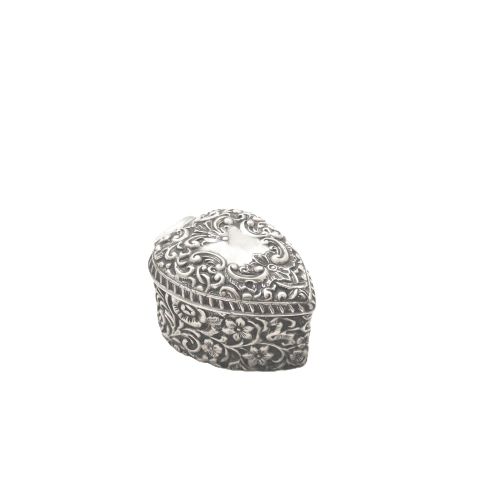

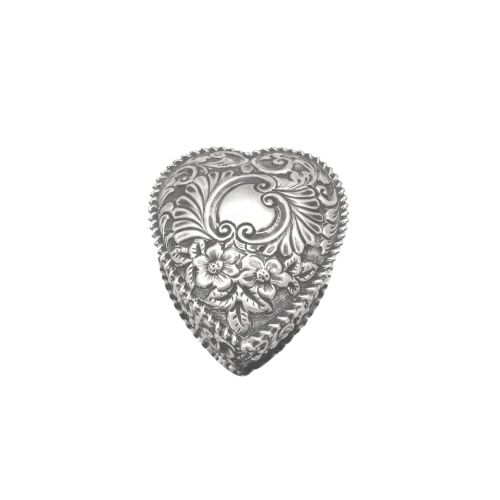
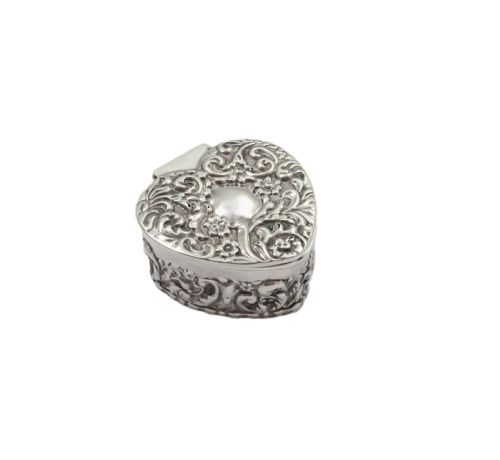


Repousse Silver Heart
A repousse silver heart combines hammered metalwork with a romantic silhouette, offering a decorative vessel for dressing tables and desks.
Repousse Silver Heart
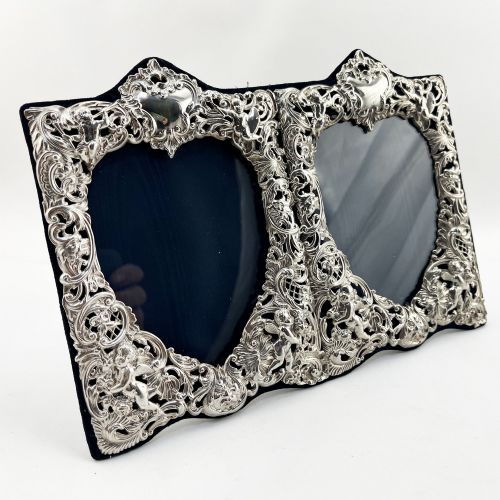
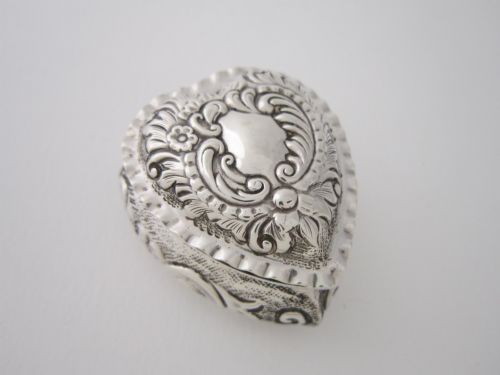
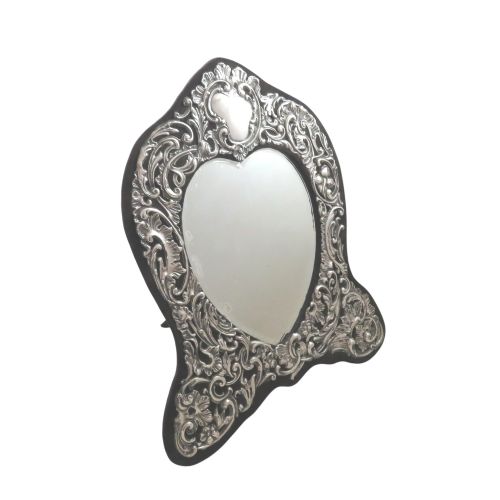
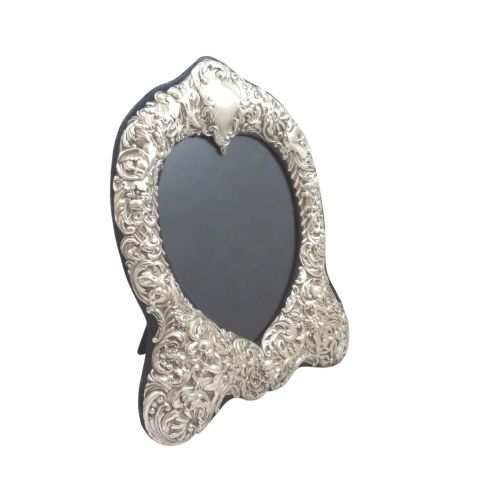
A repousse silver heart appears across various domestic items, most commonly taking the form of trinket boxes, dressing table mirrors, and photo frames. These pieces originate predominantly from the Victorian and Edwardian periods, stretching from the late nineteenth century into the early twentieth century.
Buyers will frequently encounter small storage vessels such as ring boxes and pill boxes alongside larger display pieces. The form also extends to specialised objects like pin cushions and religious wall art, reflecting the diverse uses of silverwork during these eras.
Materials and construction
Silversmiths utilised sterling silver alongside materials such as cut glass, crystal, and velvet to construct these objects. The integration of glass and wood provides structural contrast to the metallic exterior.
The repousse technique involves hammering the metal from the reverse side to raise a decorative design in relief on the front. This method creates the characteristic raised ornamentation seen across the surfaces of these boxes and frames.
Listings feature items spanning the Victorian and Edwardian eras, utilising sterling silver, glass, and velvet.
Assessing quality and craftsmanship
Quality rests upon the crispness and depth of the hammered relief work, which demonstrates the skill of the silversmith. Finer examples display intricate detail and balance across the heart-shaped contours without distortion.
The weight of the silver and the structural integrity of hinges on boxes or stands on mirrors distinguish sturdier productions from lighter items. Secondary materials like fitted velvet linings or cut glass components further indicate the standard of manufacture.
George W Shiebler
The Repousse Silver Heart Glossary
- Repousse
- A metalworking technique where the design is hammered into relief from the reverse side. This method allows artisans to create tactile, three-dimensional surface decoration on sheet silver.
- Sterling silver
- An alloy consisting of pure silver and other metals, typically copper, to increase durability. Items bearing this designation meet specific legal standards for silver content.
- Vermeil
- Sterling silver plated with a thin layer of gold. This finish provides the visual warmth of gold while utilising a silver base.
- Ex Voto
- A religious offering placed in a church or sanctuary as a vow or in gratitude. These devotional objects often take symbolic shapes, including the sacred heart.
Repousse Silver Heart: Frequently Asked Questions
What were repousse silver heart boxes used for?
These boxes served primarily as vanity accessories on dressing tables, holding small personal items such as rings, pins, and trinkets. Their decorative nature made them suitable for display in private chambers as well as reception rooms.
Over time, owners also utilised them to store keepsakes, love tokens, or daily medications, combining practical storage with sentimental value.
How can I date a repousse silver heart?
Dating relies heavily on hallmarks stamped into the silver, which indicate the assay office, the year of manufacture, and the maker. Stylistic cues, such as the heavier ornamentation of Victorian pieces compared to Edwardian designs, also offer chronological context.
The inclusion of materials like cut glass or specific lining fabrics can further help narrow down the period of production.
Are these pieces made entirely of silver?
While many items utilise solid sterling silver for the primary structure or outer casing, others incorporate mixed media. Pieces frequently combine silver mounts with cut glass bodies, wooden backs, or velvet and silk interior linings.
Mirrors and frames often feature weighted internal elements or wooden supports behind the silver shell to ensure stability.
How do I care for antique silver?
Maintenance involves gentle cleaning with a soft cloth to remove dust and tarnish without abrading the raised repousse details. Harsh chemical dips should be avoided, particularly on pieces with velvet linings, glass components, or gilt finishes.
Storing the items in a dry environment prevents excessive oxidation and preserves the integrity of both the metal and any secondary materials.