


Repousse Silver Casing
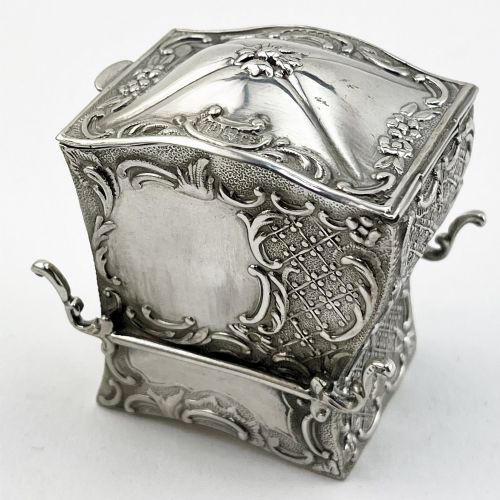
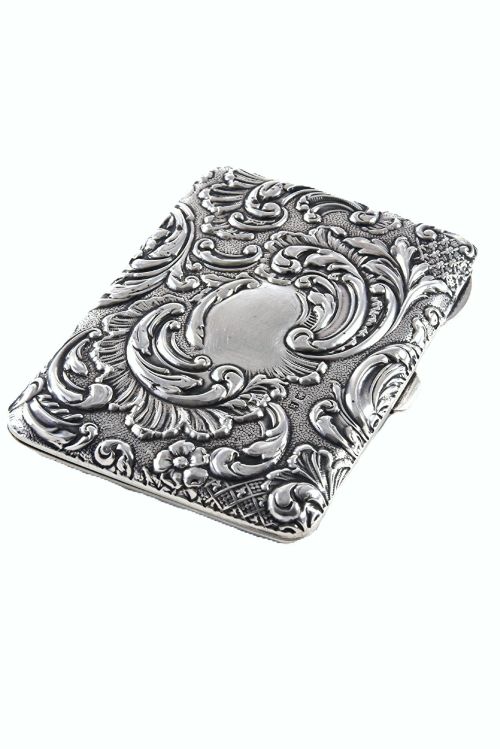
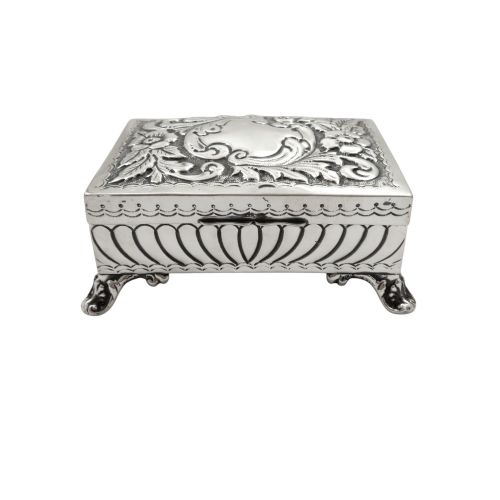
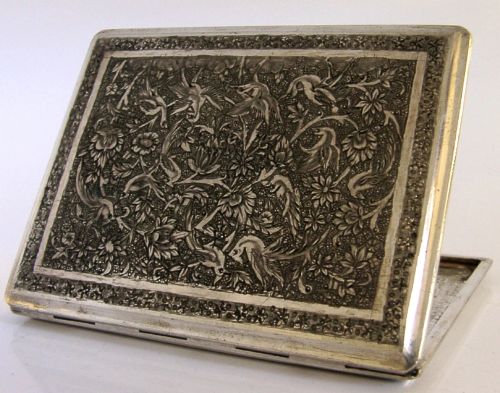
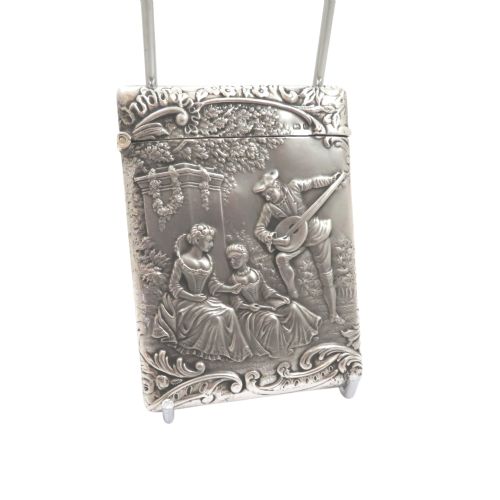
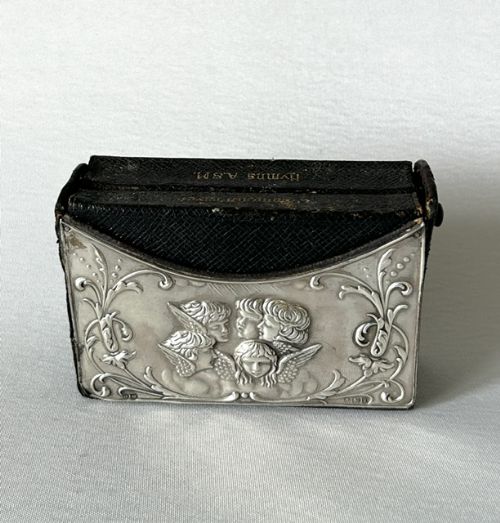
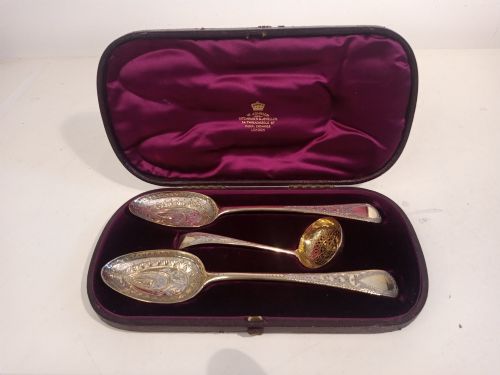
These pieces of repousse silver casing bring sculptural relief and tactile depth to small personal containers and desk objects.
Repousse Silver Casing
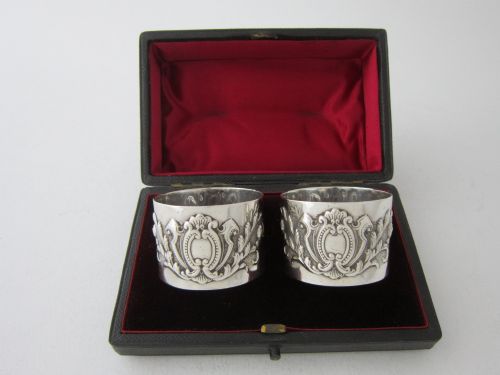
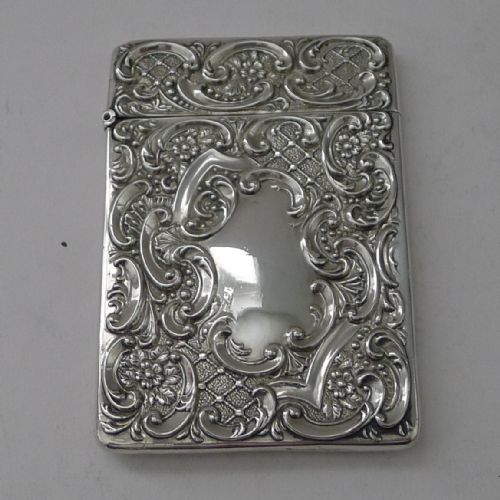
Repousse silver casing covers a variety of small personal and domestic items, from card cases and vesta cases to carriage clocks and sewing accessories. These pieces most frequently emerge from the Victorian and Edwardian periods, alongside examples from George III, George V, and international workshops.
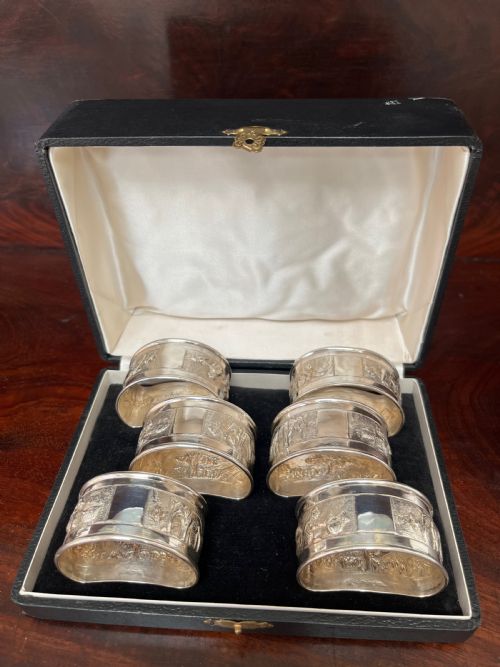
The objects serve functional daily roles transformed by decorative metalwork, such as protecting playing cards, holding prayer books, or housing pocket timepieces. Card cases, napkin rings, and scent bottles dominate the forms available in this selection.
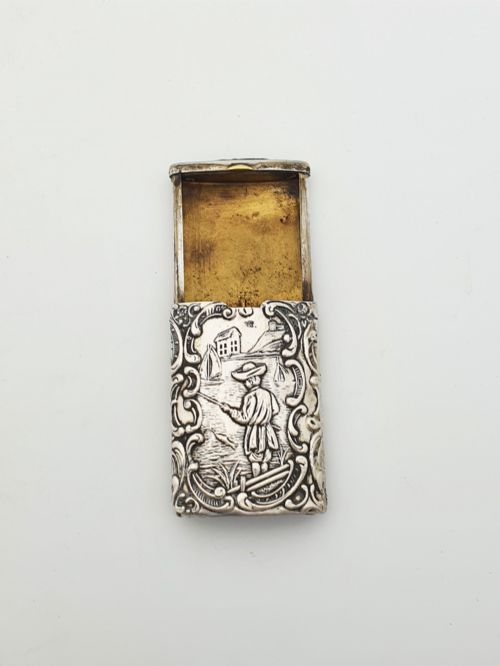
Origins span English provincial and London makers, Continental silver workshops, and Ottoman or Anglo-Indian sources. Each piece utilises its outer metal skin to frame intricate figural or architectural scenes.
Materials and Technique
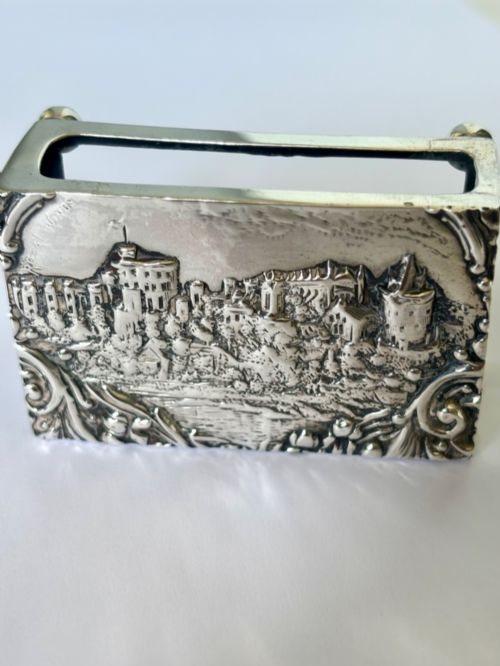
Silversmiths shape repousse casing by hammering thin sheets of sterling silver or solid silver from the reverse side to raise ornamental designs in relief. This technique allows for detailed pictorial surfaces on items like matchbox covers and telegram folders.
Makers combine silver casings with internal linings of velvet, leather, silk, and glass to protect delicate contents such as scent bottles or pocket watches. Certain items incorporate gilt finishes, enamel accents, or niello work to contrast with the raised silver elements.
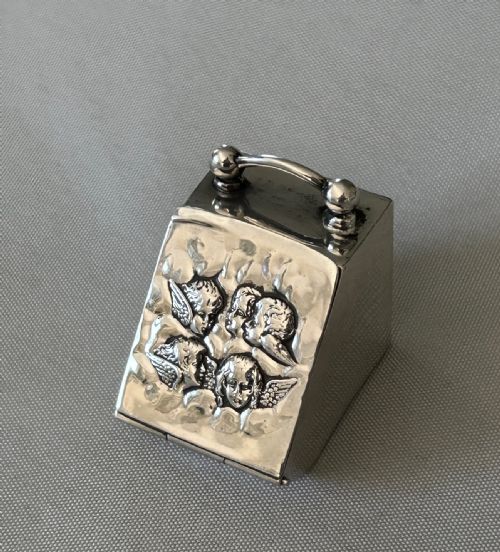
Certain Victorian items include miniature coal scuttles adapted to hold sewing thimbles.
Evaluating Quality
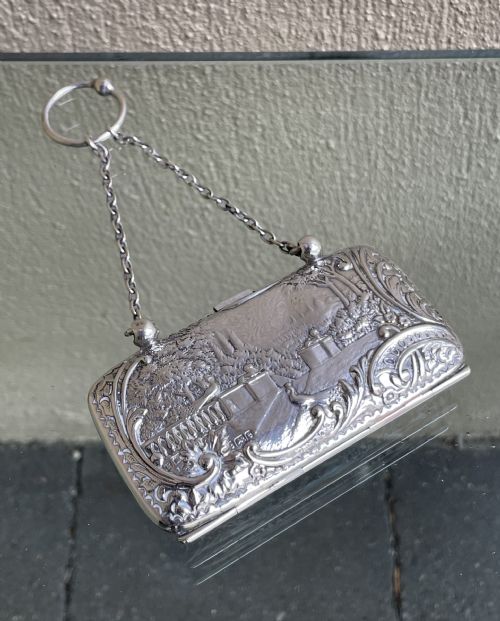
Quality depends upon the depth and crispness of the raised metalwork, where skilled hammering creates sharp contours in architectural motifs or figural scenes like castle tops and deities. Softer, shallow relief indicates hurried production or excessive polishing over time.
The precision of internal linings, secure closures on vesta cases and card cases, and the structural integrity of the outer silver sleeve determine the overall standard of the piece. Well-preserved hinges and clear hallmarks distinguish finer examples.
Laurence Emanuel·Nathaniel Mills
The Repousse Silver Casing Glossary
- Repousse
- A metalworking technique where the artisan hammers a sheet of silver from the reverse side to create a raised design in relief on the front.
- Vesta case
- A small pocket container specifically designed to hold matches and keep them dry, usually fitted with a striking strip on the base.
- Castle top
- A specific style of decorative relief featuring a detailed depiction of a well-known building, stately home, or landmark, frequently found on card cases and matchbox covers.
- Aide memoire
- A small pocket notebook or memorandum pad housed within a protective silver case, often containing silk pages or ivory writing leaves.
- Niello
- A black metallic alloy used as an inlay on engraved or etched metal surfaces to form contrasting decorative patterns.
Repousse Silver Casing: Frequently Asked Questions
What items feature repousse silver casing?
These items include card cases, vesta cases, scent bottles, carriage clocks, and sewing accessories. Most date from the nineteenth and early twentieth centuries.
Makers applied the decorative silver sleeves to everyday personal objects to elevate their appearance for social use.
How do I care for repousse silver?
Clean the silver gently with a soft brush and approved polish to avoid flattening the raised relief work. Store items away from damp conditions to protect internal velvet or silk linings.
Regular, careful maintenance preserves both the exterior metal details and the original fabric interiors.
How can I tell Victorian from Edwardian pieces?
Victorian pieces often display heavier cast decoration and deep relief scenes, reflecting mid to late nineteenth-century tastes. Edwardian examples frequently incorporate lighter frames and distinct floral or Art Nouveau motifs.
Assaying marks and date letters stamped into the silver provide the exact year of manufacture.