



Repousse Metal Wall Mirror
These repousse metal wall mirrors bring tactile surface and weight to a room, offering hand-worked metalwork from the nineteenth and twentieth centuries.
Repousse Metal Wall Mirror
A repousse metal wall mirror brings together reflective glass and hand-hammered metalwork, creating a distinct focal point for an interior. When searching for a repousse metal wall mirror, buyers encounter a range of forms spanning the Victorian era through the mid-twentieth century.
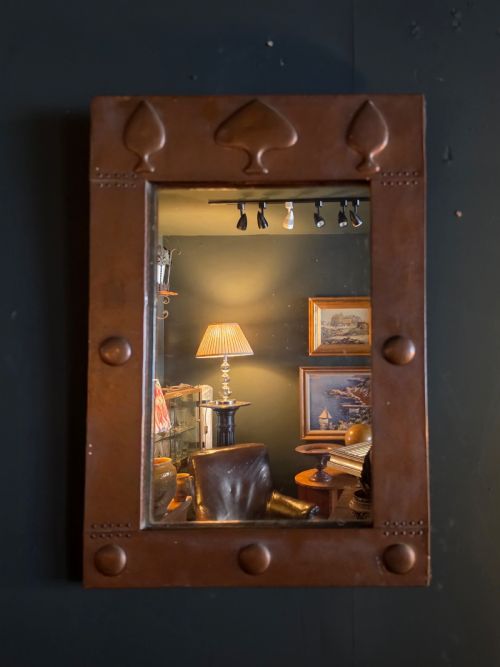
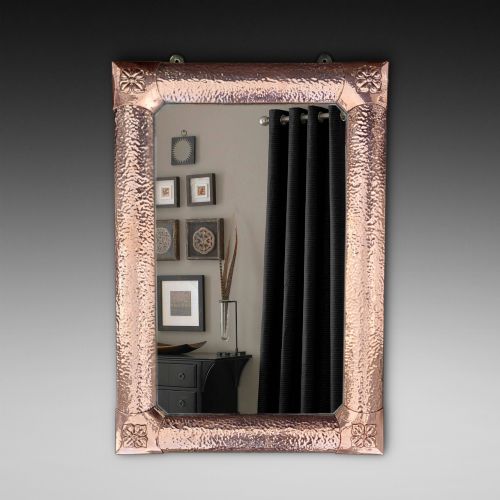
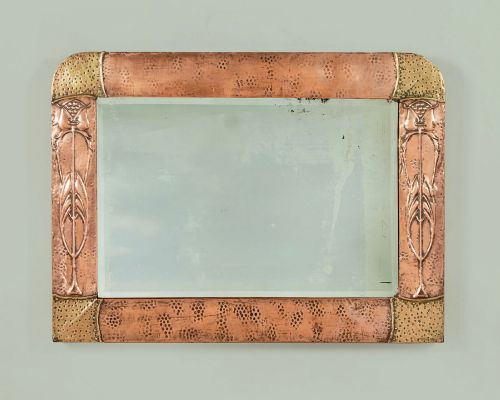
The selections on this page lean heavily into the Arts and Crafts aesthetic, alongside Victorian, Edwardian, and Dutch Baroque Revival examples. Makers utilised copper and brass predominantly, shaping frames with stylized natural motifs or cushion-moulded borders.
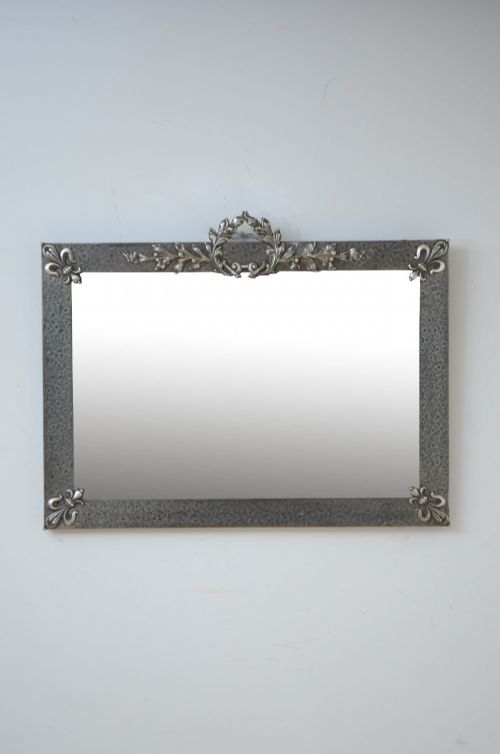
Most pieces date from around nineteen hundred, reflecting the British and continental enthusiasm for manual craft during that period. Alongside these, buyers find Peruvian colonial revival pieces and French cushion mirrors featuring decorative metal mounts.
How they were made
Craftsmen shaped these frames by hammering metal sheets from the reverse side to create raised designs on the front, a technique known as repousse or beating. Copper and brass served as the primary metals, chosen for their malleability and capacity to hold deep, textured relief work.
Makers set the decorated metal sheets over wooden carcases to provide structural rigidity for the mirror glass and wall hanging. Finished pieces often display hand-beaten textures, linear chasing, and riveted construction typical of workshop production.
Some copper frames hide stray hammer marks from makers who clearly enjoyed working with a heavy mallet on a Friday afternoon.
What varies in quality
The depth and crispness of the hand-hammered relief work separate standard production from superior examples. A well-executed repousse panel shows deliberate control in the chasing and tooling, rather than shallow or uniform pressing.
The integration of the metal frame with its wooden backing and the choice of mirror glass dictate the overall substance of the piece. Superior items retain their original bevelled or plain mirror plates and show careful joinery in the corners and fixings.
Liberty and Company
The Repousse Metal Wall Mirror Glossary
- Repousse
- A metalworking technique where the artisan hammers the design from the reverse side to form a raised relief on the front. This method creates tactile, three-dimensional surface decoration on frames.
- Arts and Crafts
- A design movement spanning the late nineteenth and early twentieth centuries that emphasised hand-craftsmanship and traditional materials. This style dominates the copper mirrors found in these listings.
- Cushion frame
- A frame profile that curves outward toward the edges, creating a padded or pillowed appearance. Victorian and Dutch style mirrors frequently employ this rounded form.
- Chasing
- A supplementary metalworking technique performed on the front side of the metal to sink the background and sharpen details. It works alongside repousse to define textures and lines.
Repousse Metal Wall Mirror: Frequently Asked Questions
How do I hang a heavy metal mirror?
These mirrors require sturdy fixings screwed directly into wall studs or masonry using appropriate wall plugs. The weight of the metal frame and wooden backing demands secure support.
Check the existing hanging wire or brackets on the rear of the frame to ensure they remain solid before mounting the piece.
How do I clean repousse copper?
Dust the raised metal surface gently with a soft, dry cloth to remove surface particles. Avoid abrasive polishes that strip the warm patination accumulated over the decades.
Leave the natural ageing intact, as collectors prize the darker tones and oxidation that develop on copper and brass over time.
Are these frames solid brass?
The metal elements consist of sheet brass or copper shaped into repousse panels, mounted over wooden frames for structural support. Solid metal throughout would prove excessively heavy for wall hanging.
This construction method provides the necessary rigidity while keeping the weight manageable for domestic walls.
How do I date an Arts and Crafts mirror?
Examine the construction methods, the style of the metalwork, and the fixings on the reverse of the frame. Pieces from around nineteen hundred often feature characteristic hammered copper surfaces and riveted joints.
Compare the motifs, such as stylized trees or geometric patterns, with documented workshop output from the period.