


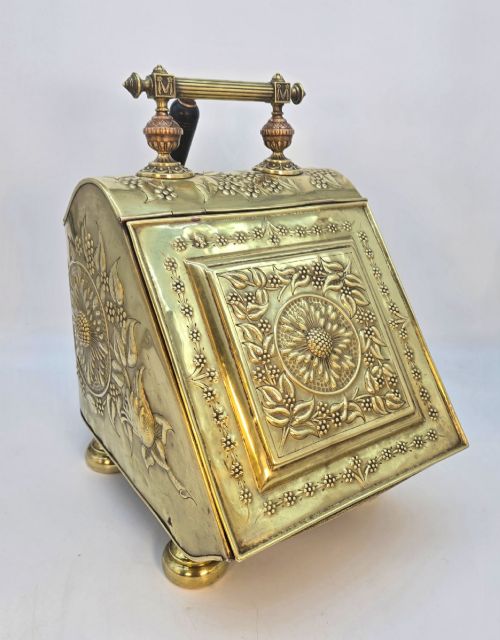
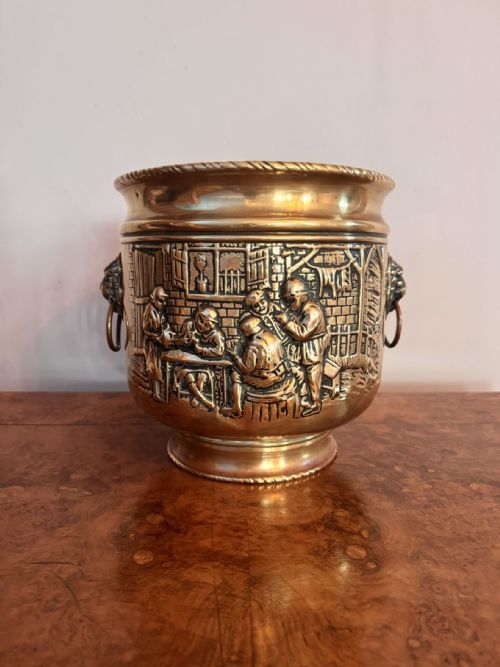
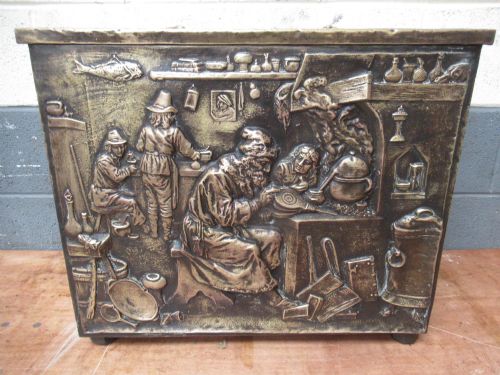


Repousse Brass Bin
These repousse brass bin examples are sturdy fireside containers fashioned to hold logs, coal, or peat.
Repousse Brass Bin
A repousse brass bin serves as a practical hearth accessory designed to store fuel near the fireplace. The pieces gathered here draw from Victorian, Regency, and early twentieth-century periods, showcasing forms such as scuttles, buckets, boxes, and jardinieres.
Makers and workshops of the Arts and Crafts and Art Nouveau movements applied surface ornamentation ranging from tavern scenes to spade motifs. Buyers frequently encounter nineteenth-century English and French examples constructed primarily from brass and copper.
Utility meets decorative intent in these items, which double as fireside fuel stores and ornamental containers. The physical evidence points to heavy metal construction meant to withstand daily domestic use in period interiors.
Materials and construction
Construction relies heavily on sheet brass and copper, sometimes combined with wooden components or internal metal liners to manage fuel storage. Artisans shaped the metal bodies through hammering, embossing, and repousse techniques to raise decorative patterns from the reverse side.
Surface treatment involves polishing the brass or patinating the copper to achieve specific visual effects, from bright metallic sheens to darker historic tones. Workshops employed riveted joints and applied bands to reinforce the containers against the weight of coal and logs.
Repousse Brass Bin Retail Price Guide 2026
Typical asking prices for repousse brass bin among the pieces listed under this phrase on Sellingantiques today, from the lower quarter to the upper quarter. They describe what is for sale here now, not the wider market.
Design styles on this page span Arts and Crafts, Art Nouveau, Adam Style, and French Provincial traditions.
Assessing quality and craftsmanship
Quality rests upon the crispness of the hammered surface relief and the structural integrity of the metal body. Finer examples display deliberate hand-worked detail in motifs like tavern scenes or floral patterns rather than flat, mechanically stamped decoration.
Construction details such as solid riveting, substantial handles, and well-fitted lids distinguish sturdier utilitarian pieces from lighter decorative vessels. The thickness of the brass sheet and the finish of the interior lining indicate the original intended grade of manufacture.
Henry Loveridge·Petrus Ramus
The Repousse Brass Bin Glossary
- Repousse
- A metalworking technique where the artisan hammers the design from the reverse side to create a raised pattern on the front. This method gives fireside containers their characteristic textured surface decoration.
- Purdonium
- A specialised coal box or cabinet, typically featuring a sloping front door and an internal shovel compartment. These Victorian receptacles kept domestic fuel neatly contained beside the fireplace.
- Dinanderie
- An old term for medieval and later brass or bronze wares, often applied by dealers to heavy continental metal vessels. The designation covers utilitarian and decorative containers produced in European workshops.
- Jardiniere
- An ornamental pot or stand designed to hold plants, occasionally utilised as a large bin for fuel storage. These vessels appear in brass and copper across nineteenth-century listings.
- Arts and Crafts
- A design movement emphasising handcraftsmanship and simple vernacular forms over mass production. Pieces from this tradition often feature stylized decoration executed in hammered copper and brass.
Repousse Brass Bin: Frequently Asked Questions
What is a repousse brass bin used for?
These containers were originally manufactured to store household fuel like coal, logs, or peat beside the fireplace. Their robust metal construction protected domestic interiors from soot and debris while keeping fuel close at hand.
Today, owners continue to use them for their traditional fireside purpose or repurpose them as large plant holders and umbrella stands. Their decorative metal surfaces add texture to living spaces whether filled with logs or left empty.
How do I clean a brass bin?
Cleaning depends on the desired finish, as many collectors prefer to retain the dark historic patina accumulated over decades of use. Gentle dusting and wiping with a soft, dry cloth will remove ordinary surface grime without disturbing the aged surface.
Harsh metal polishes should be avoided unless the owner specifically desires a bright, reflective shine. Vigorous cleaning can wear down delicate repousse relief work and strip away authentic surface character.
Are these bins heavy when empty?
Most pieces possess a substantial weight due to the thick sheet brass and copper used in their construction. Handles and reinforcing bands add further heft to containers designed to hold heavy loads of coal and wood.
This structural weight ensures the container remains stable on the hearth when items are added or removed. Buyers should consider the empty weight when planning where to place the bin.
How do I date a brass bin?
Dating relies on stylistic clues, manufacturing techniques, and specific decorative movements visible on the metal body. Victorian and Regency pieces often exhibit formal classical motifs or heavy decorative stampings, while Arts and Crafts examples display hand-hammered surfaces and stylized natural forms.
Maker marks, where present, provide direct evidence of the workshop and production era. Comparing the construction methods against known period standards helps narrow down the decade of manufacture.