


Renaissance Style Chair
A renaissance style chair brings dramatic architectural presence into a room, drawing on centuries of European craft traditions.
Renaissance Style Chair
The selection ranges from robust oak elbow chairs and walnut armchairs to distinctive X-frame seats and painted wooden hall chairs. These pieces often incorporate regional interpretations from Italy, France, Spain, and Austria-Hungary.
Seating spans heavy dining chairs, ceremonial throne chairs, and low stools, demonstrating how nineteenth-century cabinetmakers reinterpreted antique forms for domestic use.
Assessing quality and craftsmanship
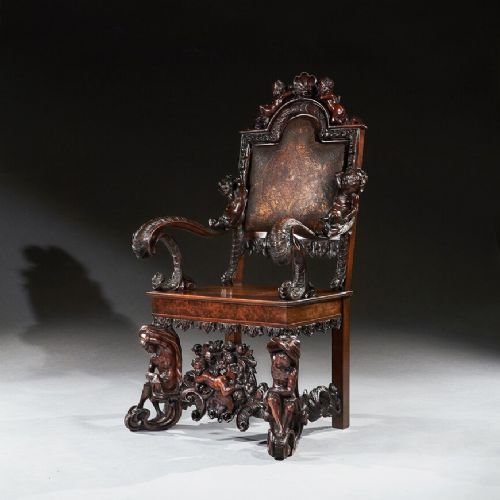
The depth and crispness of the hand-carved wood separate standard production pieces from exhibition-quality examples. Superior items display undercut relief and naturalistic anatomical proportions in figures and scrollwork.
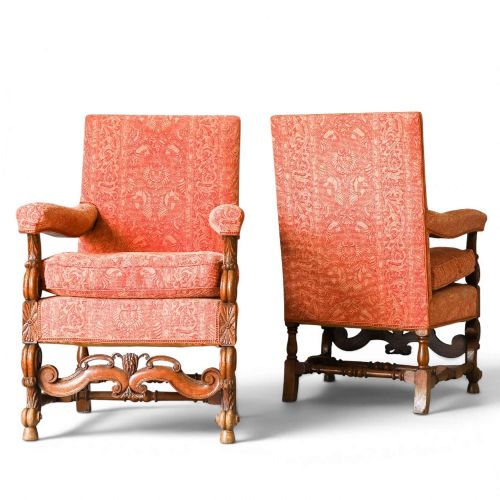
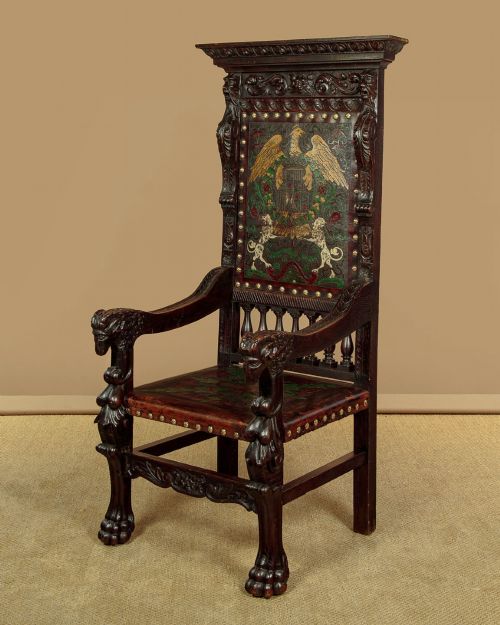
Material selection and timber figure dictate value, with highly figured walnut and quarter-sawn oak commanding attention. The integration of authentic period upholstery materials and intact painted polychromy further elevates a piece.
Structural integrity of joints and the retention of original hardware, such as brass studs on leather elements, indicate superior preservation and original workshop standards.
Some nineteenth-century makers carved mythological sea monsters and roaring lions directly into walnut armrests to frighten timid visitors.
White Allom and Co·Andrea Brustolon
The Renaissance Style Chair Glossary
- Sgabello
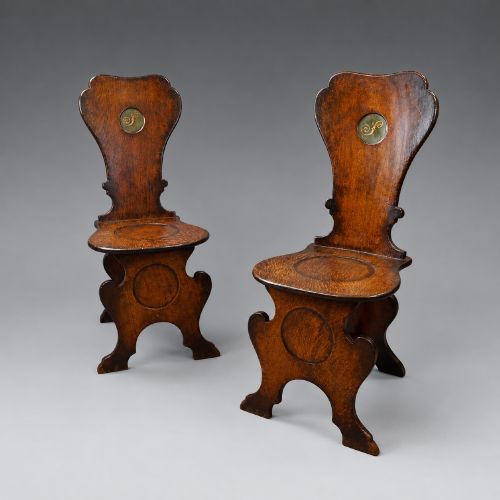
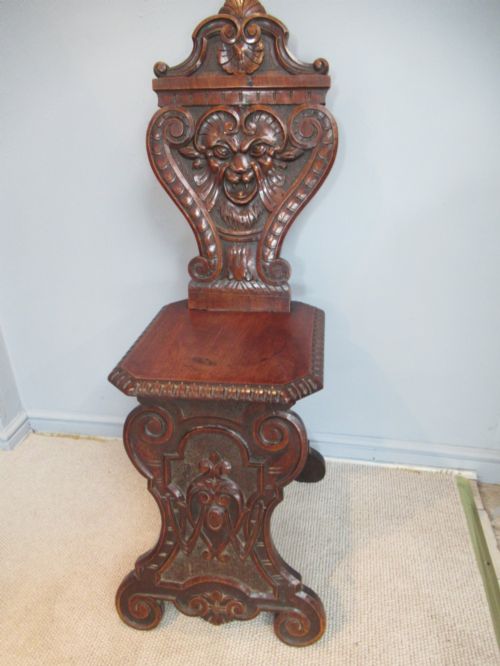
- A light wooden hall chair featuring a high back and a solid trestle or box base instead of legs. This form originated in sixteenth-century Italy and was widely revived in the nineteenth century.
- Savonarola
- An X-framed folding armchair constructed from multiple curved wooden slats. It is named after the famous fifteenth-century Florentine friar.
- Caquetoire
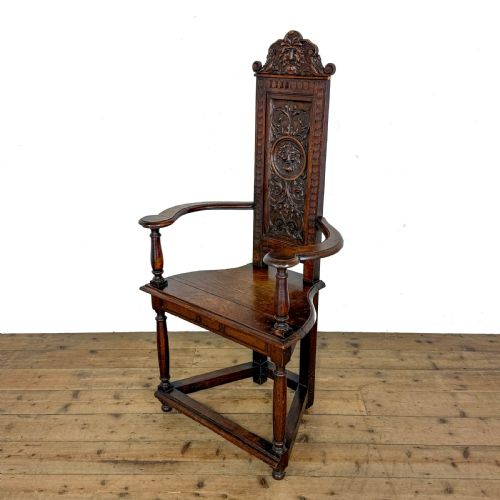
- A light sixteenth-century French armchair designed with a trapezoidal seat to accommodate wide contemporary garments. Nineteenth-century revival versions replicate this high-backed conversational form in carved walnut.
- Curule
- An ancient Roman chair shape characterised by intersecting curved legs forming an X. Revival makers adopted this profile for ceremonial and library seating.
- Strapwork
- A decorative motif resembling interlaced leather bands or flat ribbons cut into scroll patterns. It frequently appears carved onto the wooden rails and backs of revival seating.
Renaissance Style Chair: Frequently Asked Questions
Where did these chairs originate?
These seating forms draw inspiration from historic workshops across Italy, France, Spain, and Central Europe during the fifteenth and sixteenth centuries. Nineteenth-century cabinetmakers later revived these regional designs for Victorian homes.
Most surviving examples in this style date from the Victorian period onwards, reflecting a widespread European fascination with historical revivals rather than original sixteenth-century production.
How were sgabello chairs used?
Sgabello chairs were traditionally placed along the walls of grand Italian hallways and palazzi rather than gathered around dining tables. Their narrow profiles and decorated backs served a primarily decorative and status-signalling function.
Visitors would sit briefly while waiting in reception areas, making the rigid wooden seats and narrow bases practical for formal entryways.
Are X-frame chairs comfortable?
X-frame chairs like the Savonarola and Dante models offer a surprisingly supportive seat despite their rigid wooden construction. The curved slat geometry distributes weight evenly across the intersecting frame.
Many examples feature fitted leather or textile cushions across the seat to add softness for extended sitting in libraries or studies.
How do I care for antique leather upholstery?
Antique leather requires minimal intervention, benefiting primarily from gentle dusting with a dry cloth and occasional application of appropriate conservation wax. Avoid modern synthetic cleaners that can strip historic finishes.
Keeping these chairs away from direct sunlight and strong heat sources prevents the leather and underlying oak or walnut frames from drying out and cracking.
How do I distinguish nineteenth-century revivals?
Nineteenth-century revival pieces display machine-sawn timber components hidden beneath hand-carved surfaces, alongside modern secondary woods. Tool marks and assembly methods differ noticeably from authentic sixteenth-century workshop practices.
Examining the underside, screw types, and wear patterns on the walnut or oak helps confirm the Victorian manufacturing date.