

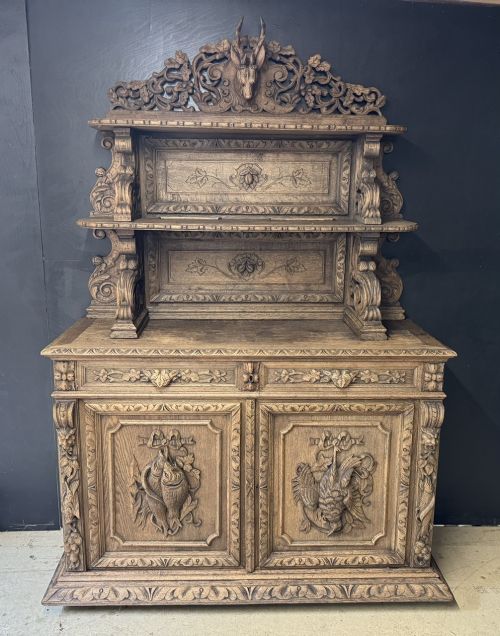
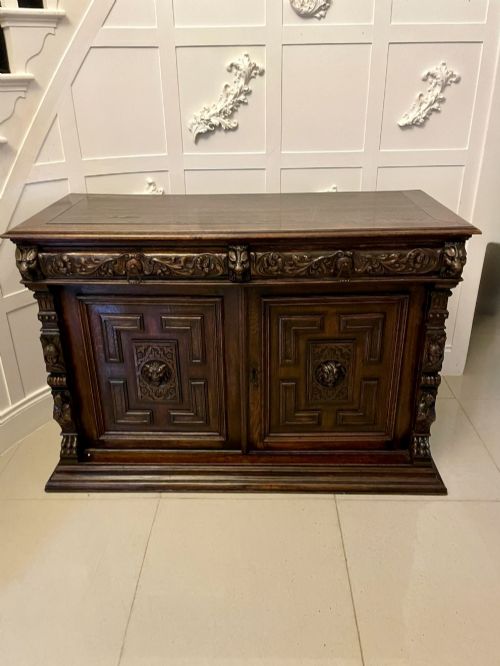


Renaissance Revival Server
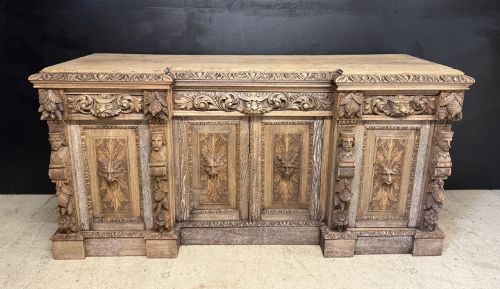
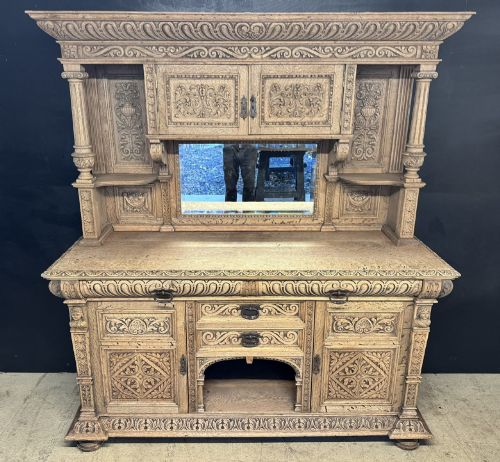
A renaissance revival server brings heavy architectural timber and deep nineteenth-century carving into a dining space.
Renaissance Revival Server
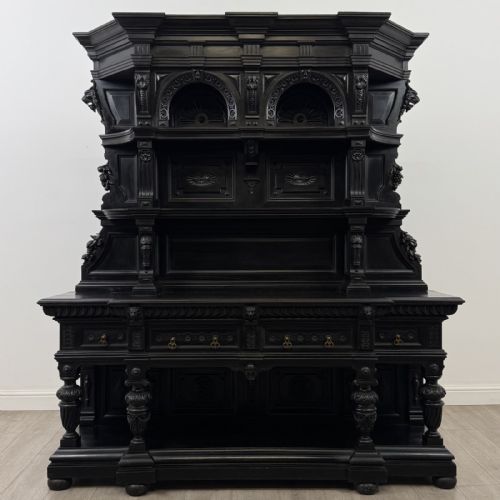
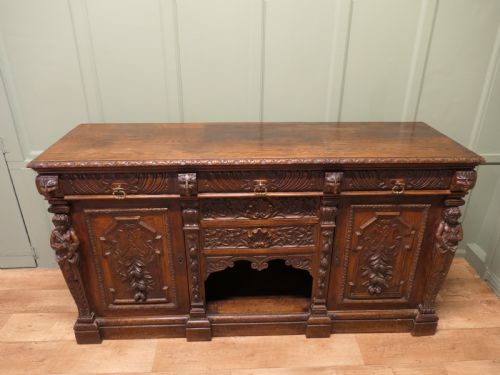
A renaissance revival server stands as a substantial piece of nineteenth-century dining furniture, drawing on classical architectural motifs and deep timber relief. These items appear primarily as sideboards, buffets, and cabinets on stand, frequently adopting robust proportions suited to formal interiors.
The pieces on this page span the Victorian era, with specific examples carrying dates from the mid to late nineteenth century. Oak and walnut form the structural core of these items, often enriched by elaborate figural carvings such as Green Men and lion masks.
How they were made
Carpenters constructed these servers using solid oak and walnut timbers, frequently employing heavy planks to support grand proportions and mirrored upper sections. Manual carving techniques defined the surface ornamentation, producing high-relief figures, cherubs, and scrollwork directly into the wood.
Secondary materials such as brass fittings, bevelled glass, and mother of pearl inlays augmented the timber carcasses. Ebonised hardwood and marble also appear, adding contrasting tones and textures to the architectural facades.
Renaissance Revival Server Retail Price Guide 2026
Typical asking prices for renaissance revival server among the pieces listed under this phrase on Sellingantiques today, from the lower quarter to the upper quarter. They describe what is for sale here now, not the wider market.
Listings feature nineteenth-century items constructed predominantly from oak and walnut, incorporating brass, marble, and bevelled glass.
What varies in quality
Depth and precision of the manual carving separate standard production from exceptional examples, particularly in figural elements like Green Men and lion masks. The choice of primary timber, such as figured walnut or dense golden oak, dictates the visual weight and longevity of the piece.
Complexity of form also influences the standing of an item, distinguishing straightforward sideboards from elaborate cabinets on stand or multi-tiered buffets featuring marquetry inlay.
The Renaissance Revival Server Glossary
- Green Man
- A sculptural motif depicting a human face emerging from or entwined with foliage. It is frequently found carved into nineteenth-century oak furniture.
- Cabinet on Stand
- A tall storage compartment elevated on an open frame or base. This form lifts the main body of the furniture off the floor.
- Marquetry
- Decorative patterns formed by fitting small pieces of contrasting veneer into a timber surface. This technique creates detailed geometric or pictorial designs.
- Ebonised Hardwood
- Timber treated with a chemical stain or finish to imitate ebony. This process yields a deep, uniform black surface.
Renaissance Revival Server: Frequently Asked Questions
What is a renaissance revival server?
A renaissance revival server is a nineteenth-century storage piece built for the dining room or hall, heavily decorated with architectural carvings and classical motifs.
These items take the form of sideboards, buffets, and cabinets on stand, utilising solid oak and walnut timbers.
How do I identify the period?
Dating relies on stylistic markers such as Victorian Gothic elements, ebonised finishes, and specific carved figures like lion masks and Green Men.
Pieces frequently incorporate materials like bevelled glass and mother of pearl alongside traditional oak and walnut construction.
Where were these pieces used?
Original placement was primarily in grand dining rooms or formal entrance halls, where they functioned as serving surfaces and storage for tableware.
Their substantial proportions and mirrored backs allowed them to anchor large wall spaces in nineteenth-century interiors.
How do I clean carved oak?
Maintenance involves gentle dusting with a dry cloth to prevent dirt accumulation within the deep recesses of the manual wood carvings.
Avoid abrasive cleaners or excessive moisture to preserve the original polish and patina of the nineteenth-century timber.