
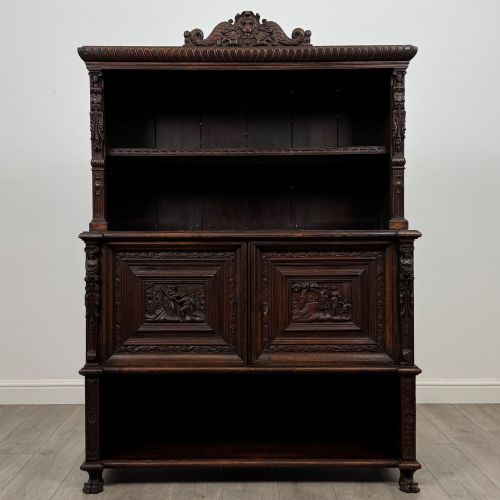


Renaissance Revival Oak Dresser
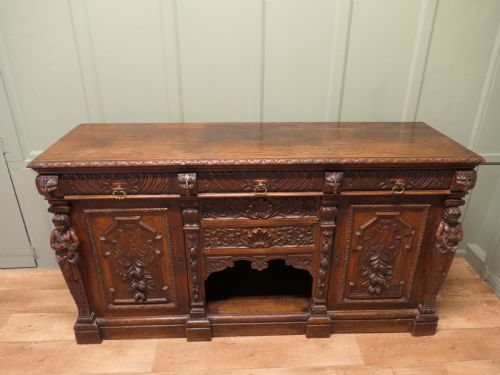
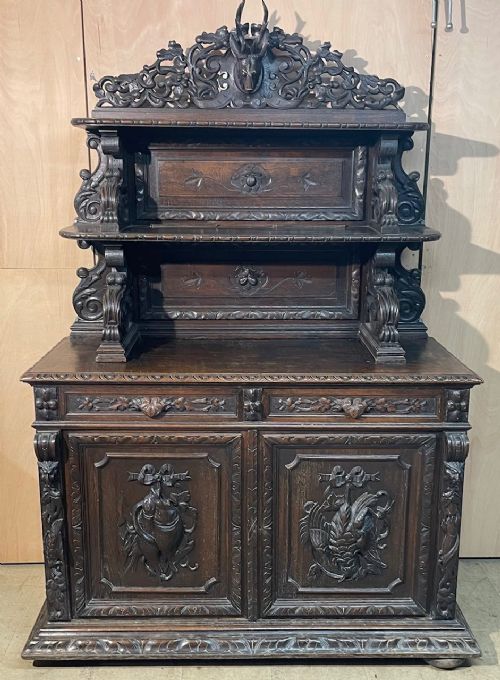
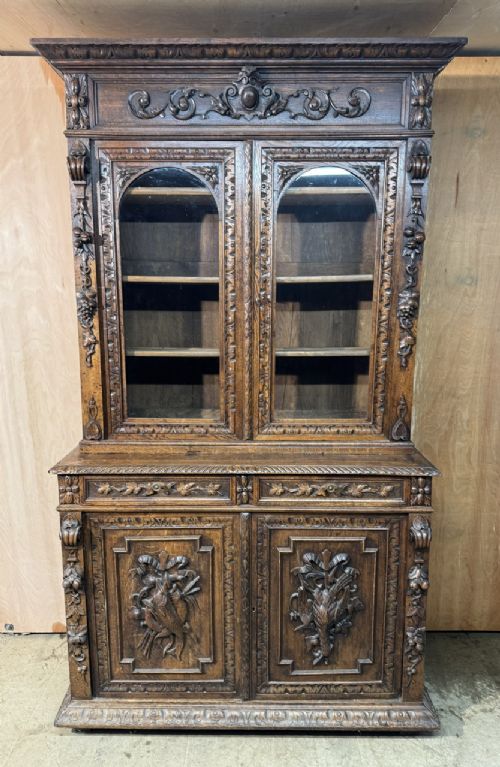
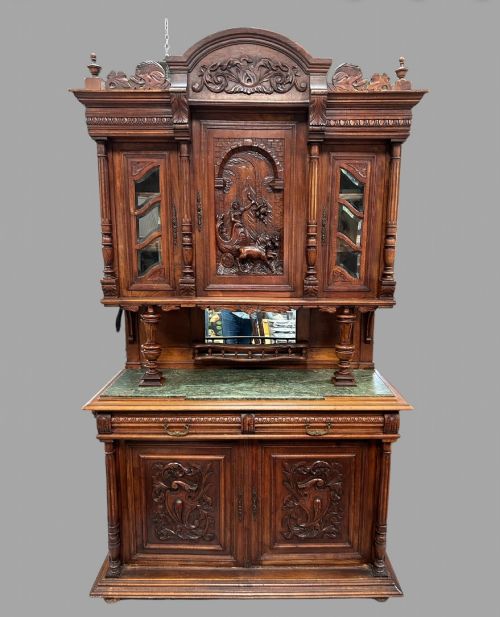
A renaissance revival oak dresser delivers substantial carved presence and deep historical weight to a room.
Renaissance Revival Oak Dresser
A renaissance revival oak dresser brings together nineteenth-century execution and heavy sixteenth-century decorative motifs. When searching for a renaissance revival oak dresser, buyers encounter large sideboards, buffets, bookcases, and cabinets rather than traditional kitchen dressers. These items emerge primarily from Victorian, French, and Flemish workshops during the nineteenth century.
The forms span mirror-back sideboards, hall cupboards, and multi-tiered buffets dominated by deep relief carving. Oak forms the principal structure, frequently accompanied by walnut, glass, brass, and marble. French Provincial and Gothic Revival influences occasionally blend into the design vocabulary of these pieces.
How they were made
Makers utilised solid oak as the structural and decorative foundation, shaping heavy panels through extensive hand carving. Workshops incorporated bevelled glass into cabinet doors and fitted brass hardware alongside iron structural elements.
Certain surfaces feature bleached oak treatments or contrasting walnut sections to vary the visual tone. Carvers worked directly into the timber to produce figures such as green men and hunting motifs.
Stray woodland spirits peer from cabinet doors through unexpected green man carvings.
What varies in quality
Depth and crispness of the relief carving separate standard production from superior examples. The execution of figurative elements, such as green man masks or hunting scenes, determines the visual strength of the piece.
The integration of secondary timbers and the retention of original hardware, glass panels, and marble tops influence the overall integrity. Proportion and the balance between heavy mass and refined detail dictate the visual success of each item.
The Renaissance Revival Oak Dresser Glossary
- Renaissance Revival
- A nineteenth-century design movement that reinterprets sixteenth-century architectural and decorative forms. It draws heavily on classical symmetry, strapwork, and robust relief carving.
- Green Man
- A sculptural motif depicting a human face emerging from or entwined with foliage and vines. This ancient symbol recurs frequently in nineteenth-century architectural woodwork.
- Sideboard
- A large dining room storage piece designed for serving food and displaying silver or ceramics. Victorian versions often include raised mirror backs and heavily carved doors.
- Buffet
- A low storage unit with enclosed cupboards and flat top surfaces for food preparation or service. Examples from the nineteenth century typically feature tiered shelving and panelled doors.
- Bevelled Glass
- Glass panes with edges ground and polished at an angle to catch light. This technique adds depth and decorative refraction to cabinet doors.
Renaissance Revival Oak Dresser: Frequently Asked Questions
Where were these pieces used?
These large storage items belonged primarily in nineteenth-century dining rooms, grand halls, and parlours. They served both as display furniture for silver and china and as functional storage for household linens.
Their substantial scale suited public rooms and large domestic interiors where heavy architectural woodwork predominated.
How do I care for oak furniture?
Maintain oak surfaces by dusting regularly with a dry, soft cloth to prevent grime buildup in deep carvings. Avoid commercial silicone polishes and instead apply natural beeswax sparingly to nourish the timber.
Keep these heavy pieces away from direct heat sources and drastic humidity changes to prevent the solid oak panels from splitting.
What defines Victorian style?
Victorian design encompasses a diverse range of revival styles that reinterpreted historical aesthetics during the nineteenth century. Makers drew inspiration from Gothic, Renaissance, and Elizabethan precedents to create ornate domestic furnishings.
This era favoured heavy proportions, dark timber tones, and dense surface ornamentation executed with mechanical and manual skill.
Are these items modular?
Nineteenth-century sideboards and cabinets were constructed as permanent case goods rather than modular units. Large pieces frequently separated into upper and lower sections to facilitate transport and placement within a room.
Internal shelving is typically fixed or rests on simple wooden supports rather than adjustable metal tracks.