



Renaissance Oak Chair
These renaissance oak chair examples bring heavy carved timber and period revival presence into a room, favoured for their architectural lines.
Renaissance Oak Chair
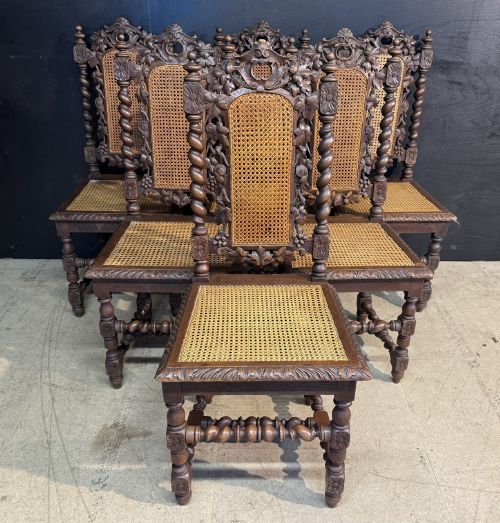
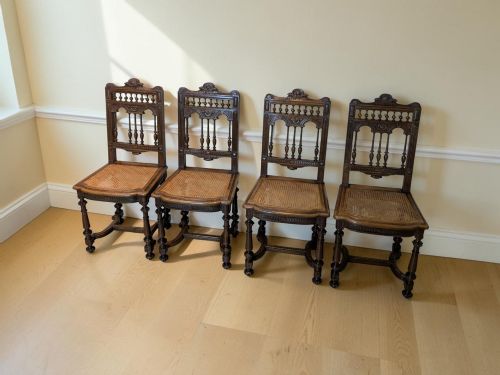
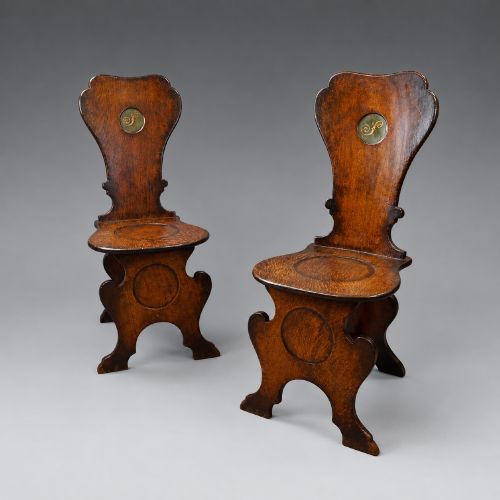
A renaissance oak chair draws on historical revival designs, appearing in forms such as armchairs, sgabello hall chairs, dining sets, and benches. These pieces often feature heavy carving and structural silhouettes linked to Italian, French, and Jacobean revivals.
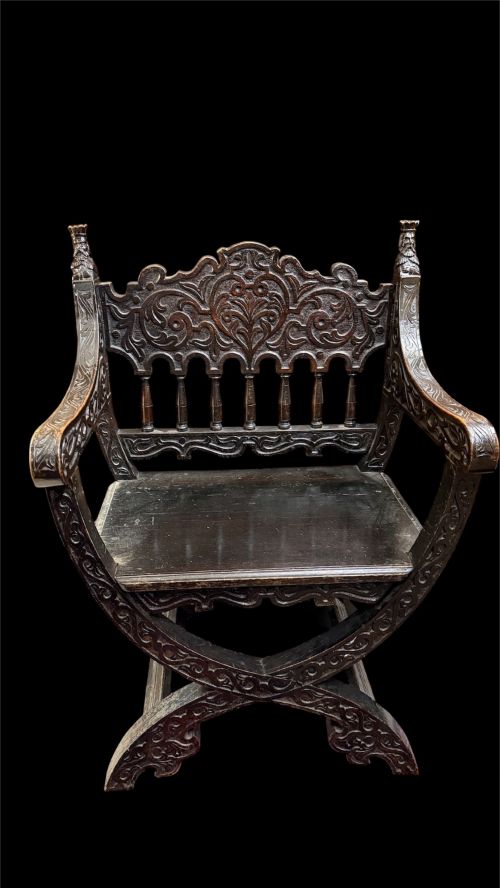
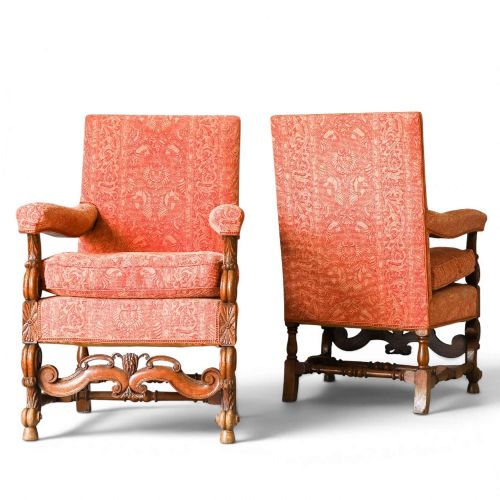
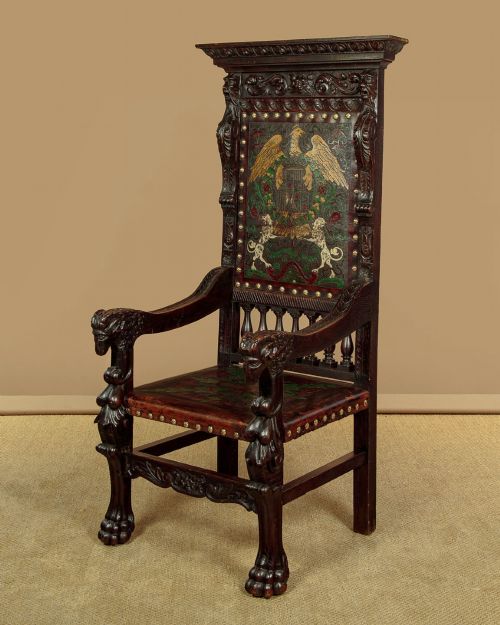
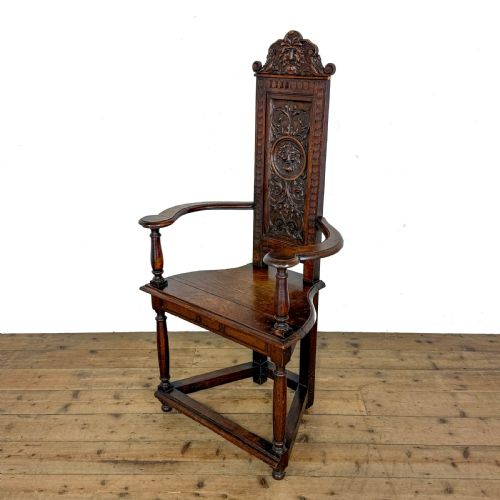
Buyers searching for a renaissance oak chair will most frequently encounter nineteenth-century revival interpretations alongside items dated to nineteen-ten and the eighteenth century. These range from high-backed throne chairs and X-frame curule designs to corner chairs and upholstered elbow seats.
The seating forms vary from sturdy hall chairs meant for entryways to sets of dining chairs and low caquetoire armchairs. Oak remains the primary timber, occasionally joined by walnut or enhanced with paint, leather, and tapestry inserts.
What varies in quality
The depth and crispness of the carving dictate much of the character in a renaissance oak chair, with sharper relief separating ambitious workshop output from simpler production. Hand-tooled detail on leather panels and balanced proportions across X-frame or sgabello structures also mark out superior examples.
The integrity of the timber frame and the retention of original elements, such as brass hardware or early upholstery fabric, influence the overall weight and presence of the piece.
Renaissance Oak Chair Retail Price Guide 2026
Typical asking prices for renaissance oak chair among the pieces listed under this phrase on Sellingantiques today, from the lower quarter to the upper quarter. They describe what is for sale here now, not the wider market.
Listings span periods from the eighteenth century through to nineteen-thirty, with nineteenth-century revival pieces forming the majority.
The Renaissance Oak Chair Glossary
- Sgabello
- A light wooden chair with a high back and a base formed of solid boards rather than legs. These pieces were common in Renaissance Italy and typically served as hall seating.
- Caquetoire
- A sixteenth-century style of light armchair featuring a trapezoidal seat and a high, narrow back. This form allowed women wearing wide farthingales to sit more comfortably.
- Curule
- An X-frame structural form derived from ancient Roman magistrate seats. In revival seating, this creates a folding or cross-brace support beneath the armrests.
- Renaissance Revival
- A nineteenth-century artistic movement that imitated sixteenth-century classical architectural and decorative motifs. This style heavily influenced Victorian cabinetmakers producing heavy carved oak furniture.
- Strapwork
- A ornamentation motif resembling flat interlaced bands or leather straps. It appears frequently in relief carving on panels and friezes.
Renaissance Oak Chair: Frequently Asked Questions
Are these chairs comfortable for daily use?
Most historic examples were built for formal rooms rather than lounging, offering upright support rather than deep cushioning.
Upholstered armchairs and dining sets provide a more relaxed sit, while rigid sgabello hall chairs suit brief seating in an entranceway.
How do I identify the revival period?
Revival pieces from the nineteenth century often combine motifs from multiple historical sources, such as French and Italian Renaissance styles.
Tooling marks, timber oxidation, and construction methods help distinguish nineteenth-century interpretations from eighteenth-century originals.
Where should I place a heavy oak chair?
These substantial seats anchor large rooms, hallways, or libraries where their architectural woodwork can stand against plain walls.
Pairing a throne chair or X-frame armchair with neutral surroundings lets the carved details take visual priority.